
Dhaka Deploys AI Traffic Enforcement System, Reports 300 Prosecutions in Early Rollout

Bangladesh’s Capital Turns to Artificial Intelligence to Untangle Its Notorious Gridlock
Dhaka, a megacity of over 22 million people ranked among the world’s most congested, launched its first AI-powered traffic enforcement system in April, connecting existing road cameras to software capable of automatically detecting violations — and police say the early results are measurable.
The system identifies offences including signal violations, lane breaches, and illegal parking, then dispatches automatic fines of 2,000 taka (approximately S$24 or US$16) via SMS to registered vehicle owners. At least 300 vehicles have been prosecuted since the rollout began, according to city police spokesman NM Nasiruddin.
A City Where Walking Outpaces Driving
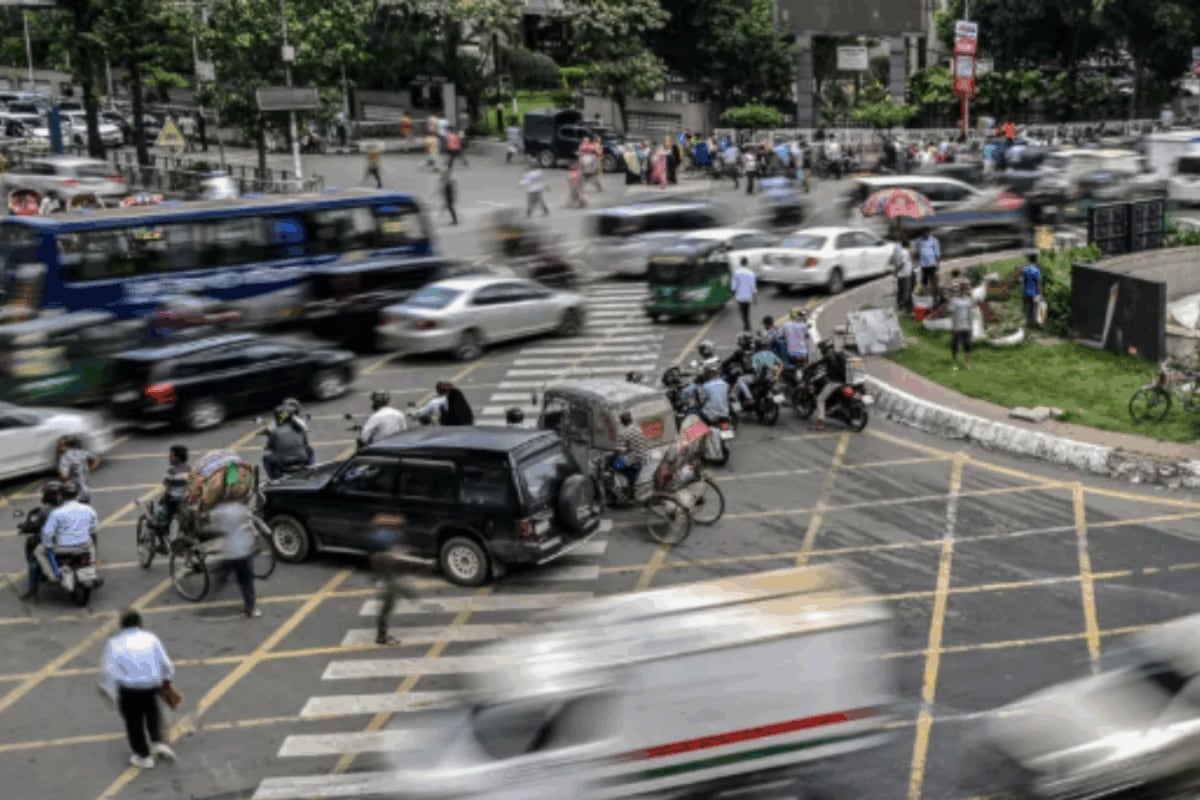
The stakes are significant. A study by the US National Bureau of Economic Research previously ranked Dhaka as the world’s slowest city. A joint report by the World Bank and Bangladesh University of Engineering and Technology found average traffic speeds of just 4.8 kilometres per hour — slower than a brisk walk.
Buses, cars, motorcycles, and rickshaws compete for severely limited road space, creating conditions that have historically made manual enforcement both inefficient and confrontational.
Reducing Confrontation on the Ground
“Those who violate the rules turn against us,” traffic sergeant SM Nazim Uddin told AFP. “But since AI was introduced, people behind the wheel have started obeying the law — and we have been spared the everyday quarrels.”
The shift in driver behaviour appears to be taking hold. Motorist Hannan Rahman Jibon, 28, said he was among the first caught by the new system after running a red light. The fine was sent directly to the vehicle owner’s phone while the owner was at home.
“I am more careful now, with cameras installed in many different parts,” Jibon said.
Phased Expansion Planned
Officials have indicated that manual enforcement will be progressively phased out as AI camera coverage expands across the city. No timeline has been publicly confirmed for full deployment.
The Dhaka initiative reflects a broader pattern across South and Southeast Asia, where governments are turning to automated surveillance infrastructure to address urban mobility failures that decades of conventional policing have failed to resolve.