
Changi Airport Expansion Plans Put Singapore’s Long-Term Aviation Strategy on Display

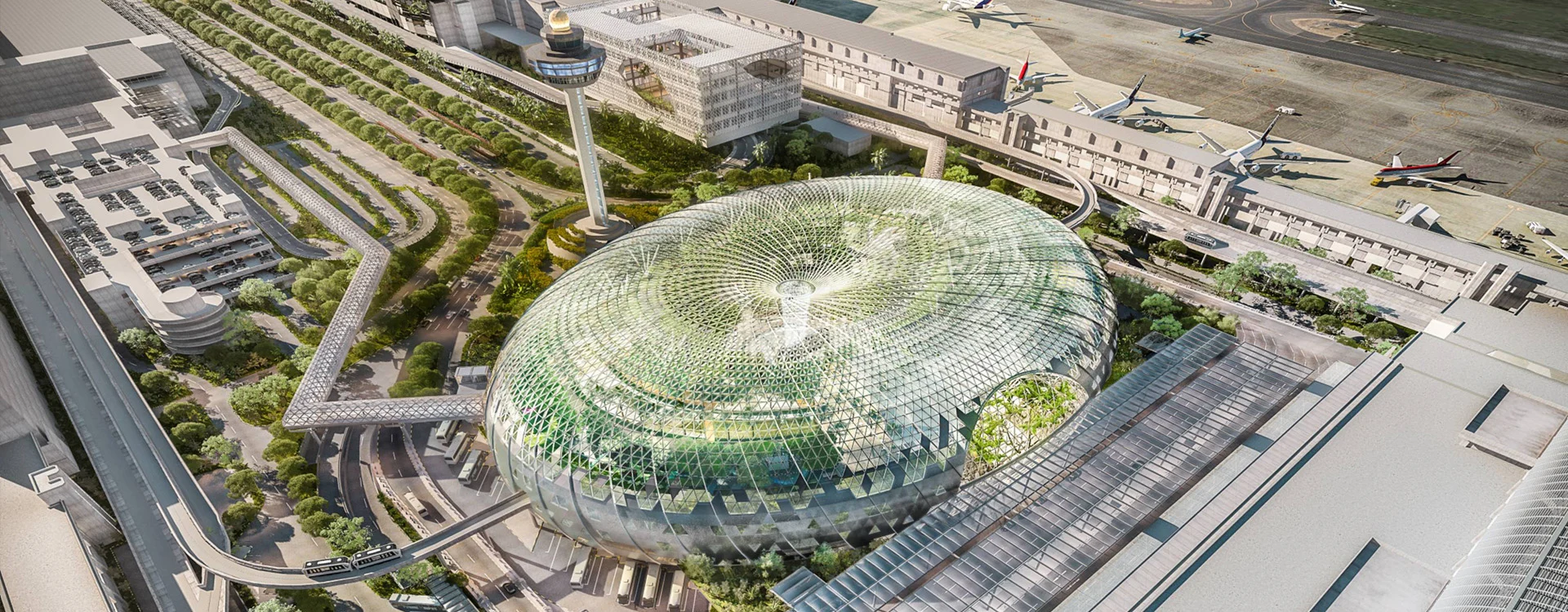
Singapore is building for the next wave of air travel. The plans around Terminal 5 and the wider Changi East development show a clear strategy. Grow capacity, keep the hub competitive, and design for disruption.
The timing is not accidental. Passenger traffic at Changi reached an all-time high in 2025, at 69.98 million passenger movements. That is a strong reminder that demand has returned and is still rising.
Terminal 5 is the centrepiece
Terminal 5, often shortened to T5, is the anchor project. It is part of the 1,080-hectare Changi East development area.
In its first phase, T5 is designed to handle about 50 million passenger movements a year. It is expected to be operational around the mid-2030s. The terminal is also designed to be built in two phases. That gives planners room to match construction to traffic growth.
Capacity is the headline but not the whole story
The expansion is not only about adding gates. It is also about how the airport runs as one system.
T5 is planned to link with the existing terminals so the airport can operate as a single integrated hub. It will also include a ground transportation centre. This is a hub that brings train, bus, taxi and other services into one place, to cut transfer time for passengers.
There is also a longer-term aim to improve sea-air connections. That means smoother transfers for travellers who may connect to nearby destinations by ferry.
A third runway is part of the long game
Changi’s expansion plan also includes a three-runway system. The third runway is currently used by the military. The plan is to integrate it for civilian operations by 2030.
More runway capacity matters because it supports more flight movements. It also reduces congestion on the airside, where aircraft taxi, park and depart.
A terminal designed for shocks
The pandemic changed airport planning worldwide. Singapore’s response is to build flexibility into the new terminal from day one.
T5 is designed to operate as smaller sub-terminals when needed. That modular approach helps manage crowding and operations during disruption. The design also includes features aimed at reducing disease transmission, such as more contactless systems and enhanced ventilation.
Contactless systems reduce physical touchpoints, like manual document checks or shared equipment. Better ventilation improves air circulation in crowded indoor spaces.
Automation is meant to ease manpower pressure
Airport operators are also preparing for tighter labour markets. T5 is planned to rely more on automation and digital systems to keep operations efficient at a larger scale.
A key feature is an automated people mover. This is a driverless train system that moves passengers between parts of the airport, reducing long walks and speeding up transfers. The plan is for the people mover network to connect areas within T5 and link to Terminal 2.
Sustainability is moving from pledge to design brief
T5 is being positioned as a low-energy terminal by design. The project targets a Green Mark Platinum Super Low Energy rating, a top-tier local standard for efficient buildings.
The plan includes one of Singapore’s largest rooftop solar panel systems. Changi Airport Group has said the system could potentially generate enough energy to power 20,000 four-room HDB flats for a year.
On the ground, electrification is part of the approach too. From 2025, new light vehicles and equipment on the airside are planned to be electric. Charging capacity is also set to expand to support a larger electric fleet.
Funding signals a long-term commitment
Mega projects need long-run financing. In Budget 2025, the Government announced a S$5 billion top-up to the Changi Airport Development Fund. The message was direct. Aviation remains a national priority, even after the volatility of recent years.
For airlines, the stakes are high as well. Singapore’s strategy depends on keeping Changi attractive for new routes, transfers and premium traffic, while also supporting cargo and maintenance ecosystems.
Public messaging is part of the strategy
Changi’s expansion has become more visible to the public. An exhibition on how T5 will be conceived and built has been staged at Terminal 3’s arrival hall from early January 2026 into March.
That outreach serves a purpose. It frames the project as national infrastructure, not just an airport upgrade. It also signals confidence that Singapore intends to stay central to regional travel flows.
Singapore is not expanding Changi to chase a short-term surge. It is building for decades. Terminal 5, runway integration, stronger ground links and a more resilient design all point to the same goal: keep the hub ready for growth, and ready for the next shock, at the same time.