

Graduate Unemployment Is Rising — But AI Is Not the Culprit

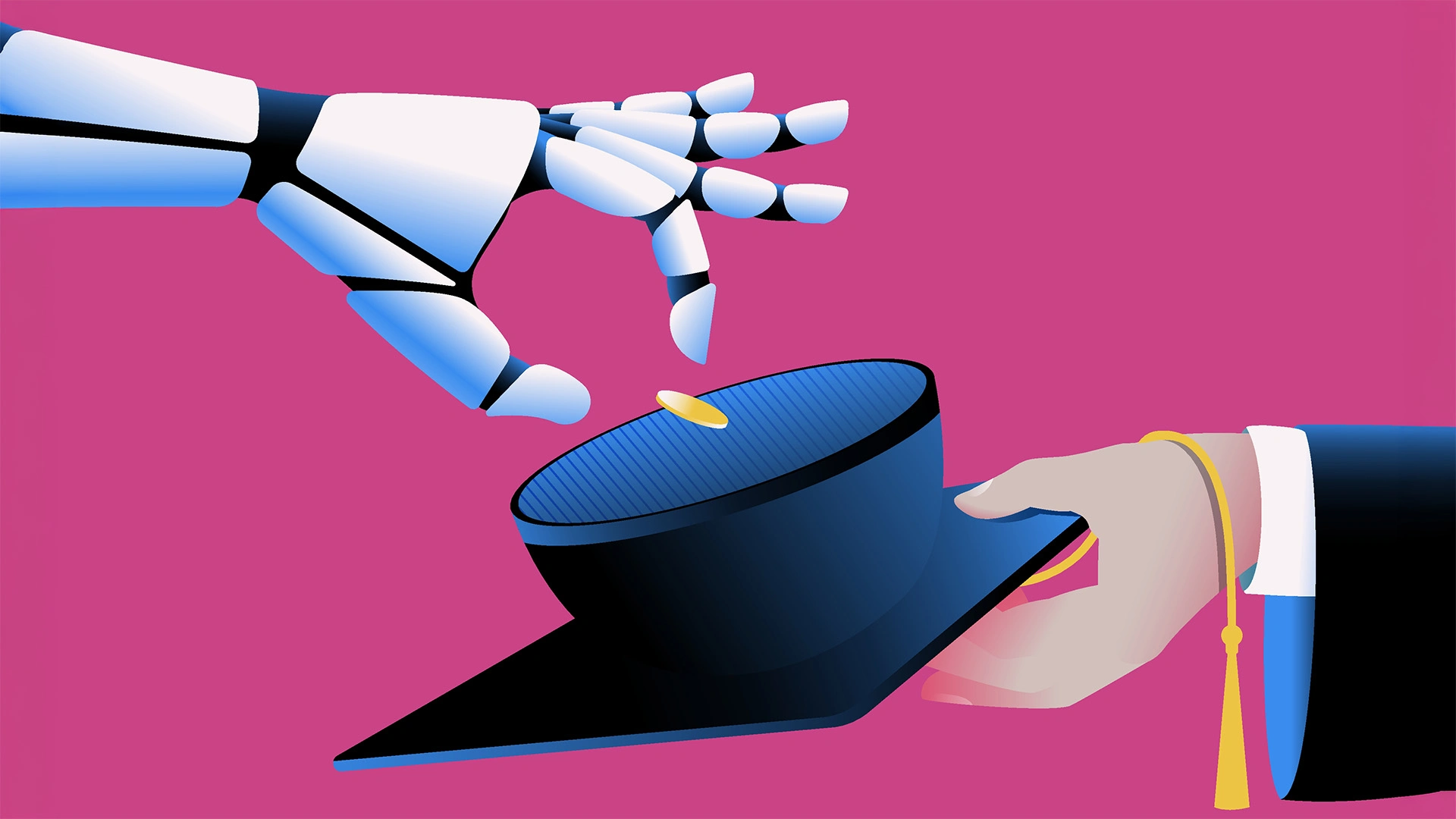
Graduate Unemployment Is Rising — But AI Is Not the Culprit
Recent university graduates in the United States are facing their worst employment conditions since 2020 — but the technology most frequently blamed for their predicament is not the primary cause, according to labour market data that points to a more structural explanation.
The Numbers Behind the Headlines
The Federal Reserve Bank of New York recorded recent-graduate unemployment at 5.7 percent in Q4 2025, with underemployment reaching 42.5 percent — the highest figure in five years. BlackRock CEO Larry Fink, speaking at a March summit, warned that this year’s cohort could face the highest jobless rate in years, attributing the trend to artificial intelligence.
The data, however, does not support that narrative.
A Hiring Freeze, Not a Robot Uprising
A breakdown by Goldman Sachs Research reveals that the industries most likely to absorb new graduates — finance, professional services, and information technology — averaged a net loss of 9,000 jobs per month between 2023 and 2025. Before the pandemic, those same sectors were adding 44,000 jobs per month.
That is not displacement by automation. That is a prolonged, deliberate contraction in white-collar hiring by large employers still recalibrating after pandemic-era overhiring.
Where AI Is Strongest, Jobs Are Growing
If artificial intelligence were eliminating graduate-level roles at scale, the most visible damage would appear in software engineering — the field most directly exposed to AI-assisted coding tools. The opposite is occurring.
Job tracker TrueUp recorded software engineer listings up 30 percent in 2026, with more than 67,000 open roles — the highest demand in over three years. The sector where AI is genuinely most capable is also the sector hiring most aggressively.
Misdiagnosis Has a Cost
Analysts describe the current graduate job market as bifurcated: certain fields are expanding rapidly while others remain effectively frozen. The underlying causes are a post-pandemic correction in white-collar hiring, heightened risk aversion among large employers, and a structural mismatch between where graduates are concentrating their search and where vacancies actually exist.
The distinction matters because misdiagnosis produces the wrong remedies. Policies or individual strategies built around AI displacement will not address a cyclical contraction in traditional graduate employers — and may delay the structural adjustments that could actually move the needle.
The problem, analysts suggest, is more fixable than a technological revolution. But only if the correct cause is identified first.