

India’s Energy Pivot: Amitabh Kant Calls for Triple Clean Power Target and End to Fossil Fuel Dependence

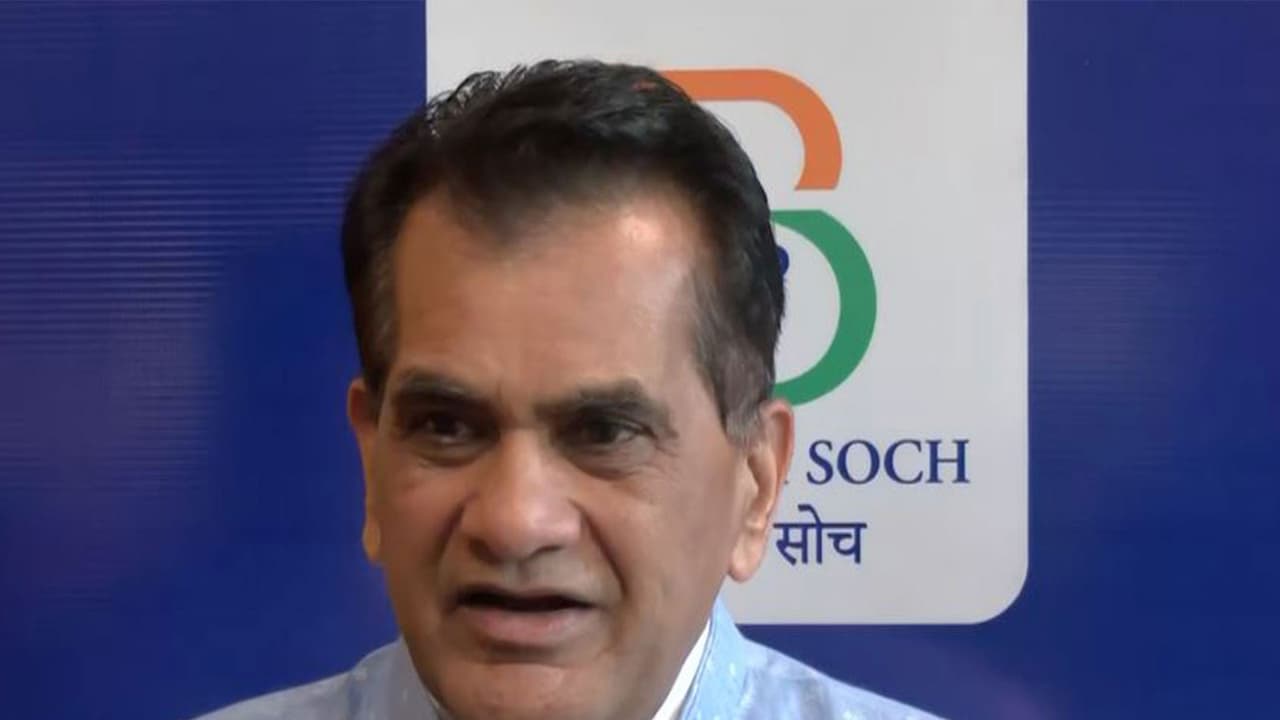
India Must Become an ‘Electric State,’ Says Former NITI Aayog CEO
Amitabh Kant, G20 Sherpa and former CEO of NITI Aayog, has called on India to abandon its dependence on imported fossil fuels and reorient its energy economy around electricity — tripling its clean energy target to 1,500 GW and accelerating a phased exit from combustion-engine vehicles by 2032. Speaking at a CII plenary session on Monday, Kant framed energy transition not merely as a climate obligation but as a geopolitical necessity, citing ongoing instability in West Asia and disruptions at the Strait of Hormuz.
The 1,500 GW Ambition
India’s current renewable energy target stands at 500 GW. Kant argued that figure falls well short of what national energy sovereignty demands, and pressed for a tripling of that goal in the coming years.
He acknowledged India’s considerable natural advantage — describing the country as “climatically blessed” with abundant solar and wind potential — but warned that generation capacity alone is insufficient. Stranded power, caused by inadequate transmission and evacuation infrastructure, remains a structural drag on the sector’s effectiveness.
A Multi-Pronged Roadmap
Kant outlined several priority areas for building what he termed India’s future energy ecosystem:
The phased exit from internal combustion engine vehicles by 2032 was presented as both an energy security measure and an economic opportunity, not a concession to external climate pressure.
Transmission: The Bottleneck Nobody Wants to Address
Anil Sardana, Managing Director of Adani Energy Solutions and Adani Power, moderated the session and pointed to transmission as a “critical bottleneck” — a structural contradiction in a country that is already power-surplus on paper. His priorities aligned closely with Kant’s: import substitution, electrification of major consumption sectors, and strengthening the critical minerals ecosystem.
Sardana also endorsed Prime Minister Narendra Modi’s target of achieving 100 GW of nuclear capacity by 2047, framing it as a collective national goal rather than a government directive.
International Lessons and Strategic Partnerships
Former Ambassador to the UAE Sanjay Sudhir offered a comparative lens, noting that hydrocarbons now account for only 28% of UAE’s GDP — a diversification achieved within a single generation. The UAE, he noted, is the only Gulf state currently generating nuclear power and plans to double that capacity by 2030.
Sudhir urged India to expand its Strategic Petroleum Reserves, including LPG, while scaling renewables — and flagged a trilateral India-UAE-US collaboration on SMRs as a promising near-term avenue.
Industry Consensus: Storage and Grid Readiness Are Non-Negotiable
Sumant Sinha, Founder and CEO of ReNew, said grid management has failed to keep pace with renewable capacity addition, constraining the system’s ability to absorb solar and wind power at scale. He called for large-scale battery deployment and Firm and Dispatchable Renewable Energy (FDRE) projects to ensure round-the-clock supply stability.
Vineet Mittal, Founder and Chairman of Avaada Group, described green energy as “inflation-protected” — a hedge against the price volatility that imported fossil fuels impose on the broader economy. He advocated green methanol production through electrolysis and carbon capture as a practical near-term strategy to reduce transportation sector import dependence.
The session’s collective message was unambiguous: energy independence has moved from aspiration to strategic imperative, and the infrastructure gap — in grids, storage, and critical minerals — is now the primary obstacle between India’s renewable ambitions and their real-world delivery.