

The Slow Death of ‘Win-Win’: How a Cold War Footnote Became a Casualty of Zero-Sum Politics

In a footnote buried on page 109 of a 1962 academic treatise on nuclear deterrence, a political scientist named J. David Singer used a phrase that would travel far beyond its origins. Singer’s book, Deterrence, Arms Control, And Disarmament: Toward A Synthesis In National Security Policy, was a bleak work — its author openly declared himself afraid and pessimistic, parsing what he called the “insane and degrading” calculus of mutually assured destruction. He deployed “win-win” in coldly mechanical terms, as one of four possible outcomes in the classic prisoners’ dilemma thought experiment, and almost certainly did not intend it to outlast the decade, let alone define the rhetorical furniture of an entire geopolitical era.
Yet outlast it did. Through the détente years and the slow unravelling of the Soviet order, the phrase accumulated meaning it was never designed to carry. It became, in effect, a verbal shorthand for a particular theory of international relations: that rational actors, given sufficient interdependence, would consistently choose mutual benefit over narrow advantage. By the time China began negotiating its entry into the World Trade Organization in 1999, retired diplomats recall Beijing’s officials struggling to even conceptualise the term — not merely translate it. The concept of structurally embedded mutual gain was, at that moment, genuinely foreign to the Communist Party’s strategic vocabulary.
Within half a decade, that had reversed entirely. By the mid-2000s, “win-win” had become ubiquitous in Chinese Communist Party messaging, deployed with the same fluency and frequency as it appeared in Western trade communiqués, joint venture announcements, and summit readouts. Its induction into the Oxford English Dictionary in 2006 — alongside nanobot, anoraky, and yada yada — felt, at the time, like an entirely appropriate cultural moment. The global order appeared structurally disposed toward win-win thinking: pre-financial crisis, pre-social media fragmentation, pre-Trump, pre-the AI disruption that would later scramble labour markets and concentrate power in ways Singer’s prisoners’ dilemma never anticipated.
The phrase’s durability since then is, in one reading, a testament to human optimism. Middle powers with the most to lose from the collapse of the postwar liberal order — Japan being the clearest example — have continued drinking from what one analyst aptly calls the win-win punchbowl, even as the liquid inside has grown increasingly difficult to swallow. When Washington extracted a US$550 billion investment pledge from Tokyo as a mechanism to “buy down” US tariffs, and Tokyo’s government accepted that framing as a win-win outcome, the suspension of disbelief required had become structurally significant. The asymmetry was visible; the language papered over it.
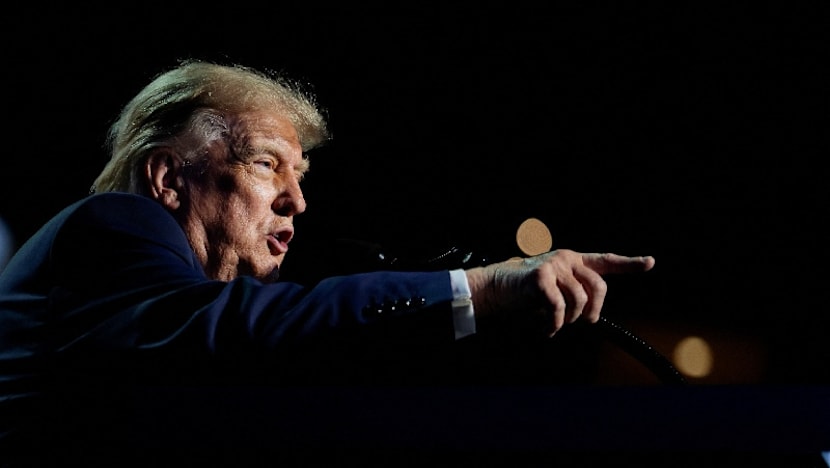
The breaking point, or something close to it, arrived in recent weeks. Jared Kushner, speaking on US negotiations with Russia over Ukraine, described the American approach as seeking a “win-win outcome.” The statement landed in a context that made it almost analytically incoherent. There is no credible evidence that Vladimir Putin is operating within a framework where mutual gain is the objective. More fundamentally, Kushner was representing a president who has consistently described international relations in terms of winners, losers, unfairness, and imbalance — a worldview that is definitionally incompatible with the prisoners’ dilemma logic on which win-win depends. That logic requires both parties to believe the other will act rationally. Trump’s deliberate strategic unpredictability forecloses precisely that assumption.
The Danger of Abandoning the Framework Entirely
The concept has always carried structural weaknesses that its cheerful ubiquity tended to obscure. Its absolutism made it easy to present arrangements that were highly favourable to one party and merely adequate for the other as though they were genuinely balanced. In the wrong institutional hands, win-win language has historically concealed coercion, papered over power asymmetries, and dressed up failure as progress. The single-superpower era in which the term flourished was, in retrospect, an unusually permissive environment for that kind of rhetorical convenience. China’s rise as a peer competitor has permanently altered the structural conditions that made such language plausible on a global scale.
What has changed more recently is the degree to which zero-sum logic has migrated from the margins of the system to its commanding heights. The concentrated financial scale and market reach of the top tier of the technology industry — built on network effects, data monopolies, and regulatory capture — have established monopolism as the more successful strategic model, not win-win cooperation. Platforms do not grow by seeking balanced outcomes with competitors; they grow by eliminating them. That logic, once confined to market structure, is now bleeding into geopolitics, trade policy, and the domestic politics of major democracies simultaneously.
The trap, as Singer’s original framework makes clear, is not that win-win has become temporarily unattainable — it is that abandoning the aspiration entirely will prolong the conditions that make it so. Treating zero-sum as the permanent, natural state of affairs, while continuing to invoke win-win only as cynical cover for coercive arrangements, is precisely the dynamic that entrenches lose-lose outcomes. Singer wrote his book in the shadow of the Cuban missile crisis, afraid and pessimistic, staring at a world where two nuclear powers were calculating the mathematics of mutual destruction. His warning was not that win-win was naive — it was that the alternative, lose-lose, was infinitely worse. Sixty years on, that arithmetic has not changed.