
Singapore’s Social Recession Risk: What the Data on Friendship, Isolation and Community Decline Actually Tells Us

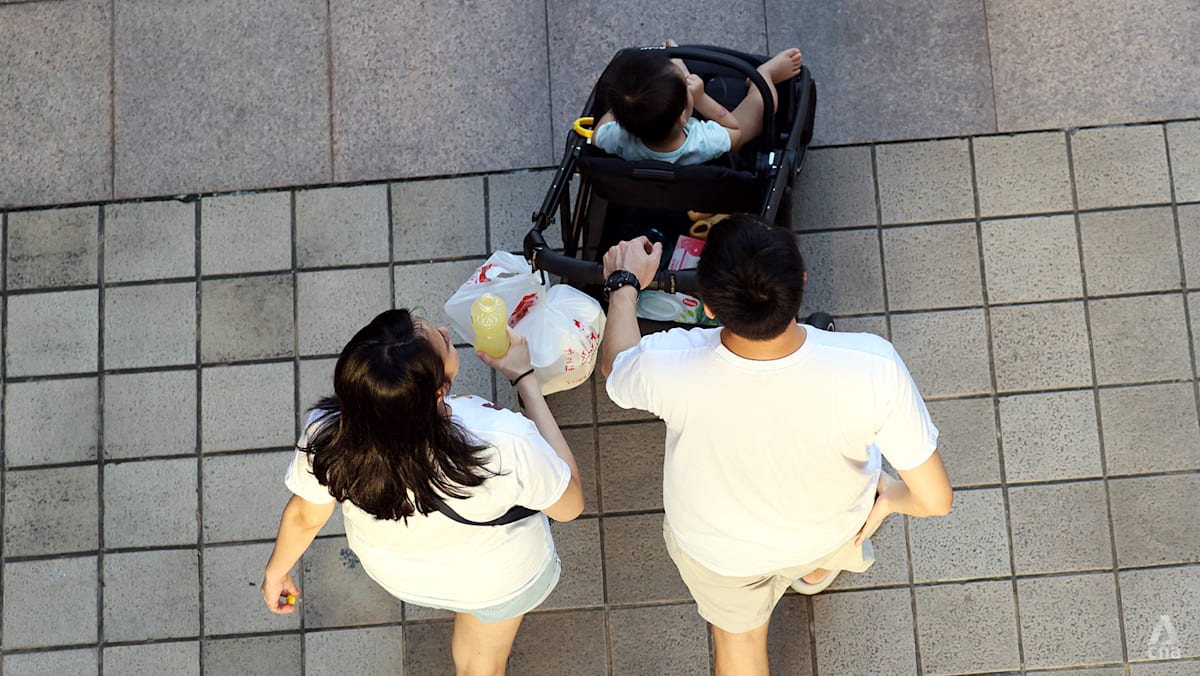
Singapore’s latest General Household Survey, released on 30 June, confirmed that married couples living with children now constitute less than half of all households in the country — a first. Alongside this, more young residents are remaining single and family sizes continue to shrink. These demographic shifts are typically filtered through the lenses of fertility policy and population ageing, but researchers at the Institute of Policy Studies argue they point toward a different kind of systemic risk: not a contraction in GDP, but a quiet erosion of the social bonds that keep communities functional, resilient and humane. Nicholas Thomas, Wong Kang Li and Wilson Goh frame this as a potential social recession — a term denoting the decline of communal ties, interpersonal trust and civic participation that sustains collective wellbeing.
The data underpinning this concern is neither anecdotal nor marginal. Multiple longitudinal surveys reveal a consistent pattern of thinning social networks, retreating civic participation and deepening loneliness, particularly among the young. The trend predates COVID-19, though the pandemic appears to have accelerated rather than created it, and post-pandemic recovery has been incomplete at best.
The international precedents are instructive and sobering. Since 1990, the share of Americans with no close friends has quadrupled, and over roughly the same period, partisan hostility in the United States grew faster than in any of the 11 other developed democracies studied — a correlation that researchers have not fully untangled but that suggests social atomisation and political polarisation reinforce each other. Britain and Japan, confronting their own data, appointed dedicated ministers for loneliness. Singapore has not reached those outcomes, but the early indicators — thinning friendship networks, withdrawal from civic groups, social ties sorting along class and educational lines — are precisely the ones those societies recorded one to two decades earlier.
The IPS researchers propose three broad categories of intervention, none of which require state monopoly over the process. Time-banking schemes, already operational in countries like New Zealand, allow residents to exchange skills and services using hours rather than money, converting goodwill into regular, cross-generational contact. Rotating citizens’ assemblies — small bodies of roughly 20 residents drawn randomly across age, race, housing type and income, convened for three months around specific local problems with genuine decision-making authority — could supplement standing residents’ committees and force the kind of cross-class, cross-background interaction that voluntary civic structures rarely achieve. Low-stakes neighbourhood spaces, from guided community tours through void decks and hawker centres to informal interest groups, provide the repeated, non-transactional contact that social capital research consistently identifies as foundational to trust across difference. The Kampung Kaki initiative, founded by residents during the pandemic to match volunteers with isolated seniors nearby, demonstrates that this matching logic already works at the ground level.
Prime Minister Lawrence Wong’s call for a “we first” society places social cohesion explicitly on the national agenda, and the Singapore Government Partnerships Office — established following the Forward Singapore exercise — signals institutional recognition of the problem. Whether these structures translate into the kind of sustained, distributed, everyday relational investment that a social recession demands remains the operative question. Singapore has built formidable stocks of economic, physical and human capital over six decades. The evidence now suggests that relational capital — the trust, the habits of cooperation, the willingness to engage with people unlike oneself — is the dimension most at risk, and the one least amenable to top-down engineering alone.