

Singapore Crosses Into ‘Super-Aged’ Territory as Births Fall and Population Greys

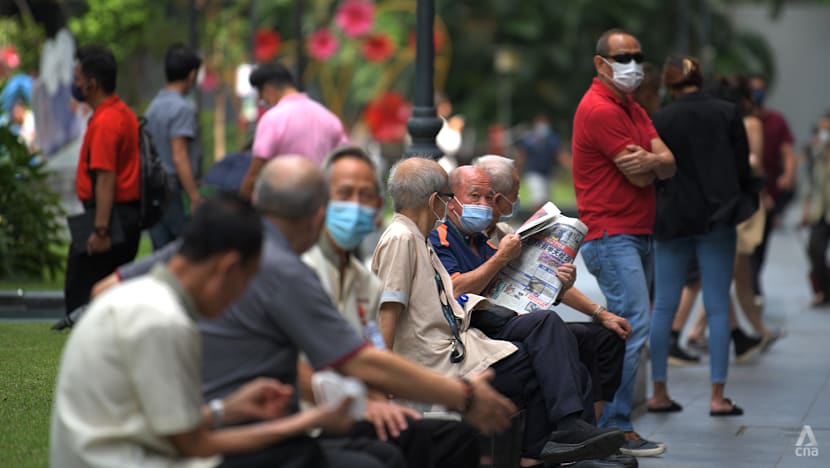
At a void deck in Toa Payoh, a group of elderly men gather for their morning card game before the heat sets in. The youngest among them is 68. It is an ordinary scene, repeated across the island — and now, it is also a demographic milestone.
Singapore has officially crossed the threshold into what demographers classify as a “super-aged society”, a designation that arrives when at least 21 per cent of a country’s population is aged 65 and above. As of June 2026, that figure stands at 21.4 per cent of Singapore citizens — a proportion that was 13.7 per cent just a decade ago. The shift, documented in this year’s Population in Brief report released by the National Population and Talent Division (NPTD) of the Prime Minister’s Office, is not a surprise. But its arrival is nonetheless a structural inflection point for an economy and a governance model that have long organised themselves around the assumption of a productive, working-age majority.
A Decade of Rapid Greying
The pace of ageing has accelerated. Between 2016 and 2026, the share of citizens aged 65 and above rose by nearly eight percentage points — a rate faster than the preceding decade. The cohort aged 80 and above grew even more sharply: from 95,000 in 2016 to 152,000 in 2026, a 60 per cent increase over ten years. These are not merely statistical abstractions. They represent a compression of dependency at the upper end of the age distribution, placing mounting pressure on healthcare infrastructure, eldercare financing, and the CPF system’s long-term actuarial assumptions.
The old-age support ratio — the number of working-age citizens (aged 20 to 64) for every citizen aged 65 and above — has fallen from 4.7 in 2016 to 2.8 in 2026. By 2035, the NPTD projects it will decline further to 2.2. That trajectory leaves little margin for complacency. The median age of a Singaporean citizen now sits at 44.1 years, up from 43.7 just twelve months prior.
The report does offer one moderating note: the proportion of citizens aged 20 to 64 is expected to remain broadly stable between 2030 and 2035, as smaller cohorts entering the 65-and-above band are offset by younger cohorts moving into working age — aided, the report is explicit in saying, by managed immigration inflows. That qualifier matters. Singapore’s demographic strategy has never been purely biological; it has always been partially engineered.
Immigration as Structural Buffer
Singapore’s total population reached 6.21 million in June 2026, a 1.6 per cent increase from the previous year. The growth, however, was not evenly distributed across population categories. The citizen population expanded by a modest 0.7 per cent, from 3.66 million to 3.68 million, while the permanent resident population held relatively stable at 0.55 million. The non-resident population, by contrast, grew by 3.7 per cent to reach 1.98 million — driven primarily by an increase in work permit holders.
The construction sector accounts for much of that non-resident growth. The report specifically names the development of Changi Airport’s Terminal 5, the expansion of Marina Bay Sands, a ramp-up in public housing supply, and transport infrastructure projects as drivers of additional work permit demand. These are not discretionary projects; they represent state-directed capital expenditure that carries its own labour logic, one that the domestic workforce — ageing, better-educated, and increasingly credentialled — is neither sized nor inclined to fill at the requisite scale.
In 2025, Singapore granted citizenship to 25,094 individuals and permanent residency to 35,352. From 2021 to 2025, annual averages of 22,400 citizenships and 34,600 permanent residencies were conferred — higher than the preceding five-year averages of 20,600 and 31,200 respectively. The NPTD frames this explicitly as a demographic corrective: “Immigration helps to moderate the impact of ageing and low birth rates on our citizen population, and keeps the citizen population from shrinking over the long term.” The language is measured, but the logic is stark. Without managed immigration, the citizen population contracts.
Births, Marriages, and the Fertility Floor
The fertility picture offers little reassurance. Citizen births fell 10.8 per cent in 2025, from 29,237 in 2024 to 26,071 — a single-year drop of more than three thousand births. The resident total fertility rate declined to 0.87, well below the replacement rate of 2.1 and among the lowest recorded for Singapore. The average number of births per year from 2021 to 2025 was lower than from 2016 to 2020, confirming that the downward trend is not a pandemic-era anomaly but a structural direction of travel.
Marriages, too, declined. Singapore recorded 21,671 citizen marriages in 2025, down 5.6 per cent from 22,955 in 2024. The median age at first marriage has shifted upward: grooms now marry at a median age of 30.8, brides at 29.1, compared to 30.1 and 27.9 respectively a decade ago. The proportion of singles has risen across most age groups between 25 and 34 — a cohort that represents the near-term pipeline for both marriage formation and first births.
Of the marriages that did occur, transnational unions accounted for 37 per cent and inter-ethnic marriages for 19 per cent — proportions that have remained largely stable since 2015, with a predictable dip during the COVID-19 border closure years of 2020 to 2022. One counterintuitive data point: the number of children granted citizenship by descent — born overseas to at least one Singaporean parent — rose from 1,409 in 2024 to 1,646 in 2025, suggesting that some portion of Singapore’s diaspora continues to maintain formal civic ties even as they raise families abroad.
The Structural Stakes
The designation of “super-aged” is, in one sense, a label — a threshold crossed, a box ticked in the taxonomy of demographic transition. But behind the label lies a set of institutional pressures that Singapore’s policy architecture will need to absorb with increasing urgency. The old-age support ratio falling to 2.2 by 2035 means that each working-age citizen will bear a heavier share of the fiscal and caregiving load. A fertility rate of 0.87 means that no plausible pro-natalist intervention — however generously funded — can close the gap within a policy cycle. And a median age of 44.1, rising, means that the workforce itself is greying even as it works.
Back at the void deck in Toa Payoh, the card game winds down as the morning heat thickens. The men pack up unhurriedly, in no particular rush to be anywhere. For them, the numbers in a government report are distant abstractions. But the policy decisions those numbers will compel — on retirement adequacy, on healthcare financing, on who gets to call Singapore home — will shape the texture of their remaining years in ways both visible and quiet. Singapore has always governed its demographics with deliberate intent. The super-aged designation does not change that intent. It sharpens the urgency with which it must be exercised.



