

Singapore’s Semiconductor Industry Pledges Over S$500 Million in R&D as the Global Chip Race Enters a New Phase

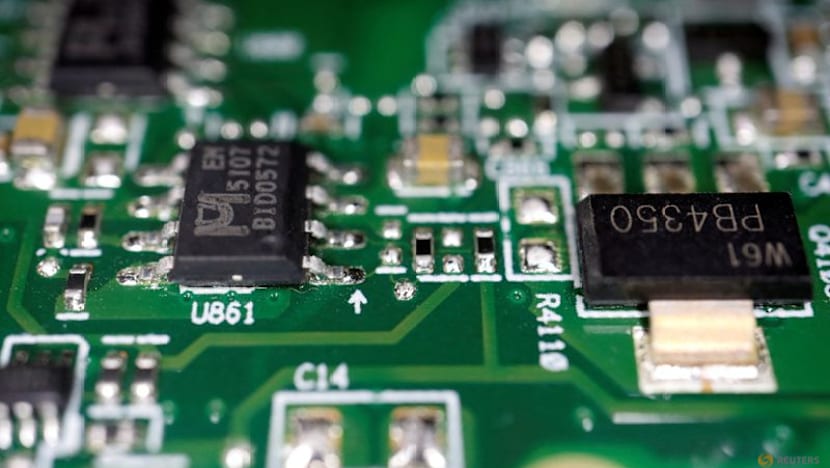
Singapore’s semiconductor sector has committed more than S$500 million — approximately US$390 million — to research and development over the five-year period beginning 2026, surpassing the S$400 million invested in equivalent efforts between 2020 and 2025. The figures come from the Agency for Science, Technology and Research, known as A*STAR, and they signal not merely an incremental budget increase but a deliberate strategic escalation at a moment when the global architecture of chip production is being renegotiated. Singapore already manufactures roughly one in every ten chips produced worldwide. The question now is whether that position, built on decades of manufacturing investment, can survive the transition to a fundamentally different technological era.
For most of the industry’s modern history, performance gains came from a single, reliable mechanism: packing more transistors onto a chip. This trajectory, broadly captured by Moore’s Law and first observed in the 1960s, drove computing forward with remarkable consistency. When the trend was identified, transistors were measured in micrometres. Today, some chip features are just dozens of atoms thick — a scale at which quantum effects become non-trivial and engineering constraints multiply rapidly. The path forward is no longer a straight line, and the capital required to walk it has grown prohibitive even for large incumbents.
Singapore’s response has been to invest, over more than a decade, in technologies that offer alternative routes to performance improvement. Advanced packaging, heterogeneous integration, and chiplets — approaches that allow multiple components to be assembled in close physical proximity, reducing the distance data must travel and cutting energy consumption — are now central to the island’s R&D agenda. Ravi Krishnaswamy, managing director for Asia-Pacific at Frost and Sullivan, put it plainly: “I think the next battle will be fought on advanced packaging, heterogeneous integration, chiplets. These are areas where I think more economic value-add opportunities will emerge.” Beyond packaging, Singapore’s research pipeline also extends into photonics, which routes data using light rather than electrical signals, and into chip architectures designed to manage the extreme power demands of AI-driven data centres.
A*STAR’s institutional role in this effort is substantial. Professor Yeo Yee Chia, the agency’s deputy chief executive for innovation and enterprise, describes Singapore as having “one of the most well organised and coordinated ecosystems” globally — a claim that, while self-interested, is not without structural basis. The agency is investing in next-generation tooling and shared infrastructure that companies can access without bearing the full capital cost themselves. It is also reporting an increasing pipeline of overseas firms, without an existing Singapore presence, arriving to collaborate with local partners. The ecosystem, in other words, is attracting external validation beyond domestic cheerleading.
The practical significance of this infrastructure access becomes clearest at the level of small and medium enterprises, where the economics of semiconductor innovation are most punishing. NexGen Wafer Systems, a semiconductor equipment manufacturer, illustrates the constraint directly. Its CEO Cheung Ting Kwan acknowledged that building proprietary clean rooms and specialised facilities independently would be “quite prohibitive, expensive for a small- and medium-sized company like us.” The shared infrastructure model effectively socialises a portion of the capital burden, allowing firms to direct resources toward differentiation rather than baseline facility costs. Professor Yeo framed this as intentional policy: “We want to allow such companies to have an unfair advantage. By allowing them to leverage our investment, it lowers the barrier to their R&D and to their ability to innovate.”
MetaOptics, a Singapore metalens firm that has since gone public and expanded internationally, offers a concrete example of how this support translates into company-building. The firm develops flat optical components applicable across cameras, sensors, and high-speed computing interconnects — a technically demanding niche that requires sustained R&D investment before commercial returns materialise. Its CEO Aloysius Chua was candid about early-stage fundraising: “Raising money remains difficult for young technology companies, regardless of where they are based.” A*STAR’s backing, alongside support from local SMEs, provided the runway that private capital alone might not have offered.
Yet infrastructure and talent, however well-organised, address only part of the structural challenge. The harder problem — and the one that Singapore’s semiconductor ecosystem has not fully resolved — is commercialisation. Advanced Micro Foundry, a silicon photonics company acquired by GlobalFoundries in 2024, encountered this directly. Co-founder Patrick Lo, now a senior fellow at GlobalFoundries, described the difficulty of sustaining specialised fabrication capacity without sufficient customer demand: “We like to build the fab infrastructure, but want it to be fully utilised. That full utilisation will be absolutely coming from the application side.” His implicit appeal — for more designers and product developers to emerge within Singapore’s ecosystem — points to a structural gap between technical capability and market pull that public investment alone cannot close. Chua of MetaOptics stated the stakes with equal directness: “If I develop the technology to what it is, and I cannot commercialise it, then I think as a company we’ve failed.” The S$500 million commitment is a meaningful signal. Whether it produces durable commercial outcomes will depend on whether Singapore can close the distance between research excellence and market demand — a gap that no amount of coordinated infrastructure spending fully eliminates on its own.