
Singapore Lifts 2026 Growth Forecast to 4.5%–5.5% as AI Spending and Resilient Finance Drive Stronger-Than-Expected Performance


For much of early 2026, Singapore’s economic managers held a cautious line. The Ministry of Trade and Industry (MTI) had entered the year projecting GDP growth of just 1 per cent to 3 per cent — a range that reflected genuine uncertainty about global demand, Middle East supply disruptions, and the durability of the technology cycle. That caution, it turned out, would not last long.
By February, the picture had already shifted enough to warrant a revision. MTI upgraded its forecast to 2 per cent to 4 per cent, citing improving external conditions. The electronics and precision engineering clusters were drawing strength from a global AI investment wave that was proving more sustained — and more capital-intensive — than most forecasters had anticipated.
The first quarter confirmed the trend. GDP expanded 6.3 per cent year-on-year, with the quarter-on-quarter seasonally adjusted figure coming in at 1.2 per cent. Robust demand for AI-related semiconductors, strong credit growth in the banking sector, and firm wholesale trade activity all contributed. The numbers were strong enough to prompt renewed scrutiny of whether Singapore’s growth was becoming structurally dependent on a single theme.
The second quarter then delivered a result that, while slightly softer than Q1, still exceeded expectations. GDP grew 5.9 per cent year-on-year — marginally above the advance estimate of 5.7 per cent — and expanded a further 1.4 per cent on a quarter-on-quarter seasonally adjusted basis. For the first half of 2026 as a whole, the economy grew 6.1 per cent year-on-year. The aggregate was difficult to dismiss.
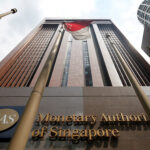
On Tuesday, 11 August, MTI formalised what the data had been signalling for months. The ministry raised its full-year growth forecast to 4.5 per cent to 5.5 per cent — a substantial upward revision that reflected both the stronger-than-expected first half and an improved outlook for the remainder of the year. The drivers were specific and traceable.
Manufacturing led Q2 growth, powered by the electronics and precision engineering clusters. Wholesale trade, particularly the machinery, equipment and supplies segment, benefited from the same AI-linked demand. Finance and insurance expanded on the back of strong credit growth and fee-generating activity in the banking segment. These are not peripheral sectors — together they form the productive core of Singapore’s open economy.
Not every sector shared in the momentum. The food and beverage services industry contracted, squeezed by a sustained rise in outbound travel among locals and a decline in visitor arrivals. The chemicals cluster within manufacturing continued to pull back, as disruptions to crude oil and feedstock supplies from the Middle East constrained production in petroleum and petrochemicals. Elevated fuel costs weighed on water and air transport. The accommodation sector remained subdued, partly because higher travel costs suppressed visitor volumes, though luxury segment resilience and a strong second-half events calendar offered partial offsets.
MTI’s assessment of the external environment was notably more measured than a simple growth upgrade might suggest. The global AI investment boom has exceeded earlier projections, providing tailwinds across the technology value chain — Taiwan and South Korea both received upgraded growth forecasts on that basis. But the ministry was careful to flag the risks still in play. US tariffs continue to weigh on affected trading partners. The Eurozone faces the prospect of further rate hikes as elevated energy prices sustain inflationary pressure. China’s second-half growth is expected to soften as export momentum eases and domestic consumption remains subdued. The Middle East conflict, while less economically damaging than initially feared, has not resolved — and continuing tensions are expected to keep global energy prices elevated through the second half of the year, feeding into inflation and constraining activity.
Alongside the quarterly GDP release, MTI published a separate study on AI adoption as part of the Economic Survey of Singapore. The findings were instructive. Using job posting data from the government portal MyCareersFuture spanning 2018 to 2024, the study found that initial AI adoption correlates with increases in both revenue and total employment, and that these gains compound as firms deepen their AI capabilities. Critically, the study found that AI adoption is not a discrete event — it tends to build on prior investments in foundational digital infrastructure. Larger firms and those in data-intensive sectors are significantly more likely to adopt AI.
At a media briefing on Tuesday, MTI’s permanent secretary Beh Swan Gin pushed back on the characterisation that Singapore’s growth had become narrowly AI-dependent. “I wouldn’t characterise our growth as being quite narrow and only dependent on AI, although it is a major contributor to the growth, but other sectors are also benefitting from that,” he told reporters. He pointed to finance, infocomms and construction as sectors demonstrating independent resilience. On the recent pullback in AI-related share prices, Dr Beh drew a deliberate distinction between equity market sentiment and real-economy production — noting that actual output in AI-linked industries had continued to accelerate regardless of stock price movements.
The distinction matters. Singapore’s economic institutions have consistently resisted conflating financial market signals with productive capacity, and Dr Beh’s framing sits squarely within that tradition. Whether the AI investment cycle sustains its current intensity through 2027 remains an open question — one that MTI’s own study acknowledges, noting that the data does not yet capture the effects of more recent advances such as agentic AI. For now, the numbers point upward. The ministry’s revised forecast range of 4.5 per cent to 5.5 per cent reflects genuine outperformance, grounded in identifiable sectoral drivers, tempered by an honest accounting of the risks that remain.