
Singapore’s Central Region Air Quality Slips Back Into Unhealthy Range as Sumatran Haze Persists

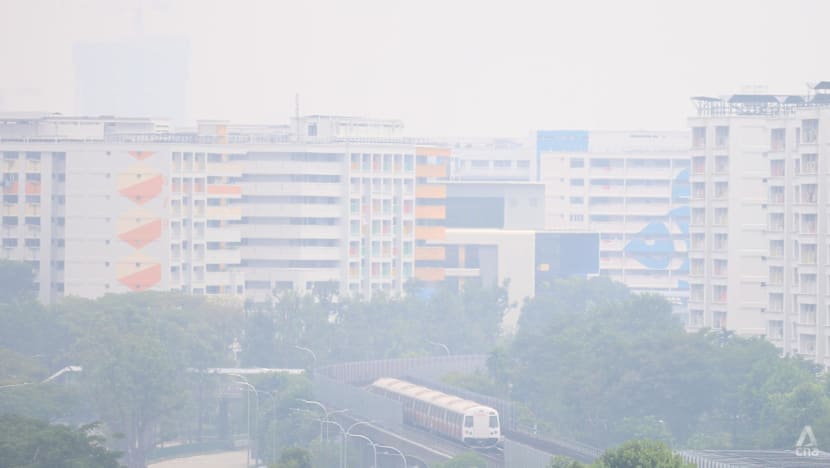
The air turned bad again over central Singapore on Thursday evening — and this time, it had taken less than 24 hours to deteriorate.
The episode that prompted renewed concern began on 4 September, when the 24-hour Pollutant Standards Index for central Singapore crossed into the unhealthy band for the first time since 2023. That crossing — a PSI reading above 101 — was significant enough that the National Environment Agency (NEA) began issuing daily haze advisories from that evening onward, signalling that authorities regarded the situation as more than a passing fluctuation.
Over the two weeks that followed, PSI readings dipped in and out of the unhealthy range across the island. The pattern intensified by Tuesday, 15 September, when all five of Singapore’s regions simultaneously recorded unhealthy air quality levels — the first time that had occurred since September 2019. The milestone underscored how sustained and geographically broad the haze event had become, rather than a localised or transient spike.
By Wednesday, central Singapore’s readings had briefly retreated to the moderate range, offering a short respite. That relief did not hold. On Thursday evening, the 24-hour PSI in the central region climbed back to 102 at 9pm, crossing once more into the unhealthy band. By 11pm, it had edged up further to 103. The other four regions — north, south, east and west — remained in the moderate range through the night.
In its Thursday haze advisory, NEA identified the atmospheric mechanics driving the deterioration. Prevailing winds blowing from the southeast to southwest were carrying smoke haze northward from southern and central Sumatra toward Singapore. Satellite imagery also showed smoke plumes over southwestern Kalimantan. Dry conditions across southern Sumatra and southern Kalimantan — the primary fire-prone zones during the region’s dry season — were expected to persist, keeping the risk of further haze incursions elevated as long as the wind pattern held.
For context, Singapore’s PSI scale places readings between 101 and 200 in the unhealthy band, those between 201 and 300 in the very unhealthy category, and anything above 300 in the hazardous range. Thursday’s reading of 103, while technically at the lower end of unhealthy, carries practical consequences — particularly for the elderly, children and those with respiratory conditions, for whom NEA advises reduced outdoor activity. At present, the broader trajectory depends less on Singapore’s own regulatory environment than on fire management practices and rainfall patterns across Indonesian Sumatra and Kalimantan — variables that remain, for now, outside the city-state’s direct control.