

Singapore’s Air Quality Slips Into Unhealthy Range Across Multiple Regions Amid Persistent Regional Haze

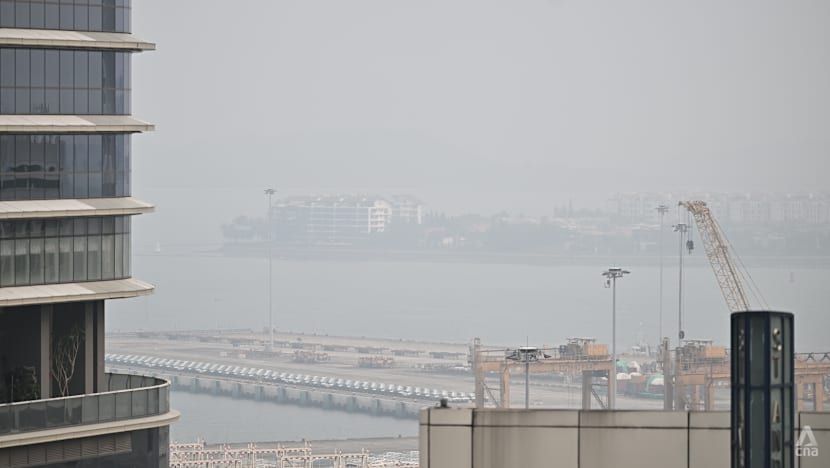
Unhealthy Readings Spread Across Three Regions
Air quality across parts of Singapore deteriorated into the unhealthy range on Sunday, 27 September, with the central, eastern, and western regions all recording elevated Pollutant Standards Index (PSI) readings at various points during the day. The central region was the first to breach the threshold, crossing into the unhealthy band on Saturday evening, followed by the eastern region at midnight. By 6am on Sunday, the central region had recorded a 24-hour PSI of 127, while the eastern region logged 114 — both comfortably within the unhealthy bracket of 101 to 200.
The western region also crossed the unhealthy threshold overnight, recording a PSI of 105 at 6am before retreating to a moderate reading of 100 by 4pm. The northern and southern regions remained in the moderate range throughout the day, with the north registering 89 and the south 94 in the morning, shifting only marginally to 87 and 95 respectively by the afternoon. These fluctuations are consistent with a broader pattern: PSI readings have dipped in and out of the unhealthy range repeatedly over recent weeks, signalling a haze situation that has yet to stabilise.
Regional Conditions Sustaining the Haze
Hotspots Across Kalimantan and Sumatra
The National Environment Agency (NEA) attributed the deteriorating air quality to persistent dry conditions across parts of southern ASEAN — excluding peninsular Malaysia — as well as the northern and central portions of Borneo and Sumatra. Isolated to scattered hotspots were detected in Kalimantan and the southern parts of Sumatra, with fewer hotspots reported elsewhere in the southern ASEAN region. The full scale of the fire and smoke situation, however, could not be precisely determined due to cloud cover obscuring satellite observation of the affected areas.
Air quality monitoring stations in Kalimantan and southern Sumatra recorded readings ranging from unhealthy to hazardous — underscoring the severity of conditions at the source. NEA warned that the situation is expected to remain elevated in fire-prone regions experiencing prolonged dry weather, with a continued risk of severe transboundary haze affecting Singapore and neighbouring countries. The prevailing winds, forecast to blow from the southeast or southwest, carry that smoke directly toward the island.
Wind Patterns and the Transboundary Dynamic
Singapore’s vulnerability to transboundary haze is structurally embedded in its geography and the seasonal weather patterns of the region. When dry conditions persist over Sumatra and Kalimantan — as they have in recent weeks — and prevailing winds align from the southeast or southwest, smoke from peatland and agricultural fires migrates efficiently across the Strait of Malacca and into Singapore’s atmosphere. NEA noted that while some showers were forecast over Singapore and parts of the surrounding region, dry conditions were expected to continue over southern Sumatra and the southern and eastern parts of Kalimantan, sustaining the risk.
Understanding the PSI Framework
Singapore’s 24-hour PSI is the primary instrument through which the NEA communicates daily air quality conditions and issues health advisories. It is calculated using six pollutants — PM2.5, PM10, ozone, sulphur dioxide, nitrogen dioxide, and carbon monoxide — averaged over a rolling 24-hour period. A reading between 101 and 200 is classified as unhealthy, between 201 and 300 as very unhealthy, and anything above 300 as hazardous. The 24-hour average, by its nature, smooths out short-term spikes, which is why the one-hour PM2.5 reading serves as a complementary, more immediate indicator of air quality at any given moment.
PM2.5 — fine particulate matter with a diameter of 2.5 micrometres or less — is the dominant pollutant during haze events and the one most directly linked to adverse health outcomes. Its small size allows it to penetrate deep into the respiratory tract, making it particularly dangerous for vulnerable populations including the elderly, young children, pregnant women, and those with pre-existing cardiac or pulmonary conditions.
Health Advisories and Recommended Precautions
NEA’s daily haze advisory on Saturday forecast the 24-hour PSI to remain in the moderate to low unhealthy range, a projection that proved accurate. When air quality sits in the moderate range, all population groups — including those with chronic conditions — can generally continue normal outdoor activities without restriction. Once readings cross into the unhealthy range, however, the guidance shifts meaningfully: healthy individuals are advised to reduce prolonged or strenuous outdoor physical exertion, while the elderly, pregnant women, and children should minimise such activities. Those with chronic lung or heart disease are advised to avoid outdoor exertion altogether when the PSI is unhealthy.
The advisory framework reflects a calibrated approach to public health communication — one that distinguishes between population groups rather than issuing blanket warnings, and that relies on the 24-hour PSI rather than instantaneous readings to avoid triggering unnecessary alarm from transient spikes. Whether that calibration remains adequate as haze episodes grow more frequent and prolonged is a question that Singapore’s environmental governance will need to continue confronting.



