

The Engineering Complexity Behind the Johor Bahru-Singapore RTS Link’s Delayed Launch

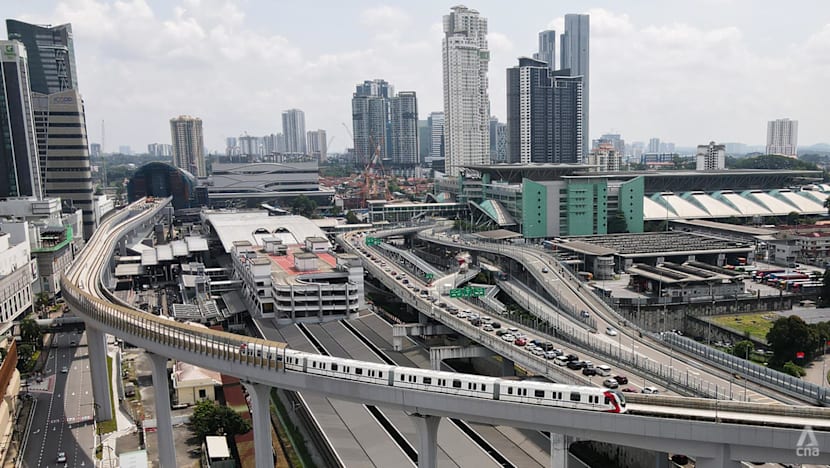
Two stations. Four kilometres. And, apparently, a formidable set of engineering problems that have pushed passenger services on the Johor Bahru-Singapore Rapid Transit System Link to February 2027.
RTS Operations (RTSO) CEO Marzuki Ariffin addressed the project’s technical demands in a Facebook post on Tuesday, outlining the layers of engineering coordination required to make the cross-border rail link safe and reliable. His remarks came four days after Singapore and Malaysian authorities jointly announced on October 2 that the previously targeted end-2026 opening would not be met, with the revised target now set for February 2027 — ahead of Hari Raya Puasa on March 10. Marzuki stopped short of explicitly linking the engineering challenges he described to the delay, but the timing of his post left little ambiguity about the broader context.
The 4km elevated link connecting Woodlands North in Singapore to Bukit Chagar in Johor Bahru carries a deceptively simple profile on paper. In practice, Marzuki identified two structural and environmental variables that demand particular precision. The elevated rail structure reaches a gradient of up to 3 per cent — the maximum permitted for RTS Link operations — meaning that as trains descend from the bridge’s highest point toward ground level, they must simultaneously maintain safe speeds and stop smoothly and accurately at the station platform. Achieving that requires tight coordination between track geometry, braking systems, and signalling infrastructure, none of which can be treated in isolation. Compounding this, wet weather reduces wheel-rail adhesion, directly affecting how trains accelerate and decelerate, which makes comprehensive testing across varied weather conditions not a procedural formality but an operational necessity.
RTSO expects to complete final system tests and trial runs by December 31, 2026. Singapore Transport Minister Jeffrey Siow acknowledged on October 2 that the original plan had been to complete safety certification and licensing before the close of this year, adding plainly that “it was not to be.” Transport analysts have noted that scheduling the launch around a major public holiday period will subject the service’s passenger-handling arrangements to an immediate stress test, with cross-border commuter demand likely to spike from the first days of operation.
The RTS Link is not merely an infrastructure project — it is a binational coordination exercise, requiring engineering teams, regulatory bodies, and operators from both Singapore and Malaysia to align on standards, testing protocols, and certification timelines simultaneously. Marzuki acknowledged this dimension directly, thanking engineers and project teams from both countries for their work. That the project has reached the final testing phase without a more significant structural setback is itself a function of that institutional cooperation, even as the delay signals how demanding the final certification corridor remains.
The February 2027 target is now the fixed public commitment. Whether the engineering timeline holds to it will depend on how cleanly the remaining system integration and trial runs proceed — and on the weather.



