
PAP Elects 39th Central Executive Committee: Jeffrey Siow and Jasmin Lau Nominated but Fall Short

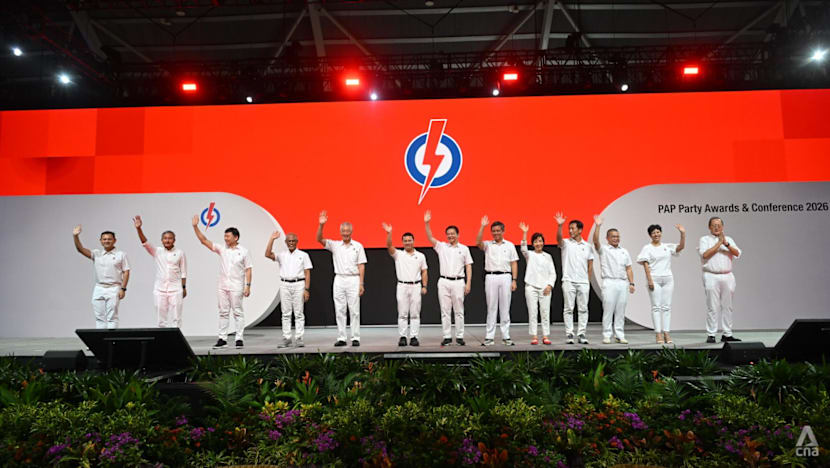
Singapore’s ruling party has renewed its innermost circle of power, and the composition of the 39th Central Executive Committee tells a story worth reading carefully.
At the People’s Action Party’s biennial conference on Sunday, party cadres voted to elect a 12-member CEC from a secret ballot of 19 candidates. Two first-term ministers, Jeffrey Siow and Jasmin Lau, made the nomination shortlist but did not secure enough votes to enter the elected slate. Their presence on the ballot nonetheless signals a deliberate effort by party leadership to test newer faces against the judgment of the cadre base — a constituency that is itself carefully curated and not easily impressed by ministerial titles alone.
Sunday’s vote carried additional institutional weight as the first CEC election conducted under Secretary-General Lawrence Wong since he steered the PAP through May’s General Election as prime minister. The party’s constitution mandates this conference every two years, making the cadre vote both a democratic ritual and a legitimising mechanism for the leadership hierarchy that governs Singapore’s dominant political institution.
The 12 elected members, in no particular order of preference, are: Prime Minister and Minister for Finance Lawrence Wong; Senior Minister Lee Hsien Loong; Minister for Education Desmond Lee; Coordinating Minister for Public Services and Minister for Defence Chan Chun Sing; Minister for Social and Family Development Masagos Zulkifli; Senior Minister and Minister for Home Affairs K Shanmugam; Minister for Sustainability and the Environment Grace Fu; Minister for National Development Chee Hong Tat; Minister for Law Edwin Tong; Minister in the Prime Minister’s Office Indranee Rajah; Coordinating Minister for Social Policies and Minister for Health Ong Ye Kung; and Minister for Foreign Affairs Vivian Balakrishnan.
Two further members entered the committee through co-optation. Minister for Energy, Trade and Industry Tan See Leng and Acting Minister-in-charge of Muslim Affairs Zaqy Mohamad were co-opted as the 13th and 14th highest vote-getters among cadres. The PAP’s constitution permits up to six co-opted members, leaving room for additional appointments to be announced in the coming weeks alongside specific internal roles such as chairman, treasurer and organising secretaries.
The remaining five candidates on the ballot, according to party insiders who spoke to CNA, were Marsiling-Yew Tee GRC MP Alex Yam, Acting Minister for Manpower Jasmin Lau, Minister for Transport Jeffrey Siow, Minister for Digital Development and Information Josephine Teo, and Second Minister for Home Affairs and Foreign Affairs Sim Ann. First-term minister David Neo did not appear on the nominees list at all.
CNA further understands that Wong, Lee Hsien Loong, Desmond Lee, Chan Chun Sing, Masagos, Shanmugam and Grace Fu were identified internally as the core leadership bloc of this committee — a seven-person nucleus that spans generational transitions and institutional portfolios critical to Singapore’s security, economic management and social cohesion architecture.
The absence of Siow and Lau from the elected tier is analytically interesting precisely because their ministerial appointments suggest they carry leadership confidence at the cabinet level. The cadre vote operates on a different logic. It reflects accumulated trust within the party’s activist base, a trust that takes time and visibility to build. Their nomination signals that the leadership is beginning to present them to this audience; their non-election suggests that process is still underway.
At the conference, Wong addressed the room with language that was notably candid about the limits of incumbency advantage. “The strong mandate we received at the last election does not guarantee continued support,” he said, adding that the party must continue to earn trust through delivery, conduct and service. He acknowledged that younger Singaporeans cannot be expected to feel the same bond with the PAP simply on the basis of its historical record, and that the party must engage them on their own terms. The remark is not merely rhetorical. It reflects a structural challenge: a generation of voters whose political memory begins after the founding mythology has already calcified into history.
Wong closed with a note of deliberate optimism pitched against geopolitical uncertainty. “The world around us may be growing darker,” he said. “But together, we will keep our little red dot shining brightly.” The language is familiar PAP register — resilience framed as collective project — but the context in which it is spoken, a period of genuine global economic and security turbulence, gives it less the quality of a slogan and more that of an institutional commitment being restated under pressure.
Timelines for the announcement of co-opted members and internal appointments have varied in recent cycles: ten days in 2024, twenty days in 2022, eleven days in 2020. The weeks ahead will fill in the remaining architecture of a committee that, for now, reflects continuity at the core and a measured, deliberate introduction of newer ministerial faces to the cadre electorate.