

Nasdaq Posts Record Close as Chipmakers Surge and Oil Retreats

AI Optimism Drives Semiconductor Rally
On Monday, the Nasdaq Composite posted its first record closing high since June 2, rising 2.26 per cent on the back of a powerful rally in semiconductor stocks — a signal that institutional appetite for artificial intelligence exposure remains largely intact, even after a turbulent week of safety warnings from industry leaders triggered a broad global tech selloff. Advanced Micro Devices led the charge, closing 10 per cent higher and crossing the $1 trillion market capitalisation threshold for the first time in its history, a milestone that underscores how rapidly the AI hardware supply chain has been revalued by markets. Intel and Arm Holdings each surged more than 12 per cent, while the PHLX semiconductor index jumped 4.3 per cent — a collective move that reflects renewed conviction, rather than mere relief, among investors tracking AI infrastructure spending.
The broader market followed suit, with the S&P 500 gaining 1.49 per cent, stopping just short of its own record, and the Dow Jones Industrial Average rising 0.71 per cent. MSCI’s All-World index advanced 1.31 per cent, while European equities rallied 1.02 per cent, suggesting the risk-on impulse was neither isolated nor purely American in character. The session demonstrated that markets are capable of absorbing hawkish monetary signals and geopolitical noise simultaneously, provided earnings narratives remain compelling enough to hold attention.
Rate Expectations and the Yield Curve
The monetary policy backdrop, however, is anything but straightforward. Two-year US Treasury yields — the instrument most sensitive to near-term Federal Reserve expectations — rose 0.75 of a basis point to 4.751 per cent, touching an intraday high of 4.772 per cent, the highest level since July 2024. Meanwhile, benchmark 10-year yields fell 4.5 basis points to 4.951 per cent, a divergence that reflects market pricing of a rate cycle that is expected to peak, even if it has not yet done so. Futures markets currently assign a 55 per cent probability to a Federal Reserve rate hike in October, rising to 91 per cent odds by year-end — figures that would, in prior cycles, have been sufficient to unsettle equity valuations considerably.
That they have not done so owes something to the framing offered by strategists like Seema Shah, Chief Global Strategist at Principal Asset Management, who argued that the current tightening cycle is structurally distinct from past episodes. “Central banks are raising rates to address inflation rather than to slow economic activity,” Shah noted, “suggesting tightening will be gradual and limited.” Her view is that higher rates may constrain multiple expansion — the mechanism by which stocks command higher price-to-earnings ratios — without materially compressing earnings themselves, leaving the broader bull market intact. Whether that thesis holds as rates approach and potentially breach historical resistance levels remains the central question for equity investors across the region.
European Sovereign Debt Under Pressure
Across the Atlantic, European sovereign debt markets offered a more cautionary signal. French government bond spreads widened on Friday to their highest level since the 2012 eurozone debt crisis, driven by compounding anxieties over inflation persistence and the long-term fiscal trajectories of major European governments — a reminder that the institutional memory of the eurozone’s structural vulnerabilities has not entirely faded. Monday brought partial relief: German 10-year yields fell 6 basis points to 3.462 per cent, while French 10-year yields dropped 9 basis points to 4.474 per cent, moves that tracked the decline in oil prices and the improvement in broader risk sentiment. The episode nonetheless illustrates how quickly sovereign risk premiums can re-emerge when inflation data and fiscal credibility intersect unfavourably.
Oil Retreats Amid Geopolitical Uncertainty
Oil markets moved in the opposite direction from equities, with US crude falling 4.86 per cent to $95.43 a barrel and Brent crude declining 3.62 per cent to $100.11 per barrel — a retreat that occurred even as geopolitical conditions in the Middle East remained acutely strained. Iran and the United States exchanged fresh threats over the period, and Houthi forces mounted an attack on Saudi Arabia’s capital, events that would ordinarily be expected to sustain or amplify an oil price premium. ING commodities strategists Ewa Manthey and Warren Patterson attributed Monday’s decline to profit-taking after recent gains, combined with cautious optimism around diplomatic engagement at the UN General Assembly and an anticipated meeting between US President Donald Trump and Chinese President Xi Jinping on Thursday.
There were additional reports suggesting that Saudi Arabia was moving to restore flows through its main east-to-west pipeline, damaged in attacks the previous week, though analysts remained sceptical about the timeline and scale of any recovery. Data from analytics firm Kpler showed Saudi exports had recovered to just over 4 million barrels per day in September, after falling to 2.4 million bpd in August — the lowest level recorded since at least 2013. The gap between those two figures captures the supply disruption that has kept energy markets on edge, even as Monday’s session suggested traders were willing, at least temporarily, to price in a degree of diplomatic resolution.
Currency Markets: The Yen in Focus
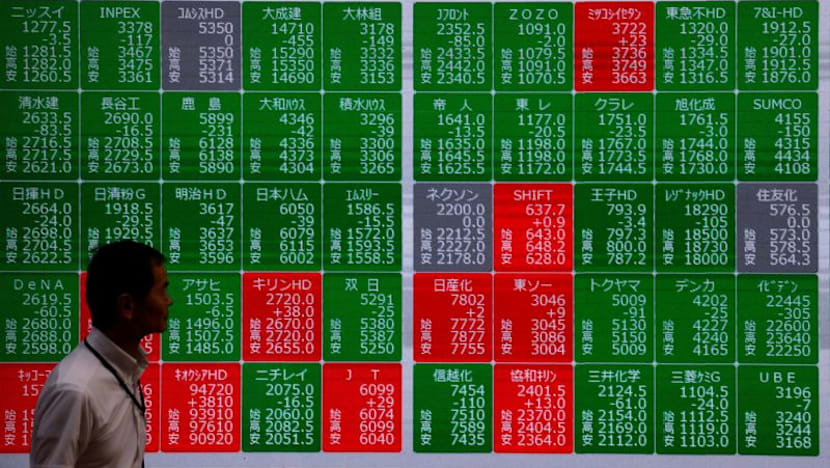
In foreign exchange, the US dollar gained 0.35 per cent against the Japanese yen, reaching 157.42, as investors remained alert to the possibility that the Bank of Japan might use the reduced liquidity of Japan’s three-day Silver Week holiday to intervene in support of the currency. The yen had already moved sharply on Friday following reports in the Nikkei newspaper that Japanese authorities had conducted rate checks in the currency market — a procedural step that typically precedes direct intervention and is designed to signal official discomfort with the prevailing exchange rate. The yen’s trajectory matters beyond Japan’s borders: a sustained weakening of the currency complicates monetary policy normalisation for the Bank of Japan and has downstream implications for capital flows across the broader Asia-Pacific region, including markets in Singapore and Southeast Asia that are sensitive to shifts in regional liquidity conditions.