

Lawrence Wong’s Gulf Debut: What Singapore’s First Middle East Visit Signals About Energy, Diplomacy and Economic Strategy

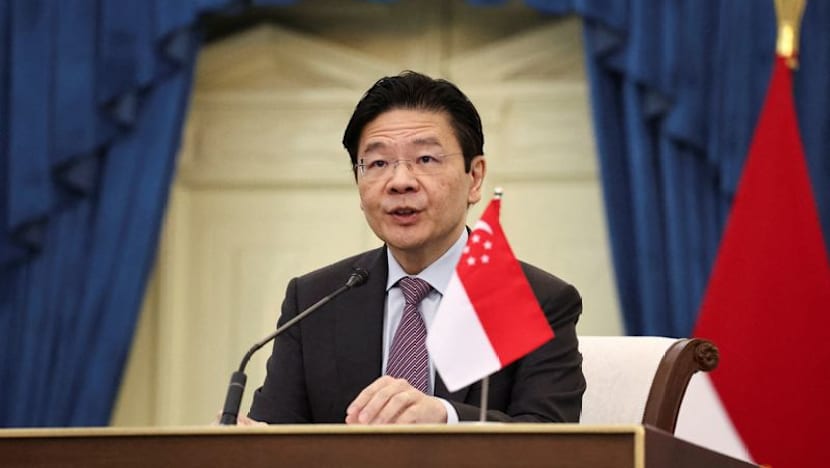
The departure gates at Changi were quiet on the morning of October 18, but the diplomatic weight of what left Singapore that day was anything but. Prime Minister Lawrence Wong boarded for Doha, embarking on his first official visit to the Middle East since assuming office — a five-day sweep through Qatar and the United Arab Emirates that carried with it the full institutional gravity of Singapore’s foreign policy machinery.
The Prime Minister’s Office framed the trip in measured, calibrated language: an opportunity to “exchange views with regional leaders on developments in the Middle East, reaffirm our support for dialogue and diplomacy, and strengthen cooperation in areas of mutual interest.” Read between those lines, and the priorities become sharper — energy security above all, then economic resilience, then the broader architecture of bilateral trust that Singapore has spent decades building with Gulf states.
Wong’s first stop, Qatar, is not a courtesy call. Doha supplies approximately 25 per cent of Singapore’s total liquefied natural gas imports, according to World Bank data, and that figure matters enormously in a city-state where around 95 per cent of electricity generation depends on imported natural gas — a combination of LNG and pipeline gas from immediate neighbours. The ongoing Middle East conflict has already disrupted LNG flows from the region, and Singapore’s energy planners are watching closely.
In Doha, Wong called on Emir Sheikh Tamim Hamad Al Thani, and the two leaders co-chaired the ninth Qatar-Singapore High-Level Joint Committee — the primary institutional platform through which both countries advance bilateral cooperation. Wong also met Qatar’s Prime Minister and Minister of Foreign Affairs Sheikh Mohammed Abdulrahman Jassim Al Thani, signalling that the engagement operated at the highest levels of the Qatari state simultaneously.
The defence dimension of the Qatar relationship is not incidental. Coordinating Minister for Public Services and Minister for Defence Chan Chun Sing had visited Doha just weeks earlier in October, suggesting a coordinated diplomatic sequence rather than isolated engagements. Singapore’s defence cooperation with Qatar runs deep, and the timing of these back-to-back visits points to deliberate strategic choreography.
From October 20, Wong moved to Abu Dhabi, where the UAE chapter of the trip unfolded with equal density. He called on UAE President and Ruler of Abu Dhabi Sheikh Mohamed Zayed Al Nahyan, and was expected to meet Crown Prince of Abu Dhabi Sheikh Khaled Mohamed Zayed Al Nahyan — who himself made an official visit to Singapore in 2024 — as well as Deputy Prime Minister and Deputy Ruler of Dubai Sheikh Maktoum Mohamed Rashid Al Maktoum. Three meetings at the apex of Emirati power in a single leg of a trip reflects the breadth of what Singapore and the UAE have built together.
That relationship has its own institutional anchoring. Singapore and the UAE marked 40 years of diplomatic ties last year, and the two countries elevated bilateral relations through the Singapore-UAE Comprehensive Partnership in 2019, covering defence, energy, water sustainability and beyond. In trade terms, the UAE is Singapore’s largest Gulf Cooperation Council trading partner, with Qatar ranking third — together, they represent the gravitational centre of Singapore’s Gulf economic engagement.
The delegation accompanying Wong was itself a statement of intent. Foreign Affairs Minister Vivian Balakrishnan, Energy, Trade and Industry Minister Tan See Leng, and Minister of State for Foreign Affairs and Home Affairs Zhulkarnain Abdul Rahim all travelled with the Prime Minister, supported by officials from the Ministry of Foreign Affairs, Ministry of Energy, Trade and Industry and the PMO. This was not a lean bilateral visit; it was a full-spectrum deployment of Singapore’s relevant ministerial capacity.
Wong also held receptions for overseas Singaporeans in both Doha and Dubai — a routine feature of prime ministerial travel that nonetheless carries symbolic weight, affirming the state’s relationship with its diaspora even in the middle of high-stakes diplomacy. Back home, Deputy Prime Minister and Minister for Energy, Trade and Industry Gan Kim Yong assumed the role of acting prime minister during the absence.
What the visit ultimately signals is something worth sitting with. Singapore under Wong is navigating a Middle East in flux — a region where conflict has sharpened energy anxieties, where Gulf sovereign wealth is reshaping global investment flows, and where small states must work harder to remain relevant interlocutors. Wong’s decision to make this his first Gulf trip as prime minister is not incidental. It is a deliberate act of institutional continuity and strategic positioning, one that tells both Doha and Abu Dhabi that Singapore intends to remain a serious, present and reliable partner — regardless of what the region’s turbulence brings next.



