

Rubio Reassures Gulf Arab Partners on Iran Talks, But Concerns Over Exclusion Persist

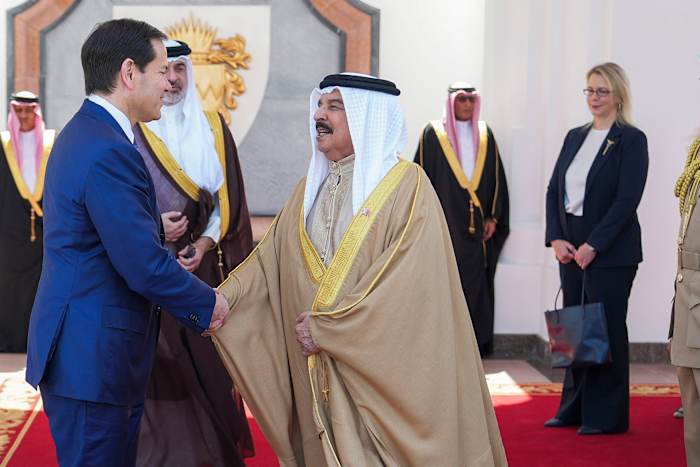
Rubio Reassures Gulf Arab Partners on Iran Talks, But Concerns Over Exclusion Persist
U.S. Secretary of State Marco Rubio concluded a three-nation Gulf tour on Thursday insisting that Washington’s partnerships with its Arab allies remain “rock solid,” even as those allies signalled they fear being sidelined in negotiations to end the ongoing war with Iran.
Rubio visited the United Arab Emirates, Kuwait, and Bahrain over three days in a bid to reassure all six members of the Gulf Cooperation Council (GCC) — Bahrain, Kuwait, Oman, Qatar, Saudi Arabia, and the UAE — that the Trump administration will not cut deals at their expense.
A War That Hit the Region Directly
The conflict, launched by President Donald Trump and Israel on February 28, has sharply curtailed the region’s oil exports. Several Gulf states absorbed direct retaliatory Iranian missile and drone strikes, raising the stakes for any negotiated settlement.
Speaking in Bahrain, his final stop, Rubio acknowledged the allies’ core anxiety: being kept in the dark. “The biggest concern is that they really just want to be informed every step along the way as we enter these negotiations at both the technical and political levels,” he said.
He offered a firm commitment in response. “We don’t want to and will not be making any decisions or commitments that in any way undermines the prosperity, stability or security of our Gulf partners,” Rubio said.
Joint Statement Masks Underlying Tensions
The U.S. and the GCC released a joint statement after the meeting, stressing the need to “maintain momentum and unity” toward a permanent end to hostilities and a shared goal of preventing Iran from acquiring a nuclear weapon.
The statement also expressed opposition to any Iranian attempt to impose tolls or assert control over the Strait of Hormuz, and welcomed an Omani initiative to establish a safe evacuation lane for stranded sailors in the waterway.
Crucially, the statement warned that any economic benefits Iran stands to gain are “conditional and reversible, contingent on Iran’s compliance” with both the temporary agreement and any final deal.
Yet the diplomatic language could not fully conceal the GCC’s frustrations. GCC Secretary-General Jasem Mohamed Albudaiwi issued a separate statement hinting that member states felt excluded from earlier negotiations.
“Such arrangements must be based on the principles of international law, respect for state sovereignty, good neighbourliness, and non-interference in internal affairs,” Albudaiwi said, signalling that the bloc expects its requirements to be formally embedded in any future agreement.
Host Nation Sets Out Red Lines
Before Rubio addressed the group, Bahraini Foreign Minister Abdullatif bin Rashid Al Zayani struck a cautiously welcoming but pointed tone. While describing the existing memorandum of understanding as encouraging, he said many questions remain outstanding.
“It is critically important that Iran fully adheres to its obligations,” Al Zayani said, outlining a set of explicit conditions: no nuclear weapons development, unimpeded freedom of navigation, a halt to all missile and drone attacks, an end to support for proxy groups, and cessation of interference in neighbouring states’ affairs.
The Bahrain meeting underscores a structural tension at the heart of the Iran negotiations — Washington must balance its own strategic calculus against the security imperatives of allies who sit directly within Iran’s strike range and who have not yet secured a seat at the table.