
Two Workers Dead, Two Charged: The Toxic Gas Failure at Choa Chu Kang Waterworks

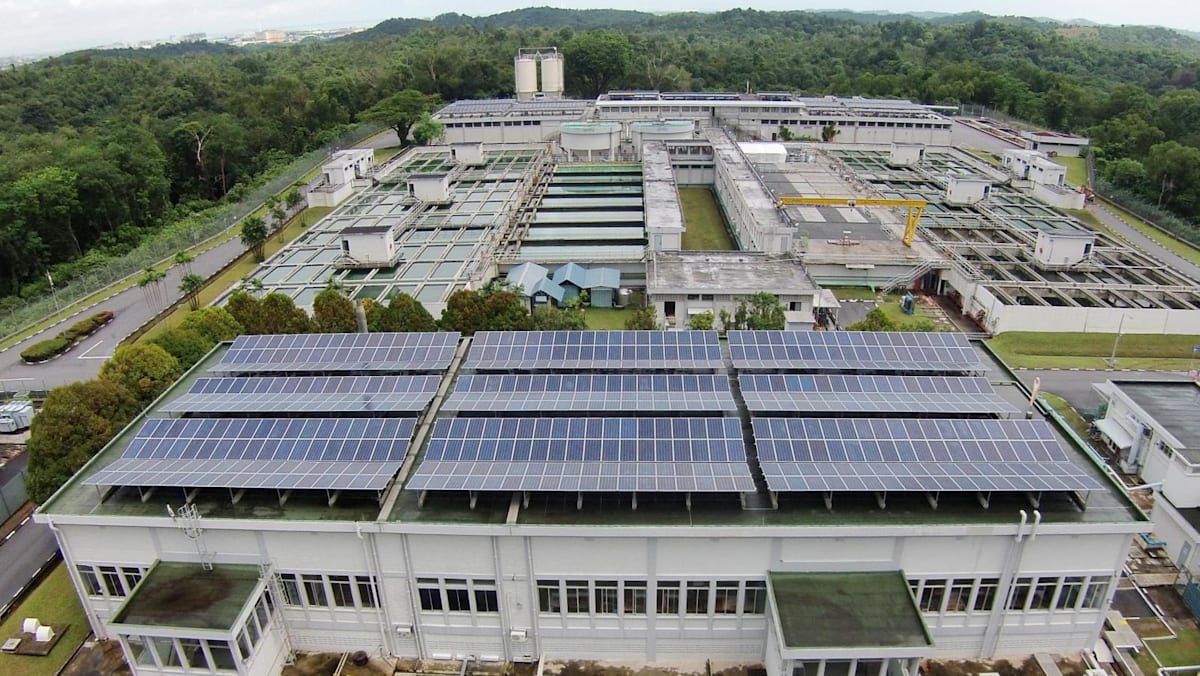
The alarm had already sounded.
On the morning of May 23, 2024, sensors installed at Choa Chu Kang Waterworks were registering hydrogen sulphide concentrations beyond safe thresholds — and still, workers descended into the enclosed passage beneath a water treatment process tank to close hand valves left open during draining operations. Three of the four workers cleaning the tank that day collapsed. Two of them would not survive. The third was discharged after treatment at Ng Teng Fong General Hospital. What followed was not merely a tragedy of misfortune, but a documented failure of process, oversight, and institutional accountability that has now reached the courts.
On July 16, 2025, the Ministry of Manpower (MOM) announced charges against Stargroup, the contractor engaged by PUB — Singapore’s national water agency — to carry out what was described as “routine” tank cleaning operations at the waterworks. Stargroup faces charges for failing to implement reasonably practicable measures to minimise risk to persons affected by its undertaking at the workplace. Lim Beng Hock, the authorised manager responsible for issuing confined space entry permits at Stargroup, was separately charged for failing to exercise due diligence in relation to those permits.
A Gas That Kills Without Warning
Hydrogen sulphide is colourless, heavier than air, and acutely lethal even at low concentrations. It is a well-documented hazard in water treatment environments, typically emitted when sludge is drained from process tanks — precisely the conditions present that morning. The gas’s insidious quality is that it dulls the olfactory senses rapidly, stripping workers of the very warning mechanism they might otherwise rely on. That sensors were in place, that an alarm had triggered, and that workers nonetheless entered the space, points to a breakdown not in detection capability but in the human and procedural systems meant to act on that detection.
MOM’s investigation confirmed that the workers were exposed to hydrogen sulphide gas at concentrations exceeding safe thresholds at the time of their entry. The regulatory framework governing confined space work in Singapore is explicit: employers are required to conduct risk assessments before work commences, test the atmosphere within the confined space, provide appropriate respiratory protective equipment, and station a trained standby person outside the confined space at all times. The charges suggest these requirements were not adequately met.
Institutional Accountability Beyond the Contractor
The enforcement actions extend beyond Stargroup. MOM issued a stern warning to a PUB officer for failing to cooperate with his employer in a manner that would have enabled compliance with the Workplace Safety and Health Act on the night before the incident — a detail that implies the conditions for disaster were taking shape well before workers entered that passage. PUB said it is “reviewing the stern warning and will take the appropriate follow-up actions,” a formulation that offers little by way of specificity.
More structurally significant is the fine levied against PUB itself. MOM issued the national water agency the maximum composition fine permissible under the Workplace Safety and Health Act — S$5,000 — for allowing employees to enter confined spaces for short periods without adequate ventilation on previous occasions. That the statutory ceiling sits at S$5,000 for an organisation of PUB’s scale and public mandate is a regulatory constraint worth noting: the fine functions more as a formal censure than a material deterrent. PUB, for its part, has since installed permanent ventilation for the confined space in question and mandated that all its plants provide adequate ventilation for confined spaces, even for brief work periods.
Blacklisting, Stop-Work Orders, and Process Reform
The immediate consequences for Stargroup were significant. PUB blacklisted the contractor for 18 months from August 2024, barring it from tendering for any PUB projects during that period. A stop-work order issued by MOM to PUB — requiring the cessation of cleaning works on pre-treatment water tanks and entry into adjacent confined spaces — was lifted on August 6, 2024, after PUB demonstrated compliance with stipulated conditions. PUB has since enhanced its contractor management processes, introducing verification checks to confirm that measures implemented on the ground align with contractors’ stated risk assessments, safe work procedures, and emergency response plans.
These are meaningful reforms, and they arrive in the institutional language that Singapore’s regulatory culture does well: systematic, procedural, documented. Yet the gap they are closing was not one of missing regulation but of missing enforcement of existing rules. The Workplace Safety and Health Act already required what was not done. The permits were issued; the protocols existed on paper; the alarm sounded. Two men still died.
The Weight of What Remains
The court proceedings now underway will determine the legal culpability of Stargroup and Lim Beng Hock. What the proceedings cannot resolve is the broader question of how routine operations at a national infrastructure site arrived at a moment where a triggered alarm did not halt the work. Singapore’s regulatory architecture for workplace safety is, by regional standards, sophisticated — but sophistication in design does not guarantee fidelity in execution, particularly in the subcontracted layers where accountability diffuses and oversight thins. The two workers who died on May 24 and May 28, 2024, were not casualties of an unforeseeable event. They were casualties of a system that knew the risk and did not stop.