
Taiwan Deploys Robot Patrol Dogs for South China Sea Island Defence

Taiwan’s Military Showcases Ghost Robotics Patrol Dogs Destined for South China Sea Outposts
Taiwan’s premier defence research body has unveiled three armed and surveillance-capable robot dogs designed for deployment on the island’s contested South China Sea territories, signalling a significant step in Taipei’s push to modernise its military posture against Beijing.
What Was Demonstrated
The National Chung-Shan Institute of Science and Technology (NCSIST) — the military’s top weapons development arm — presented the robots at a media event hosted by the defence ministry on Tuesday. The machines are built on a platform supplied by Ghost Robotics, a major US military contractor specialising in four-legged autonomous systems.
NCSIST engineers have integrated their own proprietary technology onto the Ghost Robotics base units, producing three distinct variants: a reconnaissance version, a surveillance version, and an armed firepower version equipped with a mounted gun.
Where They Could Be Deployed
Jen Kuo-kuang, deputy head of NCSIST’s missile and rocket systems research division, said the military has already identified a pressing operational need for the robots, though no formal procurement order has been placed.
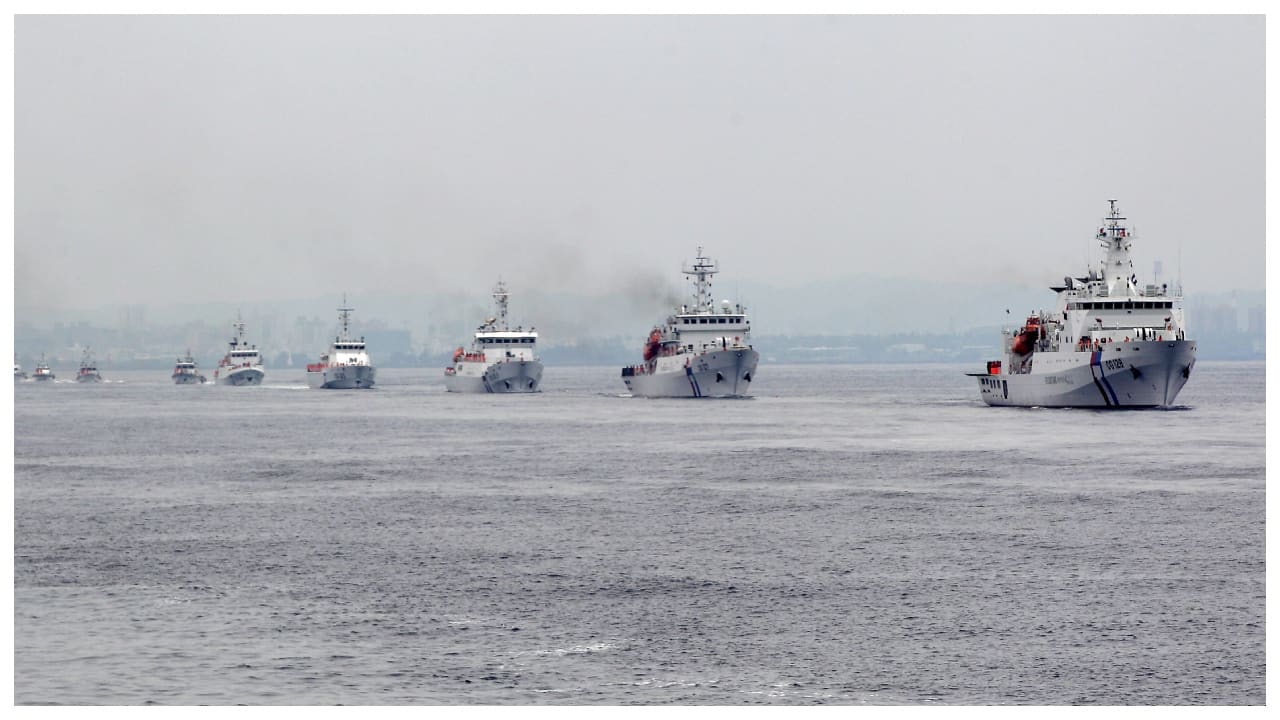
“In fact, the marines believe that on beaches and the coastline, including for the coast guard in Nansha and Dongsha for patrols and inspection, there is a pressing need,” Jen said, referring to the Spratly Islands and the Pratas Islands respectively.
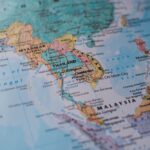
Taiwan administers Itu Aba, its principal holding in the Spratlys, as well as the entirety of the Pratas — a strategically positioned archipelago at the northern end of the South China Sea. Both locations are garrisoned solely by coast guard personnel, with no civilian population.
The Strategic Context
The robot dog programme sits within a broader Taiwanese defence modernisation effort aimed at deterring China, which claims Taiwan as its own territory. Drones and autonomous systems have become a central pillar of the defence ministry’s investment strategy.
While Chinese forces have largely refrained from directly challenging Taiwan’s presence on Itu Aba, Taipei has reported a marked increase in Chinese coast guard patrols and drone incursions near the Pratas — a trend that lends urgency to the island’s security calculus.
Both Beijing and Taipei assert overlapping claims to large portions of the South China Sea, a waterway that carries an estimated US$3 trillion in annual trade and remains one of Asia’s most volatile territorial flashpoints.