
Singapore Real Wages Rise 4% as Johor Manufacturing Shift Accelerates

Real Wage Growth Hits Two-Year High as Inflation Falls
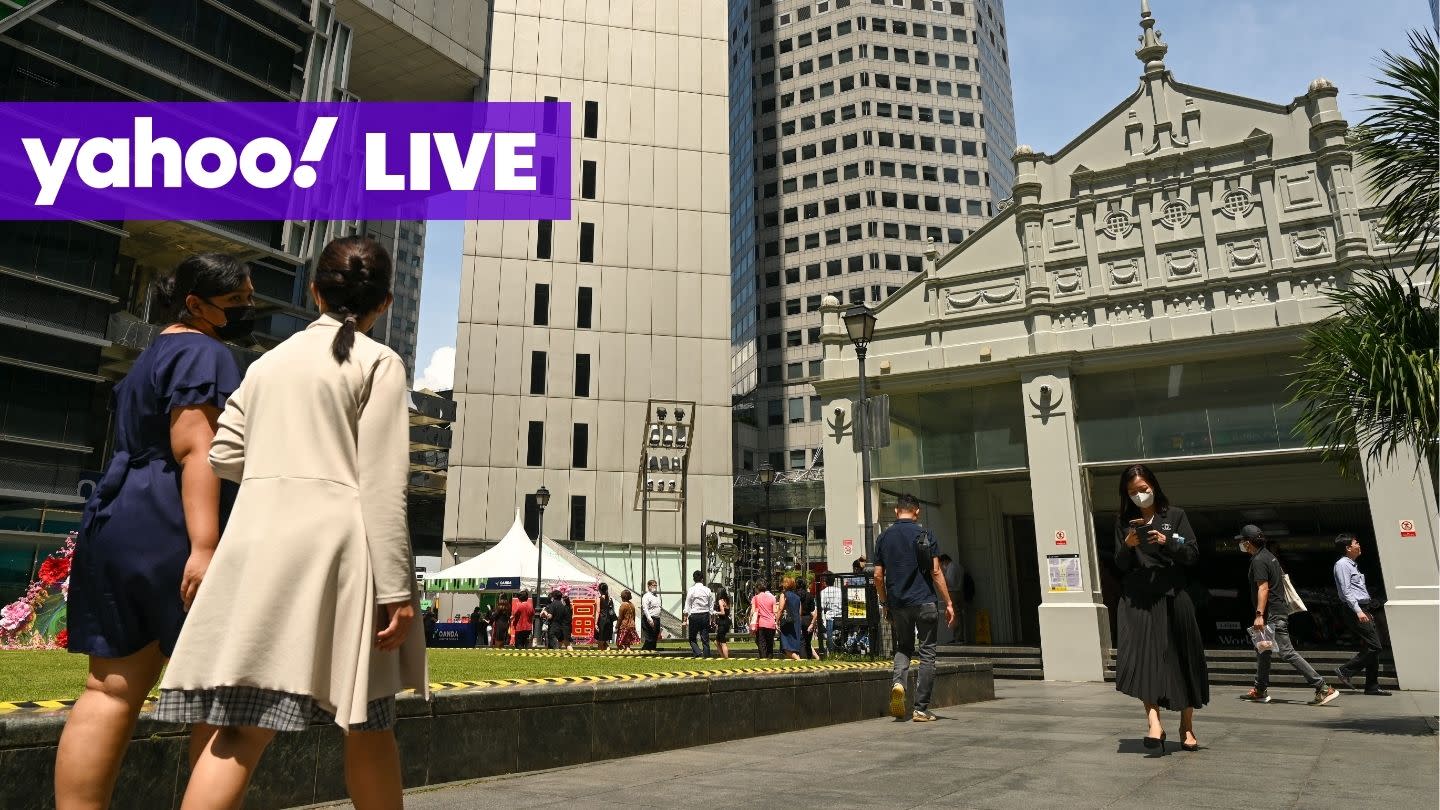
Singapore workers recorded their strongest purchasing power gains in two years in 2025, with real wages rising 4 per cent — up from 3.2 per cent in 2024 — even as nominal wage growth eased to 4.9 per cent from 5.6 per cent the previous year. The driver was not larger pay packets, but sharply lower inflation, which fell to 0.9 per cent from 2.4 per cent in 2024.
The Ministry of Manpower (MOM) confirmed that wage gains were broad-based across the workforce. Rank-and-file employees saw growth of 4.8 per cent, junior management staff 5.1 per cent, and senior management employees 4.9 per cent.
Sector Winners and Cautious Employers
Administrative and Support Services led all industries with wage growth of 7.5 per cent, followed by Insurance Services at 6.6 per cent and Financial Services at 5.9 per cent. Insurance Services and Wholesale Trade were the only sectors to record faster wage growth than in 2024.
Despite improved business conditions — with a larger share of firms reporting profitability and fewer recording losses — employers grew more cautious. Fewer establishments granted wage increases in 2025, with more opting to keep salaries unchanged.
MOM projects wage growth will remain positive in 2026, underpinned by a tight labour market and productivity gains. However, the ministry flagged geopolitical tensions, trade risks and broader economic uncertainty as factors that could produce more moderate and uneven outcomes across sectors.
Singapore Manufacturers Pivot to Johor as Cost Pressures Mount
A growing number of Singapore-linked manufacturers are relocating or expanding operations across the Causeway into Johor, drawn by significantly lower labour, land, rental and utility costs. High-profile moves by Gardenia, H&M, Yeo’s and Tiger Beer-related production operations have brought the trend into sharp focus.
Industry observers say Johor’s geographic proximity to Singapore allows firms to cut production costs without severing ties to established markets, supply chains and business networks — a critical consideration for export-oriented manufacturers.
JS-SEZ Adds Institutional Weight to the Shift
The Johor-Singapore Special Economic Zone (JS-SEZ) has added institutional momentum to the trend. Businesses expect the initiative to streamline logistics, ease cross-border movement and strengthen investment coordination between the two jurisdictions.
Analysts caution against reading the manufacturing migration as a wholesale exit from Singapore. Most firms, they say, are adopting a dual-location strategy — placing production facilities in Johor while retaining management, financing and strategic functions in Singapore.
Singapore, experts note, retains structural advantages in finance, research and development, innovation, talent acquisition and regional headquarters functions — areas less sensitive to land and labour cost differentials.
Singapore Launches AI Agent Registry for 150,000 Public Officers
Singapore will establish a registry to track AI agents deployed across the public service, covering approximately 150,000 government officers. The system, developed under GovTech’s AI Assistant Desk programme, will record ownership, usage and activity of autonomous AI systems operating within government workflows.
AI agents — systems capable of executing multi-step tasks with limited human intervention — are already in use across agencies for coding, scheduling, research and administrative support. More than half of government employees currently use AI productivity tools such as Pair.
Guardrails will be introduced to restrict higher-risk functions, including file deletion and external email actions. The registry reflects Singapore’s broader effort to scale AI adoption while maintaining accountability and security in public sector operations.
Lee Family-Linked Investors Build Crypto Banking Bridge Between Asia and the Gulf
Amy Lee, niece of Singapore’s founding prime minister Lee Kuan Yew and co-founder of Singapore Gulf Bank, is leading a Singapore-linked investor network developing a crypto-friendly banking platform licensed in Bahrain. The platform integrates fiat and digital asset services, offering 24/7 access to trading, custody, conversion and settlement of cryptocurrencies and stablecoins including USDT and USDC.
The venture is connected to Whampoa Group, a Singapore-linked investment ecosystem that entered digital assets through crypto hedge funds and venture vehicles from 2022. The bank is positioned to capture capital flows between Asia and the Middle East amid shifting global trade routes, leveraging Singapore-linked institutional credibility despite operating offshore.
CapitaLand Cuts China Workforce by 10% Amid Property Downturn
CapitaLand Investment reduced its China headcount by approximately 10 per cent in 2025 — around 365 employees — as the country’s prolonged property sector downturn continued to weigh on performance. The company’s global workforce fell to 9,542 from 10,158 in 2024, its first overall decline since 2022.
China remains CapitaLand’s largest workforce base but its share of total staff declined to 33 per cent from 35 per cent. The firm reported approximately S$545 million in fair value losses on China assets, spanning offices, retail and business parks. Employee turnover rose to 24 per cent from 21 per cent despite the absence of large-scale layoffs.
DBS Expands Wealth Network With 18 New Asian Centres
DBS Group will open 18 new wealth centres across Asia by 2027, including two additional locations in Singapore, as it scales its private banking and advisory business to meet rising demand from affluent and high-net-worth clients. The bank is shifting its model toward advisory-led services and deeper client relationships over transactional banking.
The expansion comes as competition for wealth management clients intensifies across the region. DBS chief executive Tan Su Shan was meanwhile ranked sixth on Fortune’s 2026 Most Powerful Women in Business list — the highest-placed Asian executive on the global ranking — reflecting DBS’s record profitability and expanding financial footprint under her leadership.
Workers’ Party to Hold Leadership Vote on Pritam Singh on 28 June
The Workers’ Party (WP) will convene a special cadres conference on 28 June to address the leadership position of secretary-general Pritam Singh. The meeting follows the conclusion of internal disciplinary proceedings linked to a High Court judgment issued on 4 December last year, in which a constitutional contravention without intent was found and a formal reprimand issued.
Cadre members — the party’s internal decision-making body — are expected to conduct a leadership review, with reports indicating a secret vote may determine the party’s leadership direction following the disciplinary process.
Hong Kong Overtakes Switzerland in Cross-Border Wealth Race
Hong Kong has displaced Switzerland as the world’s leading cross-border wealth management hub, driven by deep financial integration with mainland China and strong capital inflows. The shift signals a broader reorientation of global wealth flows toward Asia.
Singapore continues to compete as a stable, well-regulated alternative, but industry participants say speed of client onboarding is emerging as a critical differentiator. Authorities are pressing banks to accelerate account opening for wealthy clients while maintaining compliance standards — a balancing act that defines Singapore’s positioning in the intensifying regional wealth race.
Singapore Ranks Third Globally as AI Financial Hub
Singapore ranked third globally among AI financial hubs in 2026, behind New York and London, according to an industry assessment cited in fintech reports. The ranking credited Singapore’s regulatory quality, governance frameworks and financial sector readiness for AI adoption.
Deputy Prime Minister Gan Kim Yong said financial institutions should deploy AI to create better jobs and improve productivity rather than reduce headcount. Financial institutions are already using AI across customer service, compliance, fraud detection and operations, with policymakers encouraging parallel investment in workforce reskilling to manage the transition.
Singapore Haj Pilgrims Begin Return Home
The first group of Singapore Haj pilgrims arrived home on 1 June at Changi Airport Terminal 3, marking the start of staggered returns for the city-state’s pilgrims completing the season in Mecca. Senior representatives from the Islamic Religious Council of Singapore (MUIS), including Chief Executive Kadir Maideen and Deputy Chief Executive Dr Albakri Ahmad, were present to receive returning pilgrims.