
Fifty Years On: How Singapore Uncovered a Communist Recruitment Network Reaching Into Its Armed Forces


Fifty Years On: Singapore’s 1976 Communist Crackdown
On 31 May 1976, Singapore’s Ministry of Home Affairs announced that communist operatives had been conducting extensive clandestine recruitment across the Republic — targeting not just the general public, but members of the Armed Forces and the professional class, shattering the appearance of calm the government had carefully maintained.
Fifty Arrests, Unlikely Suspects
Authorities confirmed that 50 individuals had been detained since January 1976, in what constituted the third major security operation of its kind since 1964. Among those arrested were a Singapore Navy officer, several naval personnel, a company proprietor, a contractor, a sales manager, and the principal of a ballet school who had trained in Australia.
The breadth of the accused’s backgrounds confounded any simple profile of a communist recruit. The Ministry noted that motivations were not uniformly ideological or economic — some detainees were described as ethnic chauvinists, others as individuals radicalised through communist literature, and others as those harbouring grievances against government policy.
A Regional Underground Network
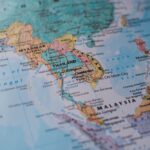
Investigators traced the network’s threads well beyond Singapore’s borders. Underground cells in Singapore were linked to contact points in Kuala Lumpur and Johor in Malaysia, Betong in southern Thailand, Bangkok, and Hong Kong — revealing an organised, transnational infrastructure rather than isolated domestic dissent.
The majority of those arrested were of Chinese origin and connected to the Malayan Peoples Liberation League, the political wing of the CPM-Marxist-Leninist faction, believed to be Soviet-oriented. This distinguished them from the main Communist Party of Malaya (CPM), which aligned with Maoist ideology — a split reflecting the broader Sino-Soviet divide of the era.
The Third Wave of Crackdowns
The 1976 operation followed two earlier waves: a 1964 sweep that netted 113 arrests, and a June 1974 operation that included a lawyer and two Chinese-language journalists among the detained. Together, the three operations traced the persistent — if subterranean — presence of organised leftist activity in a state that had been systematically dismantling the institutional left since the early 1960s.
The announcement served as a reminder that Singapore’s political stability in the mid-1970s rested not only on economic growth and administrative competence, but on an active internal security apparatus operating largely out of public view.