

‘Harmless’ Jokes and Casual Sexism Are Pushing Women Out of Workplaces, Panel Warns

‘Harmless’ Jokes and Casual Sexism Are Pushing Women Out of Workplaces, Panel Warns
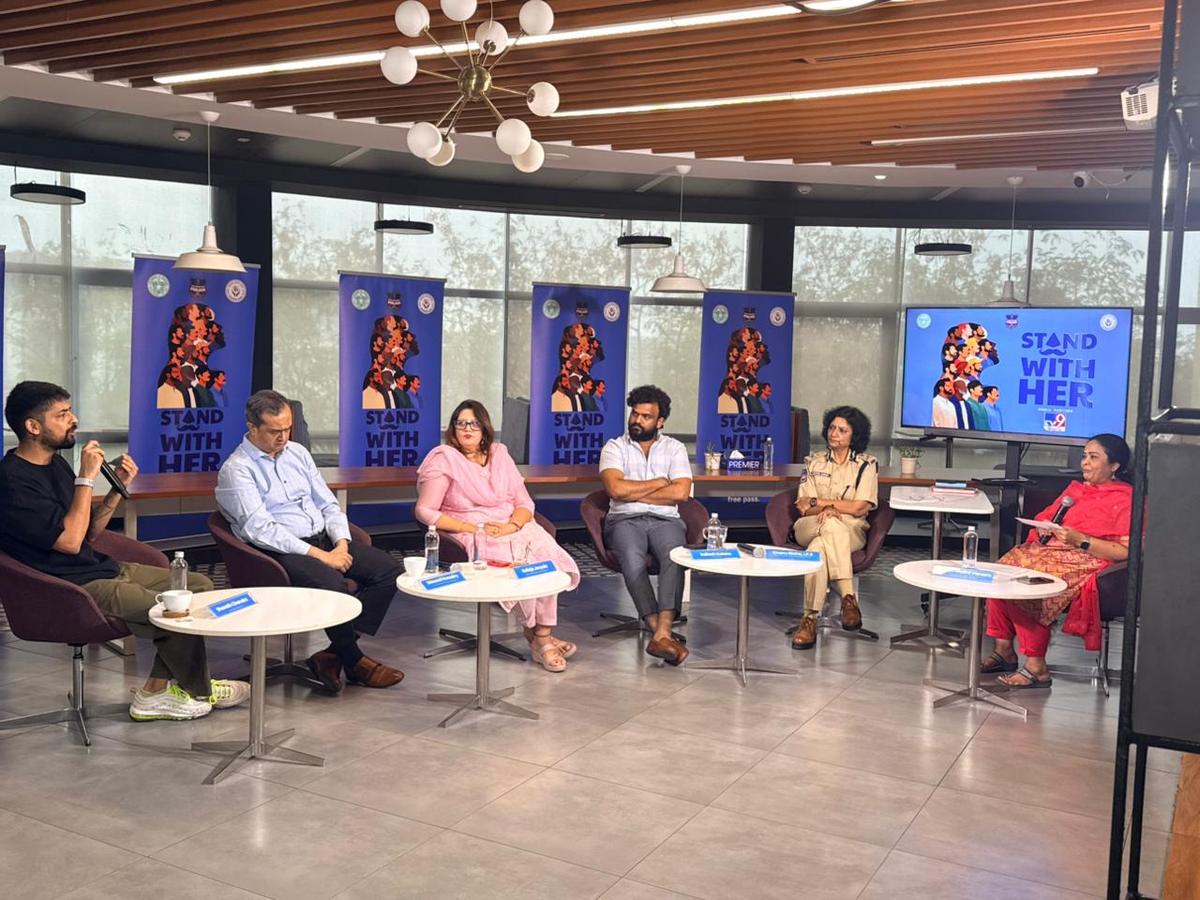
Everyday sexism — disguised as humour, unsolicited advice and offhand remarks — is systematically silencing women in professional and public spaces, senior corporate leaders, filmmakers and police officials warned at a panel discussion in Telangana on Saturday, May 9, 2026. The event was held under the state government’s “Stand With Her” initiative, which focuses on gender sensitivity and women’s safety.
Silence as a Survival Strategy
Charu Sinha, Director General of Police at Telangana’s Women Safety Wing, drew on her own career navigating hierarchical police structures to make a pointed observation: women’s silence in the workplace is rarely a personality trait — it is a learned response to hostile environments.
“When a woman becomes silent, it is often a response to the environment and not her personality,” she said.
Panellists stressed that contemporary sexism is rarely overt. It lives instead in body-shaming jokes, dismissive interruptions during meetings, unsolicited commentary on women’s appearance or marital status, and assumptions about their professional competence.
Humour as a Shield for Misogyny
A central concern raised across the panel was the weaponisation of humour. Speakers argued that framing sexist behaviour as a joke allows offenders to evade accountability behind claims of “I didn’t mean it” — while the cumulative effect on women remains real and corrosive.
Sailesh Kolanu, a film director, argued that cinema and language exert significant influence over social attitudes, and called on filmmakers to approach female characters with greater awareness and responsibility.
Sharath Chandra, co-founder of Telugu digital content platform Chai Bisket, went further, arguing that many sexist behaviours are so deeply normalised that men must actively work to unlearn conditioning absorbed across generations.
“We have to not only learn new things, but also unlearn years of behaviour we saw growing up,” he said.
Corporate Diversity Initiatives Are Not Enough
Corporate leaders on the panel acknowledged that diversity programmes have not eliminated bias in professional settings. Sailaja Josyula, Global Head of GCC Service Line at Cognizant, said women continue to be judged on appearance and demeanour rather than professional output — and are routinely interrupted, overlooked in meetings or subjected to commentary on their dress and tone.
She identified a particularly insidious pattern: decisions being made on behalf of women without consulting them directly, often framed as concern or protection.
“The biggest thing is — do not make decisions on behalf of women. They have their own choices,” Josyula said.
Masoor Hussaini, Executive Director at Tata Advanced Systems, spoke about efforts to bring women — including those from rural backgrounds — into manufacturing and aerospace. He argued that employment in these sectors had transformed not just workplaces, but women’s social standing and financial independence.
“One degree in education and employment can completely change the trajectory of a woman’s life,” he said.
Change Starts at Home — and in Leadership
Several speakers argued that gender sensitivity cannot be confined to corporate training programmes. Boys, they said, must be taught emotional awareness, shared domestic responsibilities and respect for women’s autonomy from an early age.
The panel also called on organisational leaders to take active, visible stances — challenging sexist jokes when they occur, ensuring women are genuinely heard in meetings, and building environments where women can speak without fear of ridicule or dismissal.
The discussion closed with a consensus that structural change begins with small, consistent behavioural corrections. Panellists identified accountability, media representation and family-level education as the three pillars essential to dismantling entrenched gender bias.