

Workers’ Party Tables Economic Motion in Parliament, Challenging Singapore’s Growth Narrative

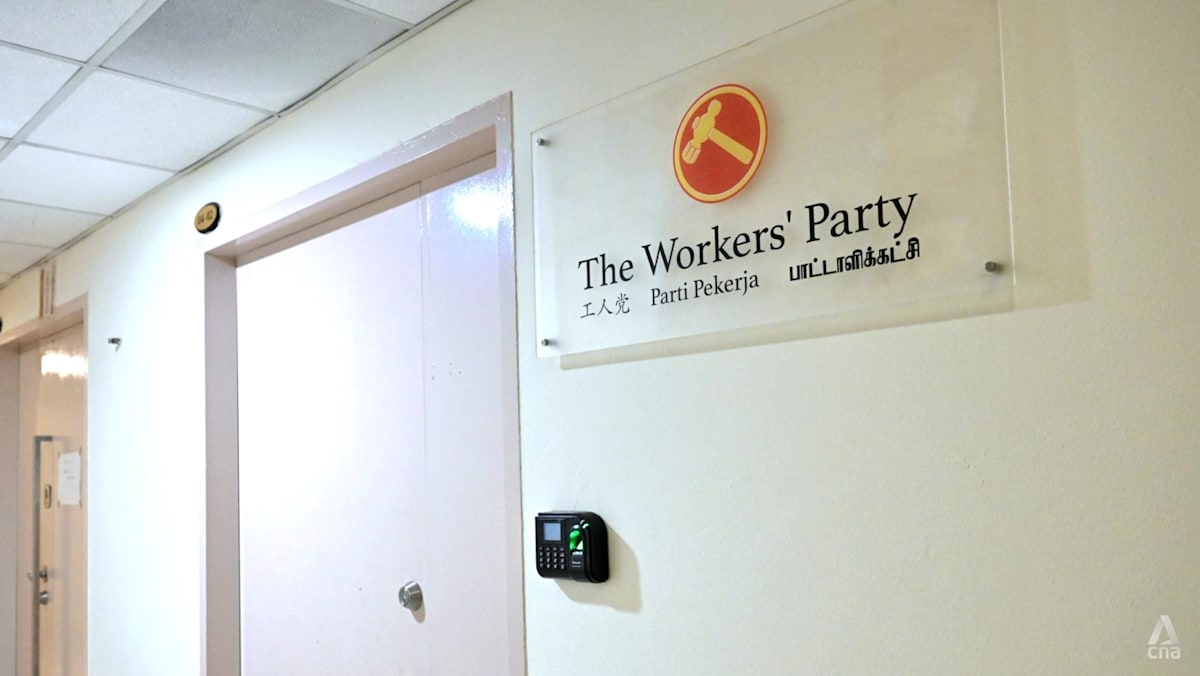
The Workers’ Party’s decision to table a parliamentary motion on Singapore’s economic future is more than procedural opposition politics. It represents a substantive attempt to articulate an alternative economic framework — one that places distributional outcomes, local enterprise vitality, and domestic demand at the centre of national growth strategy, rather than at its margins.
Tabled by MPs Kenneth Tiong (Aljunied GRC) and Associate Professor Jamus Lim (Sengkang GRC), the motion calls on Parliament to affirm belief in “a more equal and inclusive economy, with opportunities for entrepreneurs to experiment, households and businesses to succeed, workers to thrive, and ideas and innovation to flourish.” It explicitly envisions “an economic engine driven by dynamic local companies, healthy domestic demand, and Singaporeans and Singaporean capital venturing abroad.” The motion was introduced on Tuesday, 4 August.
A Deliberate Counterpoint to the ESR
The timing is not incidental. Singapore’s Economic Strategy Review (ESR) — launched in August 2024 amid accelerating geopolitical realignments and technological disruption — published its final report on 24 June 2025, consolidating 32 recommendations from five committees following extensive consultations with businesses, unions, and trade associations. The WP motion positions itself explicitly in relation to that report, though not merely as a reaction to it.
Assoc Prof Lim was precise about this distinction at a press briefing held at WP headquarters on 1 August. The party, he said, wants to convey “a sense of complementarity” to the government’s ESR-derived vision while remaining “distinct from the report.” The goal is not simply to critique but to present what he described as the party’s “very own” economic vision — one that identifies gaps in the ESR’s framework and proposes ways to fill them.
That framing matters. Opposition parties in Singapore’s parliamentary system operate under significant structural constraints. Tabling a motion is one of the few instruments available to mount a sustained, on-the-record policy argument. The WP used this mechanism last in November 2023, when a motion on cost-of-living pressures — tabled by party chief Pritam Singh and MP Louis Chua — prompted over seven hours of debate before an amended version was passed.
The Distributional Question at the Core
What the WP is really asking — and what makes this motion analytically significant — is whether Singapore’s growth model has structurally decoupled productivity gains from broad-based welfare. Kenneth Tiong framed it plainly: “How does an ordinary Singaporean get a lasting share of our country’s success?”
This is not a rhetorical flourish. It points to a persistent tension in Singapore’s economic architecture: a high-performance export and financial services economy that generates substantial aggregate wealth, yet where wage stagnation among lower-skilled workers, housing affordability pressures, and the precarity of small and medium enterprises remain unresolved. The WP’s press release identifies two emblematic groups — young Singaporeans who have “done everything asked of them and still struggle to find their footing,” and small local businesses that “employ the majority of Singaporeans but find it harder each year to keep going.”
Assoc Prof Lim’s contribution to the motion will focus on the conditions under which dynamic local firms can emerge and sustain themselves — a question the ESR addresses but which critics argue remains subordinate to policies favouring large multinationals and state-linked enterprises. Tiong’s speech, meanwhile, will address research and development funding and the challenge of fostering an innovation ecosystem capable of generating value despite Singapore’s high operating costs and land constraints.
Institutional Stakes
The deeper implication of this motion is structural. Singapore’s economic policymaking has long been characterised by technocratic consensus — a model in which strategy is developed by expert committees, endorsed by government, and implemented with limited parliamentary contestation. The ESR process itself exemplifies this: broad in consultation, but ultimately channelled through a framework the ruling party controls.
By tabling a motion that is explicitly framed as an independent “economic playbook,” the WP is asserting that Parliament should be a site of genuine economic deliberation, not merely ratification. Whether that argument gains traction — in the chamber or in public discourse — will depend on the quality of the arguments advanced, the government’s willingness to engage substantively rather than deflect, and whether the motion’s distributional concerns resonate with an electorate that returned the WP with expanded representation in the 2025 general election.
The motion asks Parliament to confront a fundamental question about who Singapore’s economy is built for. That question deserves a rigorous answer.



