

US-China Tariff Tensions: What Is at Stake Ahead of the Trump-Xi White House Summit

A Fragile Truce, a Looming Summit
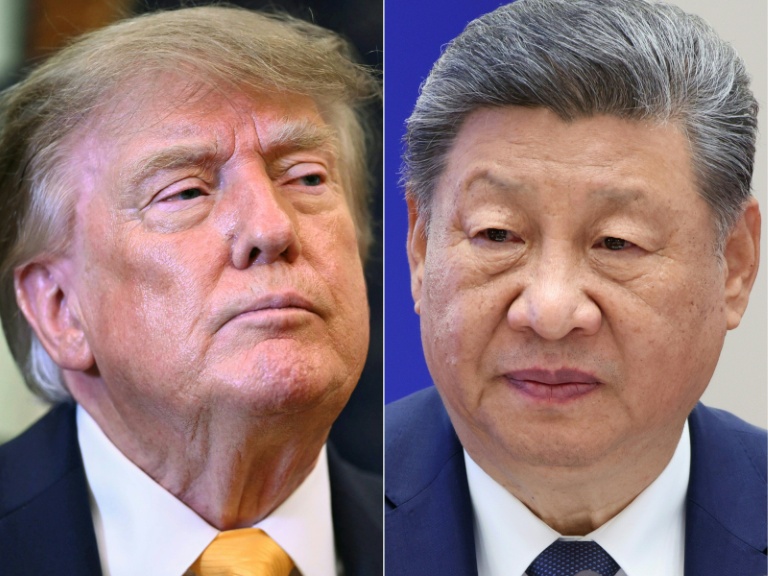
Trade frictions between the world’s two largest economies are set to dominate global attention next week, as US President Donald Trump prepares to host Chinese counterpart Xi Jinping at the White House — an encounter expected on September 24 that carries significant weight for bilateral economic relations and broader ASEAN-adjacent trade flows.
The meeting arrives against a backdrop of sustained, unresolved tension. Since 2018, during Trump’s first term, tariffs have functioned as the primary instrument of economic pressure between Washington and Beijing — a blunt tool applied with increasing frequency and, at times, alarming speed.
The Tariff Architecture: How High, and How Complex
April 2025 marked the peak of the escalation cycle. The base US tariff rate on Chinese goods reached 145 percent, met in kind by China’s reciprocal levy of 125 percent — figures that, had they held, would have effectively severed large segments of bilateral commerce. Both sides have since pulled back from those extremes, but what replaced them is not simplicity.
What now governs trade between the two nations is a dense, sector-specific patchwork of duties that resists easy summary. According to the Penn Wharton Budget Model, the effective tariff rate on Chinese imports into the United States — a weighted average across all goods categories — stood at 22.8 percent as of July 2025, the highest of any major US trading partner. Steel and aluminium bear the heaviest burden, facing an effective rate of 40.5 percent.
On the Chinese side, a baseline 10 percent levy applies to all US goods, with sector-specific surcharges layered on top — including a 15 percent tariff on liquefied natural gas, a commodity of particular strategic sensitivity given shifting energy supply chains across the region.
Trade Volumes: Resilience With an Imbalance
Despite the turbulence, trade between the two economies has not collapsed. Chinese customs data shows total bilateral imports and exports reached $400.8 billion between January and August this year — a 5.4 percent increase from the same period in 2024. The headline figure, however, obscures a structural asymmetry that has long animated Washington’s frustration.
Chinese exports account for 75 percent of that combined figure. Beijing’s sustained and growing trade surplus has been a persistent irritant in Washington policy circles, and a parallel asymmetry with the European Union is simultaneously straining relations with Brussels — a reminder that China’s trade position is not a bilateral anomaly but a systemic feature of its export-oriented economic model.
What the Summit Will Actually Address
Trump told reporters on Sunday that discussions with Xi would cover “almost everything.” That expansive framing, however, sits alongside a more precise institutional reading of what the summit can realistically deliver.
Dan Wang, a director on Eurasia Group’s China team, told AFP that tariffs remain “the main issue on the agenda,” adding pointedly: “Xi wouldn’t go if there were no deliverables on tariffs or a trade truce.” The observation reflects a basic diplomatic logic — summits at this level require pre-negotiated outcomes, not open-ended conversations.
China’s commerce ministry confirmed last week that Beijing and Washington are currently consulting on a tariff reduction framework covering $30 billion worth of products on each side. That target was first agreed at Xi’s previous meeting with Trump in Beijing in May, during which both governments also committed to establishing bilateral trade and investment councils designed to manage ongoing friction through institutional channels rather than reactive escalation.
The Structural Stakes
The summit arrives at a moment when both sides have tactical reasons to stabilise — but structural reasons to remain wary. Washington continues to press on trade deficits, technology transfer, and market access. Beijing, navigating domestic economic headwinds, has limited appetite for further export disruption. Whether the September 24 meeting produces durable architecture or another provisional truce will depend, in large part, on whether the $30 billion framework can be translated into enforceable, time-bound commitments — or whether it remains, as previous agreements have tended to, a statement of intent without binding mechanism.