
Zahid’s GE16 Gambit: UMNO Repositions Itself as Malaysia’s Government-in-Waiting

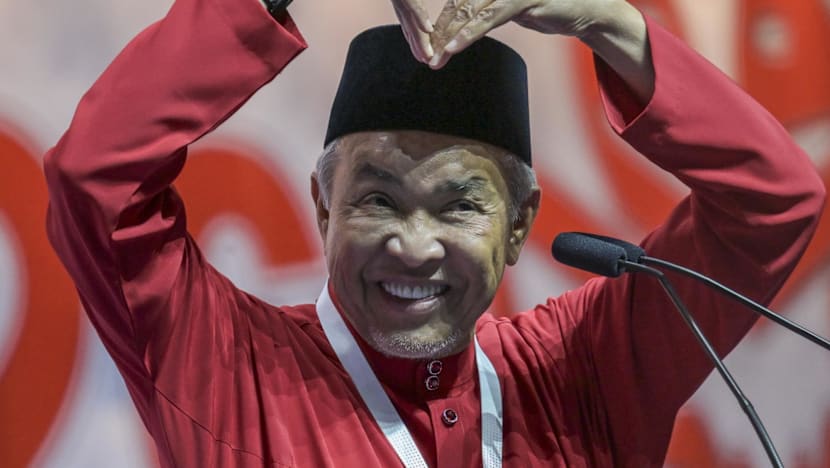
Ahmad Zahid Hamidi’s address to UMNO’s 2026 general assembly on Friday was not merely a party speech — it was a declaration of political intent. The central thesis Zahid advanced before more than 3,000 party faithful in Kuala Lumpur is this: UMNO no longer considers its role as a junior partner in Anwar Ibrahim’s unity government to be its natural or permanent condition. GE16, whenever it arrives, is framed as the vehicle through which the party reclaims the mandate to lead, not merely to support.
The political architecture underpinning this shift deserves careful reading. UMNO and Anwar’s Pakatan Harapan remain formally committed to the unity government until the parliamentary term expires in February 2028, yet the alliance has been visibly fraying. Both coalitions contested against each other in recent state elections, and UMNO’s decision to collaborate with the opposition coalition Perikatan Nasional — rather than its own government partner — to consolidate the Malay vote signals a strategic reorientation that predates Friday’s speech. The assembly merely formalised what the electoral arithmetic had already suggested.
Zahid’s rhetorical targeting of Anwar was deliberate and pointed, even if the Prime Minister’s name was never spoken aloud. References to a “guru” whose policy decisions UMNO could surpass — on GST reform, on the Budi95 subsidised fuel quota reversal — were received with audible approval from the floor. The teacher-student framing, long used to describe Anwar’s mentorship of Zahid, has now been inverted into a competitive register. When Zahid declared “hey guru, listen to what the people are saying,” he was not merely scoring a rhetorical point; he was publicly contesting Anwar’s claim to economic competence and popular legitimacy.
The policy critique is substantive, not merely theatrical. Zahid called for the reintroduction of the Goods and Services Tax, which the government scrapped in 2018 amid public backlash over the cost of living, and dismissed Anwar’s recent suggestion of a “hybrid” GST-SST system as without international precedent. Whether or not the economic argument holds in full, the framing serves a dual purpose: it positions UMNO as the party of decisive governance while casting the current administration as one of institutional hesitation and policy reversal.
Beyond the immediate electoral posturing, Zahid’s call for a “grand collaboration” among Malay-Islamic political coalitions carries longer structural implications. He was careful to distinguish this from a party merger, describing it instead as a framework to avoid intra-Malay electoral fragmentation — the very fragmentation that cost BN so dearly in the 2022 general election, when it won only 26 of 222 parliamentary seats. The invitation extended to PAS leaders to attend the UMNO assembly, conspicuously without a reciprocal invitation to PH, signals where UMNO perceives its coalition future to lie. Recent state election results reinforce that reading: BN won 48 of 56 seats in Johor in July, and a BN-PN alignment secured 25 of 36 seats in Negeri Sembilan in August.
Zahid’s acknowledgement that “voter loyalty is no longer inherited” and that younger Malaysians are “untethered to old political nostalgia” reflects a genuine structural anxiety within the party — one that cannot be resolved through assembly rhetoric alone. Yet the strategic logic he outlined is coherent: consolidate the Malay vote through cross-coalition understanding, contest GE16 from a position of demonstrated state-level strength, and present UMNO not as a coalition dependent but as the natural anchor of any future federal government. Former UMNO Youth chief Khairy Jamaluddin, himself recently rehabilitated into the party fold, described the address as “the speech of a prime minister in waiting.” The description was pointed. The question is whether the electoral ground can be made to match the ambition.