
New Bus Routes for Tengah and Woodlands, With JRL Interim Shuttles Promised From Mid-2027

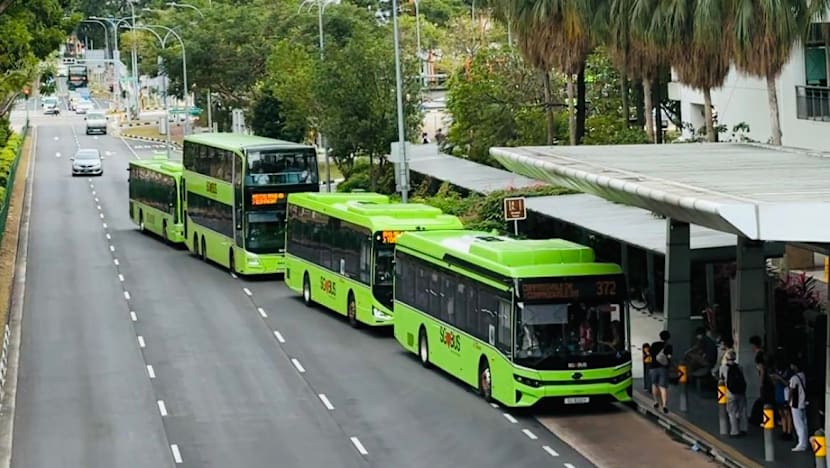
Singapore’s Land Transport Authority will launch three new bus services in October, targeting the fast-growing towns of Tengah and Woodlands, as the government races to keep public transport infrastructure pace with residential development. An interim shuttle service broadly replicating the delayed Jurong Region Line (JRL) route is also confirmed for the second half of 2027.
Transport Minister Jeffrey Siow announced the measures on Sunday at a Mid-Autumn Festival event held at Tengah Community Club, framing connectivity as a “key priority” for Singapore’s newest HDB town. Tengah’s population has more than doubled in a single year, rising to 28,000 residents, with projections placing that figure at 57,000 within two years.
The speed of that demographic surge has outpaced infrastructure delivery — a structural tension familiar to anyone who watched Punggol’s early years unfold. Prime Minister Lawrence Wong has himself acknowledged the comparison, recounting a resident who dubbed Tengah the “Punggol of the West.”
Siow noted that only four bus services operated in Tengah as recently as last May. That number now stands at eleven, though several routes remain peak-hour only due to constraints on bus fleet and driver availability. The minister was candid about the trade-off: breadth of coverage was prioritised over frequency, with the expectation that demand data will justify off-peak expansion over time.
New services 873 and 874, along with the truncated variant 873M, will begin operations on October 25. Service 873 links Tengah to Bukit Gombak, Hillview, and Hume MRT stations; 873M operates a shorter version of that corridor. Service 874, which Siow described as one of the most-requested by residents, provides a direct connection between Tengah and Choa Chu Kang — a route that currently requires two to three bus transfers. The 874 will serve Choa Chu Kang town centre, Concord Primary School, Bukit Panjang Government High, Chua Chu Kang Primary, Sunshine Place, and Brickland. Siow, who represents Chua Chu Kang GRC, noted the social logic plainly: many Tengah residents relocated from Choa Chu Kang, where family members and children’s schools remain.
In Woodlands, new service 968 will operate from the temporary bus interchange, connecting commuters to Woodlands North, Woodlands South, and Admiralty MRT stations. Siow, who also serves as Second Minister for Finance, positioned the route as preparatory infrastructure for the Johor Bahru–Singapore Rapid Transit System (RTS) Link, scheduled to open in January 2027. The logic is straightforward: the RTS Link will generate new cross-border passenger flows that Woodlands’ existing bus network is not configured to absorb.
Existing services will also see capacity reinforcement. City direct service 674, which connects Tengah to the Central Business District, and service 861, linking Sembawang and Yishun, will both receive additional trips. Siow acknowledged crowding on both routes during morning peak hours. In Punggol, service 381 has already been extended from Punggol East to Punggol Coast, effective September 13.
The JRL announcement carries particular weight given the political sensitivity around the delay. Siow had previously disclosed that the line’s opening would slip by approximately six months due to construction and testing setbacks, pushing the launch to mid-2028. The interim bus shuttle, following the JRL alignment, is designed to deliver the line’s connectivity benefits on the original timeline — first by road, then eventually by rail. LTA said fuller details on the shuttle, along with the 674, 861, and 968 enhancements, will be released closer to their respective implementation dates.
The sequencing reflects a broader pattern in Singapore’s transport planning: bus services as bridging instruments when rail delivery falters or population growth accelerates faster than capital infrastructure can follow. Whether the interim measures prove adequate for a town expected to nearly double its population again within two years remains the more consequential question.