South Korea’s Export Surge: What the AI Chip Boom Means for Asia’s Trade Bellwether

What is actually happening with South Korean exports?
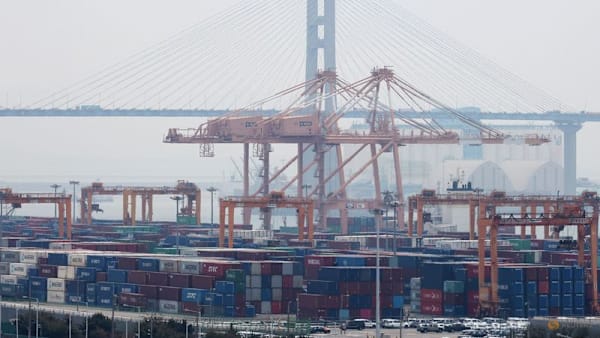
South Korea’s exports are on course to record their strongest annual growth in nearly five decades. A Reuters poll of 13 economists, released on Monday, placed the median estimate for June export growth at 61.0 per cent year-on-year — surpassing the already remarkable 53.4 per cent pace recorded in May and marking the highest growth rate since October 1978. The official trade figures are due on Wednesday, 1 July.
This is not a statistical blip. Exports have climbed consistently since June 2025, with growth accelerating into double digits from December onward. The trajectory is steep, sustained, and structurally anchored in a single sector: semiconductors.
Why are semiconductors driving everything?
The proximate cause is straightforward. Global investment in artificial intelligence infrastructure has triggered a surge in demand for memory chips — the kind produced at scale by Samsung Electronics and SK Hynix, South Korea’s two dominant chipmakers. Rising chip prices have amplified the revenue effect beyond volume alone.
The numbers from the first 20 days of June illustrate the concentration clearly. Semiconductor shipments soared 188.4 per cent year-on-year during that period, pushing chips’ share of total exports to 41.2 per cent, according to Korea Customs Service data. Exports overall jumped 60.4 per cent over the same window.
An Ki-tae, an economist at NH Investment & Securities, sees no immediate reversal. “With chip prices climbing and token usage at the world’s major language models rising, the strong run in memory chip exports looks set to continue,” he said.
Is the growth broader than chips alone?
Partially. The chip sector is doing the heavy lifting, but analysts identify secondary tailwinds beginning to support non-chip categories. Park Sang-hyun, an economist at iM Securities, points to falling global oil prices as a factor that could stimulate wider trade activity. “With the chip export boom continuing, a global recovery driven by falling oil prices should also support exports of non-chip products,” he noted.
Imports are also rising sharply — forecast at 26.3 per cent year-on-year for June, the steepest increase since August 2022. That figure, up from 20.7 per cent in May, reflects both domestic demand and the capital goods imports that feed industrial expansion. The monthly trade surplus is projected at a median $32.58 billion, which would set a fresh record.
Inflation, meanwhile, is tracking upward. Consumer prices are expected to rise 3.2 per cent year-on-year in June — the fastest increase since December 2023 — complicating any near-term monetary easing calculus for the Bank of Korea.
What structural bets is Seoul placing on this momentum?
The South Korean government is not treating the current boom as a windfall to be managed passively. Seoul is preparing to announce three “mega-projects” designed to anchor the country’s next growth phase. The centrepiece is a new semiconductor hub in the southwest of the country — a facility that local media report could attract combined investments from Samsung and SK Hynix spanning hundreds of billions of dollars over several years.
The logic is industrial policy meeting geopolitical positioning. South Korea occupies a structurally critical node in global semiconductor supply chains. Locking in that position through state-backed infrastructure — rather than relying solely on private capital cycles — reflects a deliberate, long-horizon approach to economic sovereignty.
What does this mean for the wider region?
South Korea’s export performance functions as a leading indicator for global trade conditions. As Asia’s fourth-largest economy and a high-volume exporter of capital-intensive goods, its cycles tend to precede broader regional shifts.
The June trade data, due Wednesday, will confirm whether the Reuters poll median holds. What it will not resolve is the deeper question: how durable is a growth story this concentrated in a single technology cycle. That answer will take longer to emerge — and will matter well beyond Seoul.