
South Korea’s Lee Jae Myung Backs Four-Year Presidency With Re-election Rights and Parliamentary Power Shift

A Constitution Forty Years Out of Date
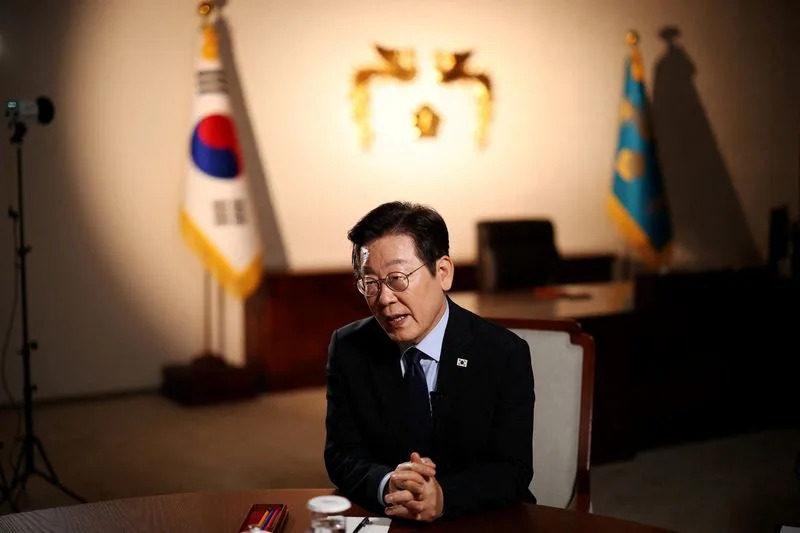
South Korean President Lee Jae Myung has publicly endorsed a fundamental restructuring of the country’s executive framework — one that would replace the current single five-year presidential term with a renewable four-year model, while redistributing meaningful authority to parliament. The proposal, consistent with positions Lee advanced during his 2022 presidential campaign, signals an early and deliberate push to reshape the institutional architecture of South Korean governance.
In a post published on X on Friday, Lee stated plainly that the constitution — unchanged for nearly four decades — no longer suits contemporary political conditions. He called for revision through bipartisan parliamentary consensus, framing the exercise as a structural correction rather than a partisan manoeuvre.
What Lee Is Actually Proposing
The substance of Lee’s preferred reform extends well beyond adjusting term lengths. His stated priorities encompass a rebalancing of institutional power that would transfer several executive prerogatives to the legislature.
A presidential Blue House official cited by Yonhap on Friday added that Lee regards the four-year re-electable model as commanding the broadest public acceptance among the available reform options. The official also noted that Lee shares concerns about what critics have long described as South Korea’s “imperial presidency” — an executive office so structurally dominant that it has historically concentrated power in ways that resist meaningful institutional check.
The “Imperial Presidency” Problem
The critique embedded in Lee’s framing is not new. South Korea’s current constitutional order, established in 1987 following the democratic transition, was designed to prevent indefinite rule by restricting the president to a single non-renewable term. The logic was sound for its moment: eliminate the incentive for incumbent entrenchment. The unintended consequence, however, has been a presidency structurally insulated from electoral accountability mid-term, and therefore prone to concentrated, difficult-to-check executive action.
The tension is well-documented. A president who cannot seek re-election faces weakened political incentives to maintain legislative coalitions, respond to public pressure, or sustain governing discipline in the final years of office. The lame-duck dynamic arrives early and persists long. By contrast, a re-electable executive must sustain performance across terms to remain viable — a structural incentive for accountability that the current framework systematically removes.
Whether the shift to a four-year renewable term would genuinely constrain the “imperial” character of the presidency, or simply extend its duration under a more electorally disciplined form, depends heavily on whether the accompanying power transfers to parliament are substantive rather than cosmetic.
The Parliamentary Arithmetic
Any constitutional amendment in South Korea faces a demanding procedural threshold. The Blue House official confirmed that changes require the support of at least 200 lawmakers in the 300-seat National Assembly — a two-thirds supermajority — and must rest on genuine political consensus rather than a simple governing coalition majority.
That arithmetic shapes everything. Lee’s Democratic Party holds a strong parliamentary position following recent elections, but a supermajority demands meaningful engagement with opposition forces. The official’s emphasis on bipartisan agreement is therefore not merely rhetorical; it reflects a hard institutional constraint that will determine whether any reform advances beyond the proposal stage.
Lee’s insistence that constitutional reform must be “discussed and pursued in the National Assembly” positions the executive as a proponent rather than a driver — a framing that may be strategically calibrated to reduce opposition resistance and signal institutional good faith.
Continuity With 2022 Campaign Positions
Lee was careful to anchor Friday’s statements in positions he held before assuming the presidency. His 2022 campaign platform explicitly backed adjusting the balance of power between the executive and legislature, and he confirmed that his acceptance of a potentially shortened presidential term — if necessary to achieve broader constitutional reform — remains operative. That continuity matters politically: it insulates the proposal from accusations of opportunism and frames it as a principled, pre-existing commitment rather than a post-election recalibration.
The deliberate consistency also signals that Lee intends to pursue constitutional reform as a defined policy objective, not a floating aspiration. How aggressively his administration presses the National Assembly to act, and whether opposition parties find the terms sufficiently attractive to engage seriously, will determine whether South Korea’s forty-year-old constitutional framework finally faces meaningful revision.