

Norway Moves to Restrict Smart Glasses in Public Spaces — and the World Is Watching

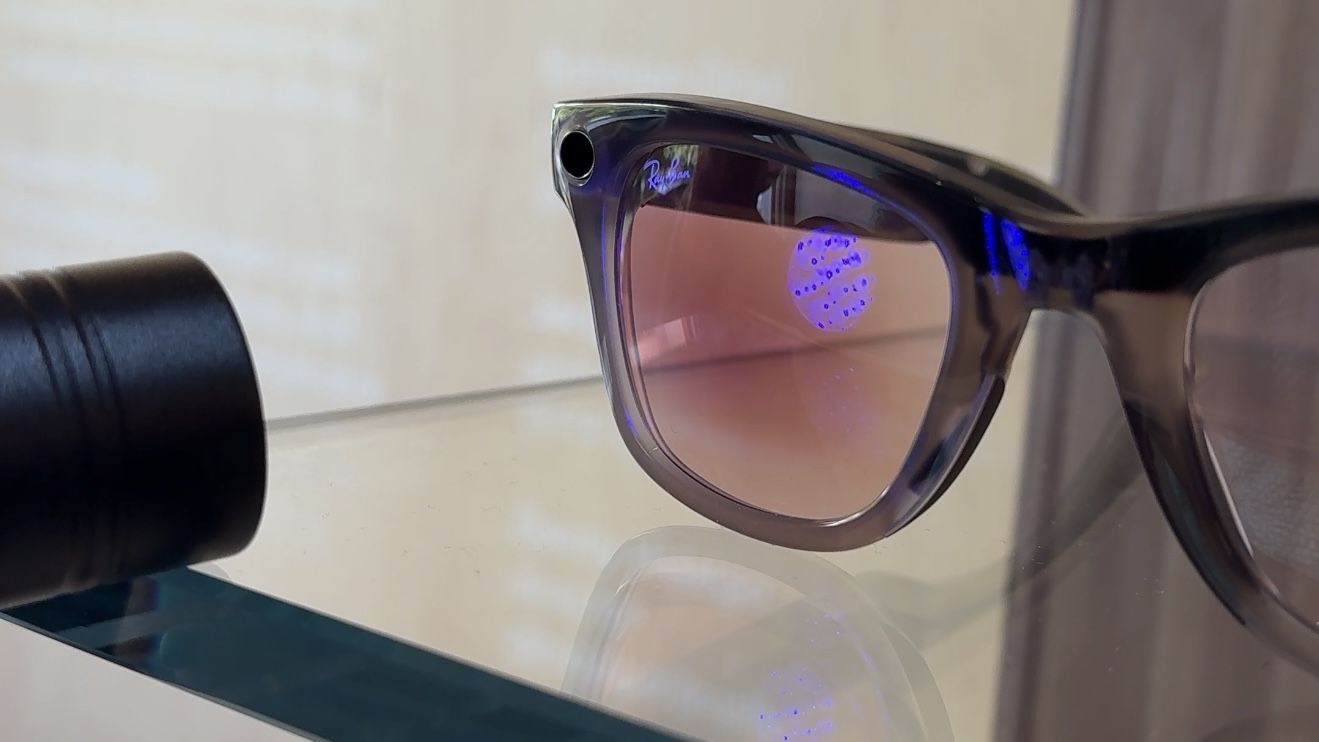
On a beach in Oslo, a stranger walks past. He wears what looks like an ordinary pair of sunglasses. He does not raise a phone. He does not point a camera. He simply looks, and in that looking, he records.
This is the quiet provocation at the heart of Norway’s landmark proposal — the first of its kind from any national government — to impose a temporary ban on camera-enabled, AI-powered smart glasses in designated public spaces. The Norwegian government’s move, reported this week by Ars Technica, targets precisely the environments where people are most physically exposed and least prepared to consent: parks, beaches, museums, schools, kindergartens, shopping centres, healthcare facilities, gyms, and public events. Private use within the home would remain unrestricted.
Norway’s Minister of Digitalization, Torgeir Micaelsen, has been direct about the stakes. “I am concerned about the introduction of powerful new technology where people risk being photographed, filmed, or recorded without their knowledge,” he said, framing the proposal not as a technophobic reflex but as a deliberate pause — a mechanism to allow, in his words, “a thorough assessment and an informed debate that can lay the foundation for permanent regulation.” The temporary ban, if passed, would buy time for an expert group to draft legislation with more durable teeth.
The governing Labour party does not hold an outright majority in the Storting, Norway’s parliament, and will require opposition support to pass the bill. It has nonetheless signalled its intention to move “as soon as possible,” a phrase that carries particular weight given the accelerating pace at which the technology is spreading into everyday life.
The timing is not incidental. Earlier this week, Dutch eyewear retailer Hans Anders pulled Meta Ray-Ban smart glasses from more than 400 stores, citing privacy concerns. The product — fashionable, inconspicuous, and increasingly capable — has become something of a flashpoint in the broader debate, earning the unflattering street-level epithet “pervert glasses” in several European markets. Meta did move to address one of the most glaring vulnerabilities: wearers had been disabling or physically covering the LED indicator light that signals active recording, prompting the company to roll out an update that blocks video capture when the LED is obstructed. It is a technical patch for what is, at its core, a social and regulatory problem.
The regulatory landscape elsewhere remains fragmented to the point of incoherence. Australia’s federal government has prohibited smart glasses in government workspaces and service centres, and is weighing broader public restrictions. The City of Sydney, acting in concert with four other local councils, has pledged to ban the devices from public pools, gyms, childcare centres, and libraries. In the United Kingdom, the pub chain Wetherspoons and a scattering of restaurants have imposed their own house rules, while cinema chains are reportedly considering restrictions — though their concern centres on content piracy rather than personal privacy. These are, by any measure, patchwork responses to a systemic challenge, and most observers acknowledge they fall short.
What Norway is attempting is categorically different in ambition: a nationally coordinated, legislatively grounded framework that treats the issue as a matter of public law rather than private policy. If the bill clears parliament, it would represent the first time a sovereign government has moved beyond ad hoc institutional bans toward something approaching a coherent national standard. Other governments — particularly those in the European Union already navigating the contours of the AI Act and GDPR — will study the outcome carefully.
The deeper question Norway is forcing into the open is one that technology policy has long deferred: at what point does the convenience of a consumer device become a structural threat to the reasonable expectation of privacy in shared public life? Smart glasses do not announce themselves. They do not require the social performance of raising a phone. They collapse the distance between looking and recording, and in doing so, they change the nature of public space itself — quietly, incrementally, and without asking permission. The person on that Oslo beach may never know they were captured. That, precisely, is the problem Norway has decided it can no longer ignore.