
US Imposes 12.5% Tariffs on Singapore Exports, Citing Forced Labour Enforcement Gaps

What Has Happened
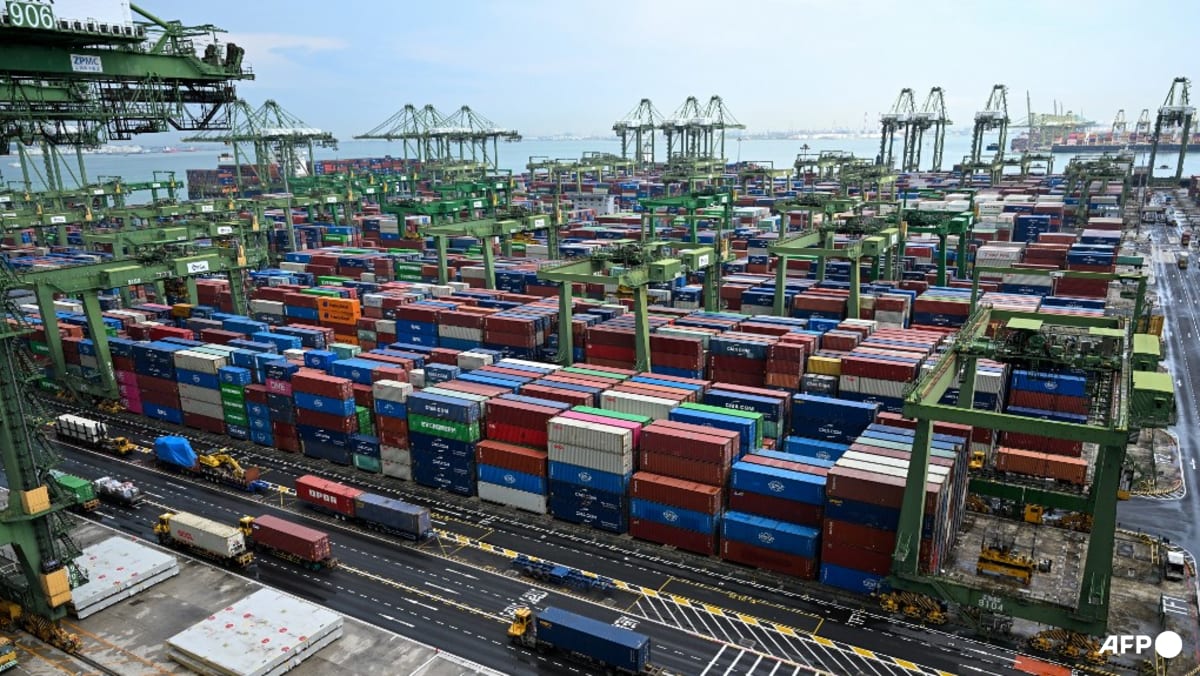
The United States began imposing a 12.5 per cent tariff on a range of Singapore exports from Friday, 24 July, following the conclusion of a Section 301 investigation by the US Trade Representative (USTR) into 60 trading partners accused of failing to enforce bans on goods produced with forced labour. Singapore’s Ministry of Trade and Industry (MTI) confirmed that approximately one-third of the country’s domestic exports to the United States will be affected by the new measures.
The tariffs are not unique to Singapore. They are part of a broader sweep.
Singapore’s Institutional Position
MTI’s response has been careful and calibrated, neither conceding the US framing nor dismissing it outright. The ministry maintains that Singapore does not condone forced labour, operates a comprehensive domestic enforcement framework, and has consistently engaged constructively with international labour standard-setting bodies. Its substantive objection to the tariff rests on a structural argument: that forced labour in complex, multi-tiered global supply chains is a transnational problem requiring international cooperation, most effectively addressed at source rather than through unilateral trade restrictions applied to transit and hub economies.
That argument carries considerable institutional weight. Singapore’s position as one of the world’s most significant trading entrepôts means that a blanket prohibition on goods produced with forced labour — the standard the USTR appears to require — would impose compliance burdens of a fundamentally different character on a hub economy than on a large domestic producer. MTI has signalled it will continue to examine this question in close consultation with the Singapore Economic Resilience Taskforce and the business community, suggesting that any legislative or regulatory response will be deliberate rather than reactive.
The Political Economy Beneath the Surface
Minister Balakrishnan’s remarks on the sidelines of the ASEAN Foreign Ministers’ Meeting deserve careful reading. His acknowledgement that the American administration “for its own domestic political reasons, needs to raise tariff revenue” was not a diplomatic slip — it was a precise and frank diagnosis of the structural dynamic at work. The US trade surplus with Singapore, and its growth, renders the forced labour justification analytically thin as a bilateral economic grievance. What it represents, instead, is a broader American policy posture in which the forced labour instrument has been repurposed as a revenue and leverage mechanism applied across trading partners without granular differentiation.
Singapore’s concern, articulated by Balakrishnan, is that it must avoid becoming collateral damage in a global tariff escalation it neither provoked nor benefits from. That is a structurally difficult position to occupy: too integrated into global supply chains to decouple, too small to absorb retaliatory leverage, and too rule-of-law-oriented to respond in kind.
What Businesses Should Do Now
SBF chairman Mark Lee’s call for “clear guidance and adequate transition periods” reflects the federation’s awareness that the administrative detail of implementation — product classification rulings, documentation requirements, enforcement timelines — will determine the practical burden as much as the headline rate itself.
The Broader Picture
The 12.5 per cent tariff is, in isolation, manageable for many Singapore exporters. The more consequential risk lies in what it signals: that the US is prepared to deploy trade instruments against economies with which it runs a surplus, on grounds that are institutionally contestable, and that the architecture of exemptions and carve-outs will be shaped by negotiating leverage rather than principled consistency. For Singapore, a state whose economic model depends on the predictability and enforceability of international trade rules, that is the deeper structural concern — one that no single round of bilateral engagement with the USTR will resolve.