
Singapore and the UAE Move Toward a Comprehensive Economic Partnership — and the Stakes Are Larger Than Trade

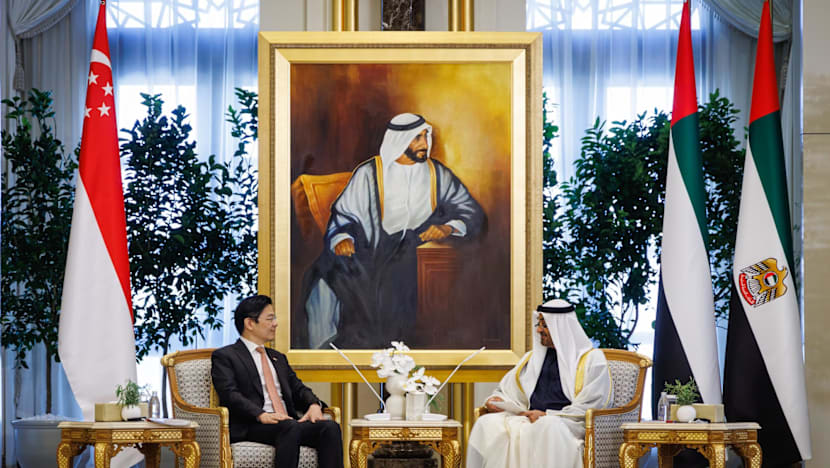
Singapore and the United Arab Emirates are not merely expanding a trade relationship. They are building the architecture of a strategic partnership designed to outlast the turbulence reshaping the global order.
The central thesis here is straightforward: the announcement of negotiations toward a Comprehensive Economic Partnership Agreement (CEPA) between Singapore and the UAE represents far more than a bilateral trade deal. It reflects a deliberate institutional move by both states to anchor themselves in each other’s economic and geopolitical futures at a moment when trusted partnerships have become scarce commodities. The substance of Prime Minister Lawrence Wong’s official visit to Abu Dhabi — witnessed agreements, a new joint energy task force, Temasek’s planned Abu Dhabi office — confirms that the relationship has moved well past diplomatic pleasantry into structural integration.
The numbers establish the foundation. Total non-oil bilateral trade between Singapore and the UAE reached approximately US$6.5 billion last year, a 25 per cent increase from the year prior. The UAE is already Singapore’s largest trading partner in the Middle East, a designation that carries real weight given Singapore’s historically deep commercial ties across the region. The CEPA, once concluded, would deepen economic integration, facilitate investment flows, and — critically — provide businesses in both countries with a formalised, rules-based framework to operate within. For Singapore, which has pursued CEPAs with the United States, China, India and others as instruments of economic statecraft, adding the UAE to that portfolio is a meaningful expansion of its institutional reach into the Gulf.
The energy dimension deserves particular attention. Three Memorandums of Understanding were signed during Mr Wong’s meeting with UAE President Sheikh Mohamed bin Zayed Al Nahyan, covering energy cooperation, water cooperation and disease vector control. A new joint energy task force was simultaneously established, with a mandate spanning the full value chain — from trading to infrastructure to downstream activities. Both governments also welcomed ongoing cooperation in nuclear energy through the Emirates Nuclear Energy Company. For Singapore, a city-state with no natural energy endowment and acute water vulnerability, these agreements are not symbolic. They address structural dependencies that Singapore’s planners take seriously. For the UAE, access to Singapore’s financial infrastructure, trading networks and technology ecosystem provides reciprocal value that pure hydrocarbon wealth cannot replicate.
The geopolitical framing of the visit is equally instructive. Mr Wong explicitly acknowledged that “this has been a difficult period for the UAE and the wider Middle East,” referencing ongoing regional conflict. His reaffirmation of Singapore’s solidarity — and the joint statement’s emphasis on trusted partnerships and economic and security resilience — signals that Singapore is positioning itself as a stable, credible partner in a region where that quality is in short supply. This is consistent with Singapore’s broader foreign policy posture: maintaining substantive relationships across geopolitical fault lines without being drawn into alignment. That posture has institutional value, and both sides appear to understand it.
The longer horizon matters too. Singapore will chair ASEAN in 2027, and both nations used the joint statement to signal their intent to advance negotiations toward an ASEAN–GCC Free Trade Agreement during that chairmanship. Temasek’s planned Abu Dhabi office, part of a broader expansion that would bring its global network to 15 offices across 11 countries, embeds Singapore’s sovereign investment presence directly into Gulf capital markets. More than 4,000 Singaporeans reside in the UAE — the largest such community in the region — providing a people-to-people substrate that trade agreements alone cannot manufacture. Taken together, these moves suggest that the CEPA is not the ceiling of ambition but the formal beginning of something considerably more integrated. The question is not whether the partnership deepens. The question is how quickly the institutional scaffolding can be built to support the weight both sides intend to place on it.