
Singapore’s Labour Market Holds Steady in Q2 2026, But Retrenchments Hit Five-Year High

The numbers tell a story of contradictions.
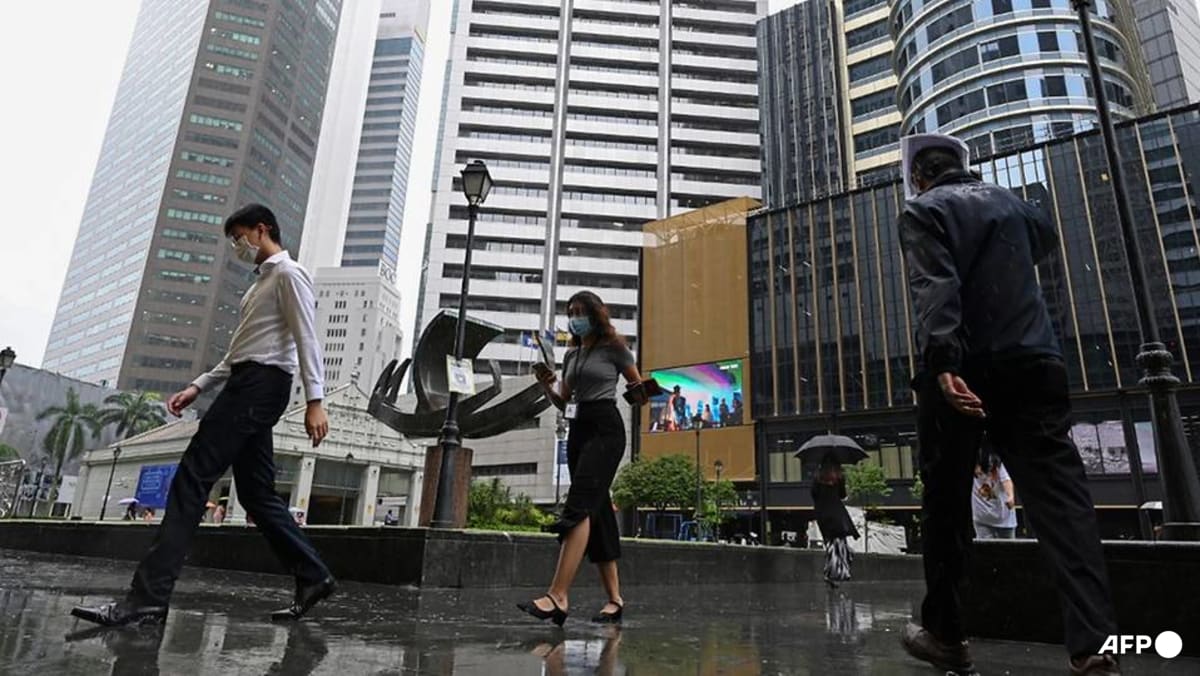
Singapore’s labour market expanded for a nineteenth consecutive quarter in Q2 2026, adding 10,700 jobs and keeping unemployment at a low 2 per cent — yet retrenchments climbed to their highest level since the depths of the COVID-19 pandemic, reaching 4,500 for the quarter. The Ministry of Manpower’s advance figures, released on 31 July, capture a labour market navigating a peculiar tension: aggregate resilience coexisting with concentrated structural dislocation.
The 4,500 workers retrenched in Q2 represent a meaningful jump from the 3,830 recorded in Q1, lifting the incidence of retrenchment from 1.6 to 1.9 per 1,000 employees — the highest quarterly figure since Q4 2020, when 5,640 workers lost their jobs as the pandemic reshaped the economy. MOM was careful to contextualise the figures: during the 2009 Global Financial Crisis, quarterly retrenchments ranged from 5,980 to 12,760, and during the COVID-19 period from 5,640 to 9,120. By those benchmarks, the current numbers remain contained. The ministry attributed the Q2 increase to “business restructuring” concentrated in outward-oriented sectors — a formulation that gestures toward, without fully naming, the technology and professional services industries that have been shedding headcount globally.
This pattern had already surfaced in MOM’s June data, which documented a sharp rise in retrenchment incidence among degree holders in Q1, driven by restructuring in professional and knowledge-intensive sectors. The same June report flagged elevated layoff rates among workers aged 50 to 59, where the incidence rose from 2.8 to 3.1 per 1,000 resident employees. These are not the profiles of low-wage workers displaced by automation in the conventional sense; they are credentialed mid-career professionals caught in the crossfire of corporate restructuring and technological substitution — a demographic with fewer safety nets than the headline unemployment rate implies.
The broader employment picture, however, defies easy pessimism. Total employment growth of 10,700 in Q2 exceeded the 9,400 recorded in Q1 and was broadly in line with the 10,400 gain posted a year earlier, suggesting that the expansion retains genuine momentum. Resident employment continued to grow, though at a slower pace than in Q1, with gains concentrated in essential and public services. Non-resident hiring — particularly in construction and manufacturing — drove the bulk of Q2’s employment increase, a compositional shift worth noting: it suggests that Singapore’s tightest labour demand currently sits in sectors requiring physical presence rather than the knowledge-economy roles where restructuring is most acute.
Unemployment figures reinforced the picture of surface-level stability. The overall unemployment rate held at 2 per cent in June, unchanged from March. Resident unemployment was steady at 2.9 per cent, while citizen unemployment edged down marginally from 3.1 to 3.0 per cent. These are not numbers that ordinarily signal distress — but they are aggregate measures, and aggregate measures can obscure the velocity of churn beneath them.
Forward-looking indicators offered some reassurance. The proportion of firms expecting to hire rose to 43.9 per cent in June from 40.6 per cent in May, and the share anticipating wage increases climbed from 23.7 to 29.3 per cent over the same period. The proportion expecting to retrench workers fell from 3.2 to 2.7 per cent. MOM interpreted this as evidence that “labour demand remained resilient even as companies stayed cautious amid economic uncertainties and ongoing restructuring in some sectors.” The Monetary Authority of Singapore, for its part, had flagged in April that hiring and wage growth were likely to moderate in 2026, citing global headwinds including the Middle East conflict — a reminder that Singapore’s small, open economy absorbs external shocks with unusual directness.
The ministry’s response to the structural pressures has been largely institutional: it pointed workers toward career conversion programmes, the Mid-Career Pathways Programme, SkillsFuture training, and NTUC’s Employment and Employability Institute. Fresh graduates encountering a difficult entry-level market can access the Graduate Industry Traineeships scheme, while involuntarily unemployed individuals may draw on the SkillsFuture Jobseeker Support scheme for temporary financial assistance of up to S$6,000 over six months. These are not negligible provisions, and Singapore’s reskilling infrastructure is more developed than most comparable economies can claim. Whether the pace and scale of institutional retraining can match the velocity of restructuring in knowledge-intensive sectors, however, remains the more searching question — one the advance figures alone cannot answer.
The full Q2 labour market report, due in mid-September, will offer a more granular decomposition of these trends. Until then, the advance data sketches a labour market that is, by the numbers, holding — but doing so against a backdrop of sectoral stress that the aggregate figures are structurally designed to understate.