

Singapore Haze Clears: PSI Returns to Moderate Across All Regions as NEA Eyes Improving Outlook

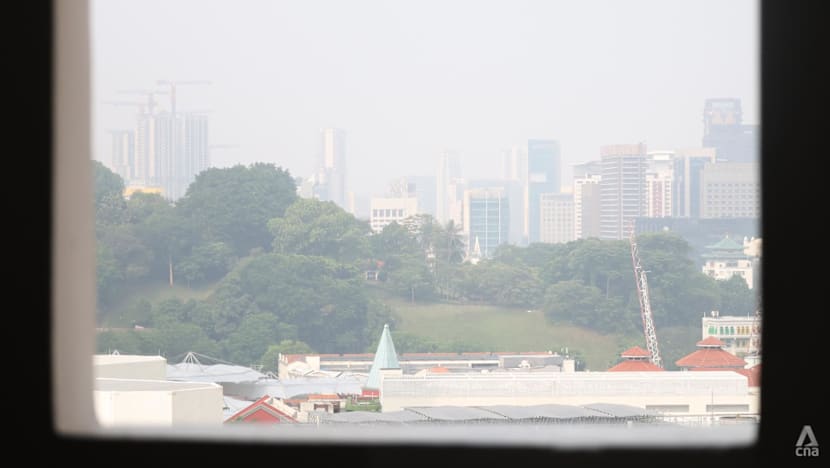
Singapore’s air quality has turned a corner, at least for now. By Sunday night, the 24-hour Pollutant Standards Index (PSI) reading had returned to the moderate band across all five regions of the island — a meaningful, if cautious, improvement after a day that saw several areas lingering in unhealthy territory. The trajectory points toward further relief, but the underlying conditions that produce transboundary haze have not disappeared.
The west was the last holdout. Its 24-hour PSI reading remained in the unhealthy band throughout Sunday before finally dipping into the moderate range at 11pm. The south and north had recovered earlier — the south crossing below the unhealthy threshold at 10am when its reading fell to 100, the north following at 1pm with a reading of 99. Central Singapore entered the moderate range at 5pm, and the east joined at 7pm. The sequencing matters: it reflects the directional movement of smoke and wind patterns, not a uniform clearing of conditions.
The 1-hour PM2.5 readings told a slightly more volatile story. The west briefly rose into the elevated range at 8pm before falling back to normal by 9pm. The four other regions remained in the normal band throughout. PM2.5 — fine particulate matter small enough to penetrate deep into the lungs — is the metric most directly tied to health risk, and its return to normal levels across the island is the more clinically significant data point.
What NEA’s Forecast Signals
The National Environment Agency projected that Monday’s 24-hour PSI would range from 70 to 100, placing it in the good-to-moderate band. The agency noted that smoke haze was observed over Kalimantan on Sunday but did not drift toward Singapore — a reminder that the source of the problem remains active even when its effects are temporarily contained. Showers over parts of Singapore on Sunday helped suppress local particulate levels, and further rainfall is expected on Monday, which NEA said should reduce the likelihood of haze affecting the country.
For Tuesday and Wednesday, winds are expected to continue from the southwest or west, and showers over Singapore and its vicinity should, in NEA’s assessment, “further help the haze situation.” That language is measured and deliberate. The agency is not declaring the episode over; it is describing conditions that may keep the worst outcomes at bay.
The public health guidance remained tiered by vulnerability. Healthy individuals were advised to reduce prolonged or strenuous outdoor exertion on Sunday, while elderly people, pregnant women and children were told to minimise such activities. Those with chronic heart or lung disease were advised to avoid strenuous outdoor physical exertion entirely. When hourly PM2.5 concentrations rise into the elevated band, even healthy individuals are advised to curtail strenuous outdoor activities for the subsequent hour.
The episode underscores a structural reality Singapore cannot regulate away: its air quality is partially determined by land-clearing practices in neighbouring countries, particularly in Kalimantan and Sumatra, where agricultural burning during dry seasons generates the smoke that regional wind patterns carry westward. Domestic showers and wind shifts provide temporary relief. The deeper question — of regional enforcement, bilateral pressure and ASEAN-level accountability — remains, as it has for decades, unresolved.



