
Singapore Raises Prime Minister’s Salary by Over S$1.4 Million, Marking First Ministerial Pay Revision in 15 Years

A Landmark Revision to Already-Record Salaries
Singapore has announced a sweeping upward revision to its ministerial salary benchmarks, increasing Prime Minister Lawrence Wong’s annual compensation from S$2.2 million to S$3.6 million — a rise of roughly 64% that brings his benchmark package to approximately US$2.8 million. The adjustment, the first of its kind since 2010, extends across the entire cabinet: the Deputy Prime Minister’s benchmark climbs from S$1.8 million to S$3 million, while other cabinet ministers will receive between S$1.8 million and S$2.8 million depending on portfolio seniority. These are not incremental cost-of-living corrections. They represent a structural reset of what Singapore’s political establishment believes competitive governance should cost.
The Institutional Logic Behind the Numbers
Singapore’s approach to political compensation rests on a long-standing, explicitly articulated argument: that competitive salaries are necessary to attract individuals of sufficient calibre away from the private sector, thereby reducing the structural incentives for corruption. The city-state consistently ranks among the world’s least corrupt jurisdictions on major international indices, and its government points to this record as partial vindication of the model. Critics, however, note that the causal relationship between high pay and clean governance is difficult to isolate, and that the policy serves as much to normalise elite compensation as it does to deter malfeasance. The tension is real and has never been fully resolved in public discourse.
For reference, the US President earns US$400,000 annually, and the UK Prime Minister approximately US$230,000. Singapore’s Prime Minister, even before this revision, earned multiples of both figures. The gap is not incidental — it reflects a deliberate philosophical divergence on how the state should value political labour, one that the People’s Action Party has defended consistently across decades of governance.
Process, Phasing, and Wong’s Personal Commitment
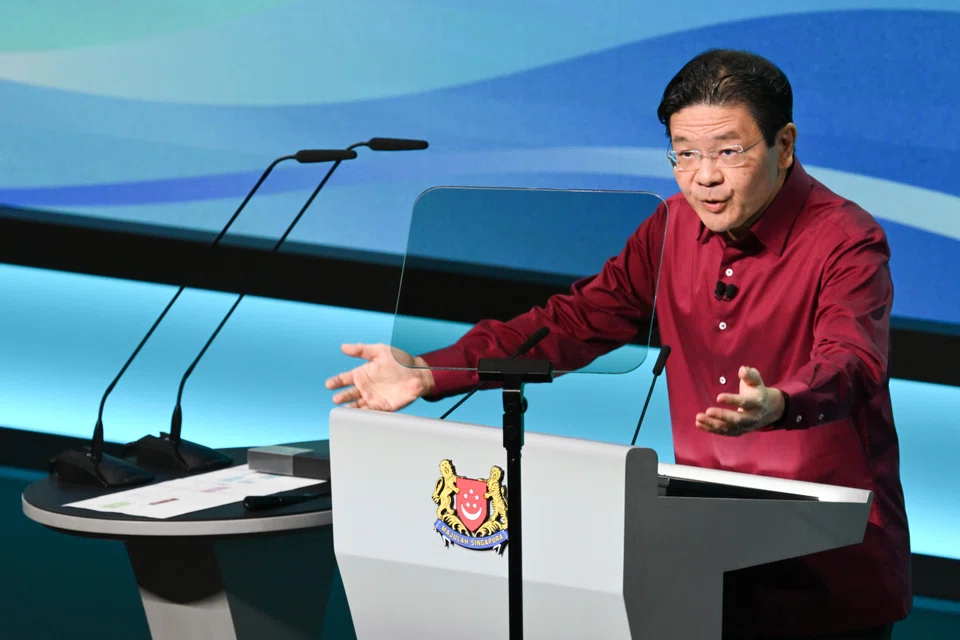
Prime Minister Wong stated that the increases were recommended by an independent committee, lending the revision a degree of procedural insulation from the appearance of self-interest. Existing office holders will not transition immediately to the new benchmark figures. Instead, they will receive a one-off adjustment of up to 9% effective 15 October, with the precise quantum tied to individual performance assessments and other personal circumstances. The phased implementation is a familiar mechanism in Singapore’s administrative culture — it manages optics while signalling institutional seriousness about the underlying change.
Wong also announced that he would donate the entirety of his personal salary increase to what he described as “suitable good causes” for the duration of his term. The gesture is politically legible: it pre-empts the most immediate line of public criticism without conceding the principle that the increase is warranted. Whether it shifts sentiment among Singaporeans who view the revision as tone-deaf relative to median household incomes remains to be seen.
Political Sensitivity in a Dominant-Party System
Wong acknowledged directly that political salaries constitute “a difficult and emotive issue,” and that the sums involved exceed what the vast majority of Singaporeans earn. The People’s Action Party, which has governed Singapore without interruption since independence and controls the 21-member cabinet, commands sufficient parliamentary dominance to implement such changes without legislative obstruction. That institutional position does not, however, insulate it from public scrutiny or the slower-moving pressures of electoral sentiment. Singapore’s political culture involves a population that is highly educated, internationally aware, and increasingly willing to interrogate the assumptions embedded in long-standing policy frameworks.
The core framing offered by Wong — that the question is ultimately about whether Singapore can continue to attract the quality of leadership it requires — is the same argument the PAP has deployed for decades. Its durability as a rhetorical position reflects both its genuine logic and the absence, within Singapore’s political structure, of a robust institutional challenger capable of proposing and credibly defending an alternative model. What this revision confirms is that Singapore’s approach to governance compensation remains coherent, deliberate, and, for now, largely self-reinforcing.