

Singapore’s Mental Health Overhaul: IMH Expansion, a New National Centre, and the Consent Question

What is Singapore actually changing about its mental health system?
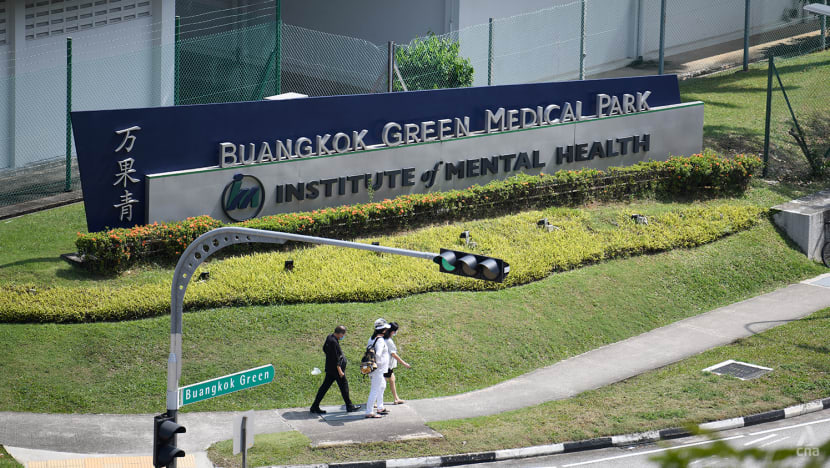
The scale of the shift is significant. The Institute of Mental Health (IMH) will be expanded and redeveloped at its current Buangkok site by 2040, while three regional hospitals — Changi General Hospital, Woodlands Hospital and Alexandra Hospital — are simultaneously strengthening their psychiatric capabilities. The announcement came from Health Minister Ong Ye Kung on October 10, marking World Mental Health Day.
The changes extend beyond bricks and beds. In 2027, IMH will be redesignated as a national specialty centre and renamed the National Centre for Mental Health Singapore. That designation carries institutional weight: it places psychiatric care alongside Singapore’s existing national centres for cancer, cardiology and ophthalmology — fields long treated as infrastructure priorities.
The new centre will lead research, coordinate psychiatric care across hospitals and build sector-wide capabilities. Mr Ong, who also serves as Coordinating Minister for Social Policies, described IMH as “the bedrock of specialist psychiatric care in Singapore” while acknowledging it would need stronger support from the broader hospital network going forward.
Why is this expansion happening now?
Demand is rising, and the numbers make the case plainly. National mindline 1771 is handling approximately 9,000 calls for help each month. The number of youths receiving community-based mental health support has more than doubled. Hospitals and specialist clinics are seeing more patients, including those still in school.
Mr Ong framed this as a global trend accelerating locally, particularly among young people. Rising caseloads in community services, he noted, partly reflect a genuine increase in need — but also a growing willingness to seek help. Both dynamics place pressure on a system that was not designed at its current scale.
Singapore’s response operates on two tracks: expanding specialist capacity at the institutional level while investing in prevention and early intervention at the community level. The redevelopment of IMH and the strengthening of regional hospitals address the former. The latter requires a different kind of structural reform — one touching on stigma, disclosure and access.
What is the stigma problem, and how does the government plan to address it?
Stigma is not merely a cultural inconvenience here — it functions as a structural barrier with measurable consequences. Some individuals fear being judged by family, employers or teachers. Others worry that seeking mental health support could produce a record that disadvantages them in scholarship applications, university admissions, job hiring or insurance underwriting.
Mr Ong addressed this directly: “Seeking mental health support should not, by itself, become a mark against a person.” He added that where disclosure is genuinely necessary, it should be limited to relevant circumstances and handled fairly — with government agencies expected to work through the practical implications.
The acknowledgement that institutional processes — not just social attitudes — may be penalising help-seeking behaviour represents a notable shift in how the state frames the problem. It moves the locus of responsibility from the individual to the system.
Why is parental consent a specific concern for young people?
Current practices across providers are inconsistent, and that inconsistency creates gaps. Callers to mindline 1771 may remain anonymous. Community-based providers generally do not require parental consent before offering counselling. Schools, however, tend to require consent before formal counselling begins, reflecting their emphasis on family partnership.
The problem is that a blanket consent requirement can prevent a young person from taking a first step. Mr Ong acknowledged that a youth may not be ready to involve their parents — whether out of fear of disappointing them or because they do not yet fully understand what they are experiencing. Some may need several confidential conversations with a professional before any family involvement becomes appropriate.
“We need a balanced approach,” Mr Ong said. “The right system is one that lets a young person enter through a safe door, and then involve the family appropriately as the care journey progresses.” That framing positions confidentiality not as a threat to family cohesion but as a precondition for eventual, productive family involvement.
What new guidelines are being developed, and who will they affect?
Two parallel processes are underway. The Singapore Medical Council is revising its ethical guidelines to give doctors clearer direction on parental consent, with the explicit aim of allowing clinicians to proceed with treatment when it is in the patient’s best interests. This addresses the clinical dimension — what a doctor may do when a minor presents without parental knowledge.
The Ministry of Health is separately developing consent guidelines for a broader range of service providers, covering the wider ecosystem of counsellors, social workers and community mental health practitioners. The stated objectives are improving access, protecting welfare and privacy, and engaging parents in ways that strengthen rather than disrupt the recovery process.
Public consultation on these guidelines will be conducted in the coming weeks. That process will test how much appetite exists — among parents, educators and practitioners — for a more flexible, patient-centred approach to consent in mental healthcare for minors.



