
Singapore Signals Escalating Legal and Economic Pressure on Haze-Linked Firms

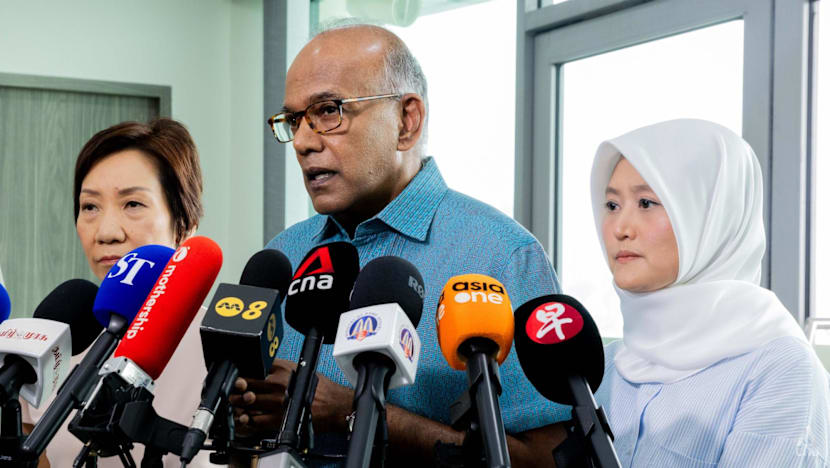
On a Monday morning at Woodlands Checkpoint, flanked by the machinery of border governance and a minister for sustainability, Senior Minister K Shanmugam delivered what amounted to a declaration of sustained institutional intent. The setting was mundane by design — a working checkpoint, not a press conference podium — but the message was anything but routine. Singapore, he said, would pursue the companies responsible for the haze “for as long as it takes”, deploying every legal, regulatory and economic instrument available, regardless of whether those companies maintain a presence on the island.
The haze that periodically blankets Singapore and much of the wider region is not a new grievance. It traces its origins to land-clearing fires in Indonesia’s Sumatra and Kalimantan provinces, a practice that agricultural conglomerates have long been accused of tolerating or enabling in the name of cost efficiency. What distinguishes the current moment is the explicit escalation of Singapore’s institutional response — an escalation that Shanmugam, who also serves as Coordinating Minister for National Security and Minister for Home Affairs, framed in unusually direct terms. Singapore is prepared to amend existing legislation or introduce entirely new laws “on an urgent basis to ensure further cooperation”, he said, stopping short of naming a specific timeline but leaving little ambiguity about the direction of travel.
The pressure points Singapore intends to activate are layered and mutually reinforcing. Shanmugam outlined that the government would look beyond the individual concession-holding companies and pursue the larger corporate groups and the individuals who ultimately control them, cutting through the opacity of complex holding structures that have historically allowed agribusiness conglomerates to diffuse accountability. “Companies cannot play hide and seek with different corporate structures,” he said, in a formulation that acknowledged precisely the legal architecture these firms have relied upon. Investigations have already identified that Asia Pulp and Paper purchases from three of the companies that the National Environment Agency has served with preventive measure notices — a supply-chain linkage that Singapore appears willing to treat as grounds for scrutiny.
Smoke-source data has also pointed toward Singapore-listed entities, including First Resources, Bumitama Agri and First Borneo Plantations. The Singapore Exchange has formally directed questions at seven agri-companies listed on its bourse — Golden Agri-Resources, Bumitama Agri, First Resources, Wilmar International, Kencana Agri, Indofood Agri and TSH Resources — a regulatory signal that carries weight precisely because access to Singapore’s capital markets is a meaningful commercial asset. Kencana Agri disclosed that Indonesian authorities have launched a preliminary inquiry into a fire incident at one of its subsidiaries, though the company maintained that the subsidiary had not conducted land clearing in the affected area. Golden Agri-Resources and Wilmar International issued statements seeking distance from the fires, moves that Shanmugam characterised as insufficient on their own. “Their claims must be backed by evidence, not just words,” he said. “They cannot greenwash their behaviour.”
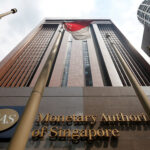
The financial architecture extends further still. Shanmugam noted that banks operating in Singapore have extended credit to companies with agricultural operations in the region, and that any potential connection between those borrowers and the fires would constitute an environmental and legal risk that lenders are obliged to manage. The Monetary Authority of Singapore, he said, retains supervisory jurisdiction over those banks and would ensure they discharge that obligation properly. Singapore would additionally examine whether any haze-linked companies are benefiting from government grants or incentives, with Shanmugam making clear that such benefits are “contingent on lawful and responsible conduct”. Three additional Indonesian companies — PT Buana Megatama Jaya, PT Mananjung Hayak and PT Baratama Putra Perkasa — were named by Minister for Sustainability and Environment Grace Fu as the next recipients of preventive measure notices under the Transboundary Haze Pollution Act, bringing the total to ten firms served under that legislation.
The diplomatic dimension of this posture is not trivial. Legal experts have pointed to 2015 as a cautionary episode, when Singapore’s attempt to invoke the Transboundary Haze Pollution Act generated friction with Jakarta. Shanmugam addressed this directly, stating that it is not Singapore’s approach to “shiver in our shoes before we take any action to protect our own people”, while simultaneously expressing appreciation for the stance adopted by Indonesian President Prabowo Subianto‘s administration — steps he described as “quite unprecedented”. The framing is deliberate: Singapore positions its enforcement actions not as bilateral pressure on Indonesia but as aligned with Jakarta’s own declared policy direction, presenting a unified front against the corporate actors rather than a dispute between sovereign governments. Singapore has offered its full cooperation in firefighting assistance and expressed hope for reciprocal Indonesian cooperation in pursuing the responsible companies.
What emerges from Woodlands Checkpoint that Monday is a picture of institutional resolve that is worth taking seriously, precisely because it operates across multiple registers simultaneously — capital market disclosure obligations, banking supervision, legislative amendment, supply-chain accountability and investor-relations pressure. Whether these instruments will prove sufficient to dislodge the structural incentives that make land-clearing fires a recurring feature of regional agriculture remains an open question, one that no single press statement can resolve. But for the companies named, or those who fear they may yet be named, Shanmugam’s closing line carries the weight of an institutional commitment rather than a rhetorical flourish: the pressure will not lift when the skies clear.