

Singapore’s Haze Crisis Deepens as Three Regions Hit Unhealthy Air Quality Levels

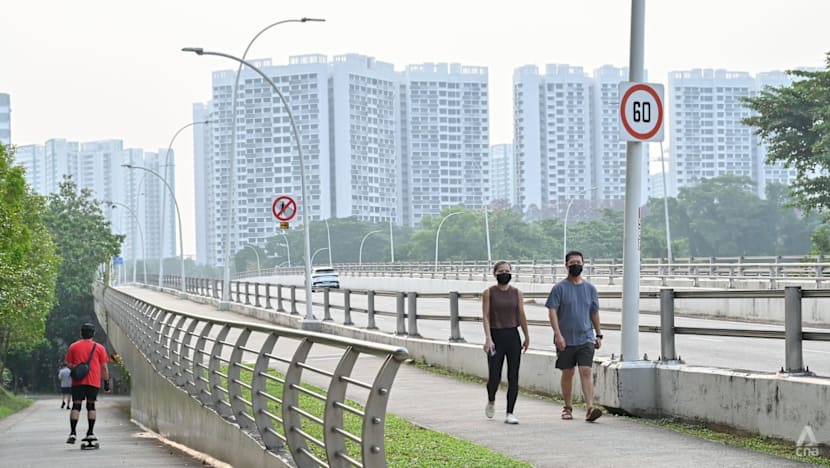
The haze that has periodically choked Singapore’s skies in recent weeks reached a new intensity on Sunday, 20 September, as three of the city-state’s five regions simultaneously recorded unhealthy air quality — a convergence that underscored the worsening transboundary smoke drifting north from Sumatra and Kalimantan.
The deterioration had begun a day earlier, when the central region first crossed into the unhealthy band on the 24-hour Pollutant Standards Index (PSI). By Sunday morning, it had been joined by both the east and the west. At 6am, the central region recorded a PSI of 123, while the west posted 105 and the east 102 — all three firmly above the 100-point threshold that defines unhealthy air quality under Singapore’s National Environment Agency (NEA) framework.
The eastern region was the first to recover. By 10am, its reading had eased to 99, slipping back into the moderate band, and fell further to 87 by 1pm. The west followed a similar trajectory, returning to moderate levels at 1pm with a reading of 97. The central region held out longest, finally dropping to 100 — just within the moderate range — at 7pm. By 11pm, the 24-hour PSI readings across the central, western, and eastern regions stood at 95, 91, and 75, respectively, signalling a meaningful if fragile improvement.
Despite the morning’s elevated readings, two major outdoor events proceeded as scheduled. The Yellow Ribbon Run at Kallang and Race Against Cancer at East Coast Park both went ahead, with organisers citing NEA guidelines and hourly PM2.5 data as the basis for their decisions. The Yellow Ribbon Run organising committee noted that PM2.5 readings from 6am to 10am had remained within Band 1 — classified as normal — for the central and south regions, and shared updates and photographs on social media throughout the morning.
Sunday’s episode did not emerge in isolation. PSI readings had been oscillating in and out of the unhealthy range across the preceding weeks, and the situation had already reached a notable threshold earlier in the week, when all five regions of Singapore simultaneously recorded unhealthy air quality on Tuesday — the first such occurrence since September 2019. That benchmark underlined how significantly conditions had deteriorated relative to recent years.
The meteorological picture helps explain why. NEA’s Sunday morning assessment identified dry weather across much of the southern ASEAN region, with only scattered showers over northern peninsular Malaysia, Borneo, and Sumatra offering any relief. Scattered to widespread hotspots were detected across Kalimantan and the southern and central parts of Sumatra.
Cloud cover complicated a full assessment of the hotspot situation, limiting satellite visibility. NEA nonetheless forecast the 24-hour PSI for the coming period to range from low moderate to unhealthy, warning that dry conditions were expected to persist in southern Sumatra and southwestern Kalimantan. The agency also flagged that prevailing winds blowing from the southeast would continue to carry haze toward Singapore — a structural meteorological risk that offers little short-term relief and situates this episode squarely within the region’s long-running transboundary haze challenge.