

Singapore’s Haze Crisis: What the Government’s First Press Conference Revealed

A City Breathing Carefully
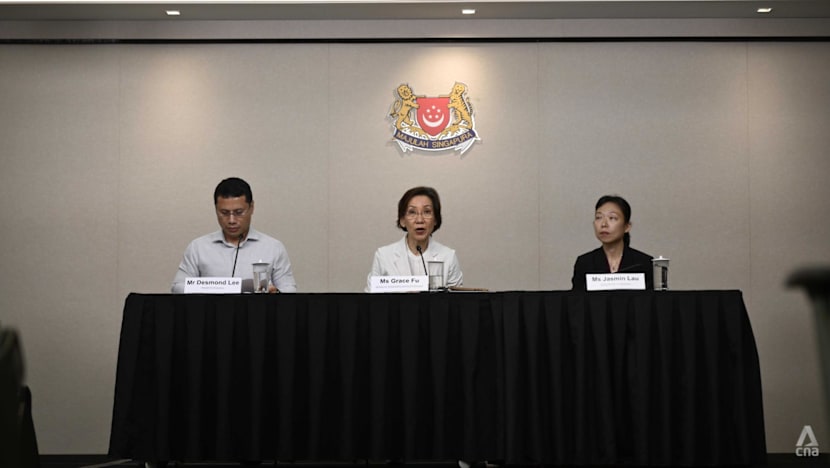
The air over Singapore has carried the acrid signature of burning peatland for nearly two weeks. On Friday, October 16, the government convened its first formal press conference on the deteriorating situation — a signal, in itself, that the haze had crossed from seasonal inconvenience into genuine public health emergency. Minister for Sustainability and the Environment Grace Fu, Education Minister Desmond Lee, and Acting Minister for Manpower Jasmin Lau took the podium together, presenting a coordinated institutional response to a crisis that no single ministry can resolve alone.
Singapore recorded its first unhealthy 24-hour PSI reading of the year six weeks ago. The city has now endured nearly a fortnight of persistently poor air quality across at least parts of the island. What emerged from Friday’s briefing was a picture of a government calibrating carefully — managing public anxiety, coordinating with industry, and navigating a diplomatically delicate relationship with Indonesia, where the fires originate.
Hazardous Levels and a Long Horizon
The headline warning was stark. For the first time this year, the government raised the possibility of the 24-hour Pollutant Standards Index breaching 300 — the threshold that defines hazardous air quality. Ms Fu was measured but direct: the haze could persist for another three to four weeks. That timeline is not arbitrary. It reflects the meteorological reality of Singapore’s position between Sumatra and Kalimantan during this period of the year.
Relief, when it comes, will arrive in two stages. The inter-monsoon period at the end of October or early November should bring lighter, more variable winds less likely to channel smoke toward the island. By early December, the northeast monsoon is expected to redirect those winds entirely. Until then, conditions remain fluid and dependent on rainfall patterns over the fire zones — factors Singapore cannot control.
Masks, Machines, and the Logistics of Protection
The government’s most visible logistical response has been the deployment of N95 mask vending machines. All 37 units were to be operational by Friday night, supplementing distribution already underway at community clubs since October 14. The take-up rate, however, tells its own story: only around ten per cent of eligible Singaporeans had collected their masks at the time of the briefing.
Retail shelves had thinned in some locations as demand spiked, but Ms Fu moved to reassure the public that aggregate supply remains adequate. Retailers are actively restocking, and the government is coordinating with them to prevent localised shortages from becoming systemic. A second round of distribution remains on the table if conditions deteriorate further — a contingency that the government is clearly not ruling out.
Reading the Air: PSI Versus PM2.5
One of the more practically useful outputs of the press conference was guidance on how residents should interpret the two key air quality metrics. The 24-hour PSI captures sustained exposure over a full day and is the appropriate tool for planning ahead. The one-hour PM2.5 reading, by contrast, reflects immediate conditions and should be checked just before going outdoors.
Ms Fu illustrated the distinction with a concrete example: a group planning an outdoor run should first consult the PSI forecast for the following day, then verify the one-hour PM2.5 reading before heading out. If conditions have worsened in the interim, the activity should be cancelled. The National Environment Agency has been asked to present this information more clearly on its platforms — an acknowledgment that the current interface has not made the distinction sufficiently intuitive.
Schools, Examinations, and the Education System Under Strain
The education sector faces the most operationally complex set of decisions. If the 24-hour PSI forecast for the following day reaches or exceeds 300, the Ministry of Education will consider closing schools and shifting to home-based learning for students from preschool through secondary level. Parents would be strongly encouraged to keep infants and young children at home.
The critical carve-out is for working parents who have no alternative arrangements. MOE kindergartens, kindergarten care services, and Early Childhood Development Agency-licensed preschools will remain open regardless — a recognition that school closures impose real economic costs on lower-income households who cannot simply work from home. School leaders will use one-hour PM2.5 readings to manage the school day in real time, restricting outdoor activities as conditions require.
The national examinations add another layer of complexity. Education Minister Desmond Lee confirmed that O-Level examinations could be rescheduled if hazardous PSI forecasts materialise. A-Level candidates are considered less vulnerable by virtue of age and are therefore less likely to face rescheduling. All examination venues will operate with air-conditioning and air purifiers running. Any schedule changes will be communicated through the Singapore Examinations and Assessment Board, MOE’s official channels, and the Parents Gateway platform. Students who fall ill and cannot complete their papers should obtain a medical certificate and apply for special consideration through their schools.
Platform Workers and the Gig Economy’s Exposure
Acting Manpower Minister Jasmin Lau addressed a constituency that often falls between the cracks of workplace protection frameworks: platform workers. Delivery riders and other gig workers cannot retreat indoors when air quality deteriorates. Ms Lau was explicit that platform operators must not penalise workers for haze-related delays — whether through reduced job allocations, pay deductions, or punitive incentive structures.
The ministry’s inspection data adds texture to the concern. Of more than 400 worksites inspected since September, roughly a quarter had inadequate haze management plans. That is not a marginal failure rate. Further guidance is forthcoming on how employers can use one-hour PM2.5 readings to calibrate outdoor work, including the possibility of suspending outdoor activities entirely for vulnerable workers when conditions demand it.
The Indonesian Dimension
Behind every haze season in Singapore lies a bilateral relationship that the government must handle with both firmness and diplomatic care. On Friday, Ms Fu confirmed that Singapore will issue preventive measure notices to seven Indonesian companies identified as responsible for fires contributing to the current pollution. The notices are issued under the Transboundary Haze Pollution Act and carry specific obligations: deploy firefighting personnel, cease burning activities on land the companies own or occupy, and submit plans to extinguish existing fires and prevent recurrence. Fines and charges remain possible further steps.
Singapore has also renewed its offer of assistance to Indonesia, including civilian firefighting support and cloud seeding. Ms Fu said she had contacted her Indonesian counterpart again on Friday but had not yet received a response. That detail — offered plainly, without editorial embellishment — carries its own weight. The fires burn in Indonesian territory. The smoke drifts south. The diplomatic channels remain open, but the pace of response is not Singapore’s to set.
What the Briefing Signals
Press conferences of this nature are institutional instruments as much as informational ones. The government’s decision to convene all three ministers simultaneously reflects an understanding that the haze touches every domain of daily life — health, education, labour, and foreign relations — and that a fragmented response would undermine public confidence. The messaging was calibrated: honest about the severity, precise about the timelines, and careful not to generate panic where preparation is the more useful response.
For residents, the immediate task is straightforward but demanding. Monitor the forecasts. Collect the masks. Adjust plans as the air quality data shifts. The longer structural question — why Singaporeans find themselves here, breathing smoke from fires they did not set, in a crisis that recurs with dispiriting regularity — remains open. Friday’s press conference answered the operational questions. The deeper ones will outlast the haze.



