

Singapore’s Food Safety Exposure: What the Formalin Cabbage Scare Reveals About a 90% Import Dependency

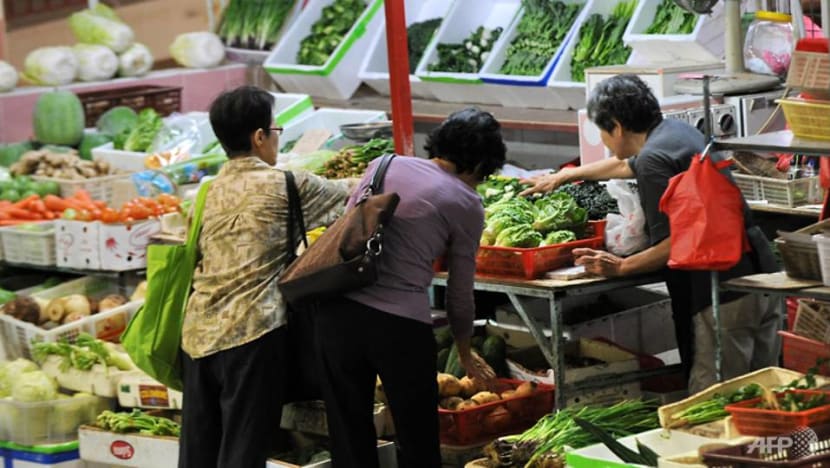
A food safety incident unfolding thousands of kilometres away can reach Singapore’s wet markets and supermarket shelves faster than any regulatory response. The recent case of formalin-treated cabbages sourced from Hebei, China — where traders illegally applied the carcinogenic preservative to extend shelf life — illustrated precisely how exposed a small, import-dependent city-state can be to the failures of distant supply chains. The Singapore Food Agency (SFA) moved swiftly, stepping up surveillance and confirming on 4 September that no formalin contamination was detected in tested Chinese vegetables. The episode passed without incident. The structural vulnerability it exposed, however, remains.
Singapore imports more than 90 per cent of its food from over 180 countries and regions, a deliberate diversification strategy designed to insulate the city-state against supply shocks — plant and animal diseases, extreme weather events, export restrictions, or geopolitical disruption. That breadth is a genuine strength. It is also, simultaneously, a source of compounded risk. Every additional origin country introduces a distinct farming system, regulatory culture, and enforcement capacity, each capable of generating hazards that Singapore’s own authorities cannot directly control or observe in real time. The path a single vegetable travels — from farm to collector, packing house, wholesaler, transporter, exporter, importer, and finally retailer — represents multiple points at which contamination can occur or go undetected.
The range of threats is wide. Bacterial pathogens such as salmonella and E. coli, pesticide residues, undeclared allergens, mycotoxins, and deliberate adulteration all feature in the global food safety landscape. The World Health Organization estimates that contaminated food sickens approximately 866 million people annually and causes around 1.52 million deaths. Critically, these failures are not confined to countries with weaker regulatory frameworks. The United States, in 2025 alone, has investigated E. coli linked to frozen blueberries and raw cheddar cheese, salmonella associated with eggs and jalapeño peppers, and cyclospora connected to iceberg lettuce. Food safety risk is, in this sense, a structural feature of modern food systems rather than a symptom of underdevelopment.
Singapore’s layered defence begins upstream. Higher-risk food categories — meat, eggs, poultry — are subject to source accreditation before they can enter the market, with SFA approving new overseas sources for several of these categories in 2025 under its regulatory framework. Once food enters Singapore, a farm-to-fork surveillance model governs imports, local manufacturing, and retail. Between April 2024 and March 2025, SFA tested more than 6,000 food samples through its Market Monitoring Programme, scanning not only for conventional pathogens but also undeclared allergens. The results suggest the system is functioning: major foodborne illness cases associated with outbreaks of at least 15 people fell from 22.8 per 100,000 population in 2024 to 16.8 in 2025, a meaningful improvement by any comparative standard.
The more difficult question is whether the system can detect what it does not yet suspect. The formalin episode triggered intensified testing precisely because external reports flagged the problem first. Without that intelligence, the hazard might have passed unnoticed through routine sampling protocols not calibrated to look for it. Testing every shipment for every conceivable contaminant is operationally and financially impossible, which means the frontier of food safety governance must shift from reactive detection toward anticipatory intelligence. Paul Teng of the ISEAS-Yusof Ishak Institute, writing on the issue, identifies international intelligence-sharing, rapid outbreak data exchange, improved supply chain traceability, and advanced data analytics as the necessary pillars of this more forward-looking posture. Artificial intelligence tools capable of cross-referencing supplier histories, disease outbreak patterns, laboratory results, and international food alerts could eventually give regulators the capacity to identify anomalies before they become incidents.
Calibrated vigilance, rather than alarm, is the appropriate public posture. No country in the world can guarantee a completely risk-free food supply, and Singapore’s import model, for all its exposure, is also what keeps shelves stocked and prices manageable in a land-scarce city-state. The answer is not autarky — an impossibility — but the continued deepening of anticipatory intelligence, laboratory capability, and international cooperation. Early warning systems will always outperform damage control, and in food safety as in so many other domains of governance, Singapore’s institutional sophistication is both its most reliable asset and its most demanding obligation to maintain.



