
Shell Singapore Faces Court Over Pulau Bukom Oil Discharges and Delayed Reporting

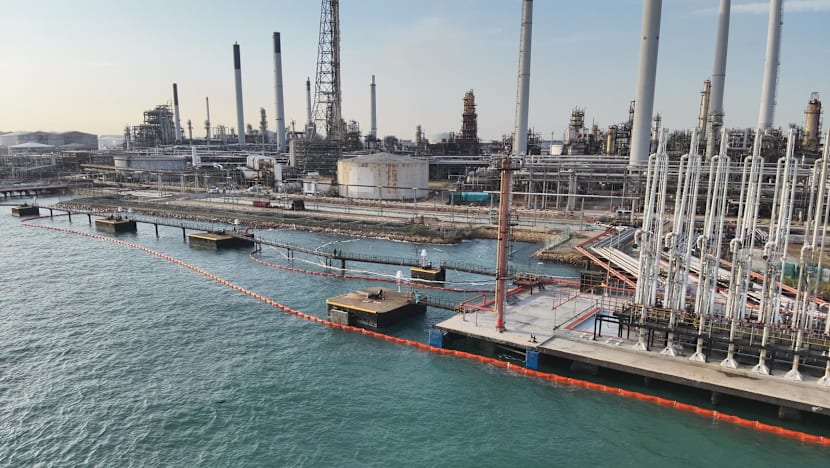
The morning of October 20, 2024 began unremarkably at Pulau Bukom — until, at around 8am, a hole in a land-based pipeline sent approximately 40 tonnes of oily mixture pouring into Singapore waters. Nearly five hours passed before Shell Singapore reported the incident to the port master, at 12.55pm. That gap — between the rupture and the notification — now sits at the centre of a criminal prosecution.
Shell Singapore was charged on Tuesday under the Prevention of Pollution of the Sea Act over two separate discharge incidents at its Shell Singapore Energy and Chemicals Park on Pulau Bukom. The charges cover not only the discharges themselves but also the company’s alleged failure to report them immediately, a requirement the legislation frames in unambiguous terms: notification must occur “without delay and to the fullest extent possible.”
The second incident compounds the picture. Between 9.30am on December 26, 2024 and 8.30am on December 28, 2024 — a span of nearly two full days — an estimated 485kg to 956kg of oil mixture leaked from the same facility into Singapore waters. Shell flagged this discharge at approximately 11.50am on December 26. Whether that constitutes a sufficient delay to sustain a charge is now a matter for the courts.
The October spill, involving a mixture of oil and water commonly referred to as “slop,” spread into the channel between Bukom Island and Bukom Kecil. The response was significant: oil absorbent booms were pre-emptively deployed at Sentosa, Labrador Nature Reserve, and East Coast Park, and clean-up efforts proceeded in coordination with government agencies. In December, authorities confirmed that Shell had shut down an oil processing unit at Pulau Bukom to facilitate investigations into the suspected second leak.
The legal exposure is substantial. For an entity found guilty of being the occupier of a land-based facility from which oil or an oily mixture is discharged into Singapore waters, the Prevention of Pollution of the Sea Act prescribes fines ranging from S$1,000 to S$1 million. The reporting failures carry a separate penalty of up to S$5,000 per offence. Shell also faces parallel prosecution by the National Environment Agency over the same two incidents — a dual-track enforcement approach that signals the seriousness with which Singapore’s regulatory apparatus is treating the matter.
In court on Tuesday, a Shell representative sought an eight-week adjournment. The reasons were layered. Shell requires time to take internal instructions and appoint counsel. The business associated with the oil spill has since been divested in 2025, creating practical difficulties in locating historical records. The company, she said, needs adequate time to properly understand and respond to the charges.
The case has been adjourned to October.
What the adjournment request reveals, quietly, is the institutional complexity now surrounding this prosecution. A divested business unit, records to be reconstructed, counsel yet to be appointed — these are not the logistics of a company treating the charges as routine. Singapore’s regulatory framework for sea pollution is not new, and the obligations on refinery operators are well-established. The question the prosecution will press is straightforward: did Shell know, and did Shell tell anyone in time?
For residents who watched booms unfurl along Sentosa’s shoreline last October, or who followed the December shutdown with unease, that question carries weight beyond the courtroom. Pulau Bukom has anchored Singapore’s refining industry for decades. Its proximity to recreational coastlines, nature reserves, and one of the world’s busiest shipping lanes means that a pipeline failure is never merely an industrial incident. The charges filed this week are a reminder that proximity to consequence demands a commensurate standard of care — and of candour.