NUS Bets on AI Literacy: ChatGPT Access for All, Compulsory Module for Freshmen

A University-Wide Shift Begins at Orientation
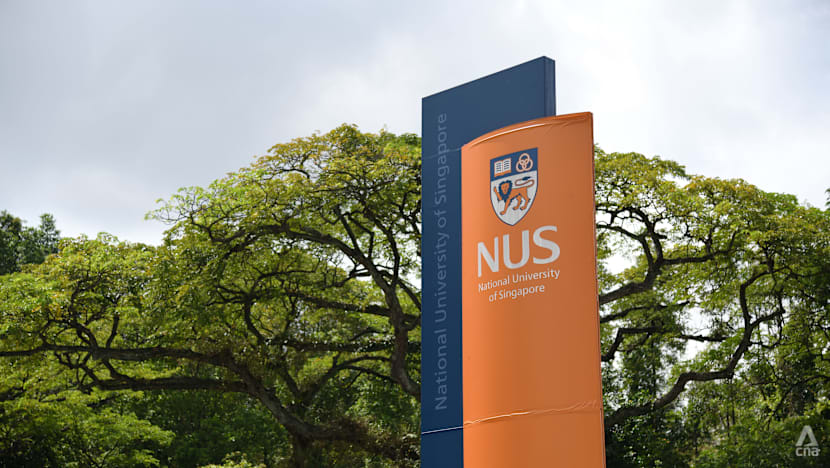
Before the semester has properly begun, before lecture theatres fill and tutorial groups convene, more than 7,700 students entering the National University of Singapore this year have already been assigned their first piece of coursework. It arrives not as a reading list or a laboratory induction, but as a structured encounter with generative artificial intelligence — three hours of online lecture videos, embedded quizzes, and a two-hour in-person workshop, all to be completed within the first two weeks of term. The module is called Applied Generative AI: From Prompting to Evaluation, and from this academic year, it is compulsory for every incoming NUS freshman.
The timing is deliberate. NUS is not easing students into AI use; it is front-loading it, treating foundational AI fluency as a prerequisite for everything that follows — assignments, internships, and careers that the university expects will be shaped, in ways still difficult to fully anticipate, by large language models and the tools built on top of them.
The OpenAI Partnership and What It Actually Covers
Announced on Monday, 11 August, the partnership with OpenAI formalises what the university describes as the first in a series of industry collaborations it has in the pipeline. From 31 August, all NUS students, faculty, and staff will gain access to ChatGPT Edu, a version of the platform built specifically for higher education institutions. The rollout is tiered rather than uniform: baseline access goes to the entire student body, while more advanced tools will initially be piloted in selected courses before being progressively extended to undergraduate programmes where, in the university’s assessment, AI can add genuine educational value.
Students in computing and related disciplines — fields where AI forms part of the core curriculum rather than a supplementary skill — will have access to the most sophisticated tools through their specific courses and activities. The architecture of access, in other words, is calibrated to context.
NUS Provost and Deputy President for Academic Affairs Professor Aaron Thean declined to disclose the financial terms of the arrangement, characterising the investment only as “significant but necessary.” He was more forthcoming about the strategic rationale: AI companies, he noted, are drawn to NUS precisely because of its captive market of approximately 50,000 undergraduate, master’s, and PhD students — a substantial and educationally coherent user base. The university, however, is not positioning itself as a captive market for any single provider.
NUS intends to work with multiple AI companies simultaneously, exposing students to a range of tools rather than anchoring the institution to one platform’s ecosystem. Students already have access to Microsoft Copilot through the university’s Microsoft 365 subscription, and staff currently use an in-house generative AI platform incorporating models from OpenAI, Anthropic, and Google. Selected tools from that staff-facing platform will, from this academic year, also be made available to students through specific courses.
Equity as a Design Principle
The tiered access model reflects a concern that goes beyond pedagogy. Premium large language model platforms carry real costs, and the university is explicit that it wants to ensure equitable access rather than allow AI capability to become another axis of student disadvantage. All students receive baseline access as a floor; those who require more advanced tools for domain-specific expertise can access them through the relevant courses. The structure is intended to prevent a situation where a student’s AI fluency is constrained by their willingness or ability to pay for external subscriptions.
This is a meaningful institutional commitment, even if its long-term adequacy will depend on how rapidly the frontier of what counts as “advanced” shifts — and how quickly the tools available at the baseline tier fall behind it.
Supporting Faculty Who Did Not Grow Up With This
The student-facing rollout is only one dimension of the initiative. Professor Melvin Yap, NUS’s Associate Provost for Education and Technology, has outlined a parallel effort to equip instructors with ready-to-use AI tools they can adapt for their classes — a deliberate attempt to lower the barrier to entry for faculty who may find the landscape of generative AI tools bewildering rather than intuitive.
“Basically, we don’t want instructors to start from ground zero and figure out from scratch how to use AI for teaching,” Yap said. The university currently offers seven such solutions, ranging from a classroom engagement tool that transcribes discussions, tracks student contributions, and surfaces emerging topics in real time, to a scenario generator, a resource navigator, and a tool for practising oral presentations. These are starting points, not prescriptions — instructors are expected to tailor them to their specific pedagogical needs.
Professor Thean acknowledged frankly that some faculty face a steeper learning curve than their students. Instructors who are, in his phrase, “less AI-native” will need to level up. “They have to learn enough to be able to teach,” he said. The university’s AI Centre for Educational Technologies and its Centre for Teaching, Learning and Technology will provide the institutional scaffolding for that process.
What NUS Is Signalling — and to Whom
Taken together, the compulsory module, the tiered access architecture, the multi-provider strategy, and the faculty support infrastructure constitute something more than a technology rollout. They represent a deliberate institutional position: that AI fluency is not an elective skill to be acquired by interested students on their own time, but a baseline competency the university is now responsible for delivering. NUS is, in effect, revising its implicit contract with students about what a degree from the institution equips them to do.
The partnership with OpenAI is the most visible signal of that shift, but it is the compulsory freshman module that carries the real institutional weight. A university that makes AI literacy a condition of completing your first two weeks has decided, with some finality, where it stands. Whether the rest of Singapore’s higher education sector follows — and how quickly — will be worth watching closely.