
Nature Is Not Stable and Financial Systems Built on That Assumption Are Already Paying the Price

Nature Is Not Stable — And Financial Systems Built on That Assumption Are Already Paying the Price
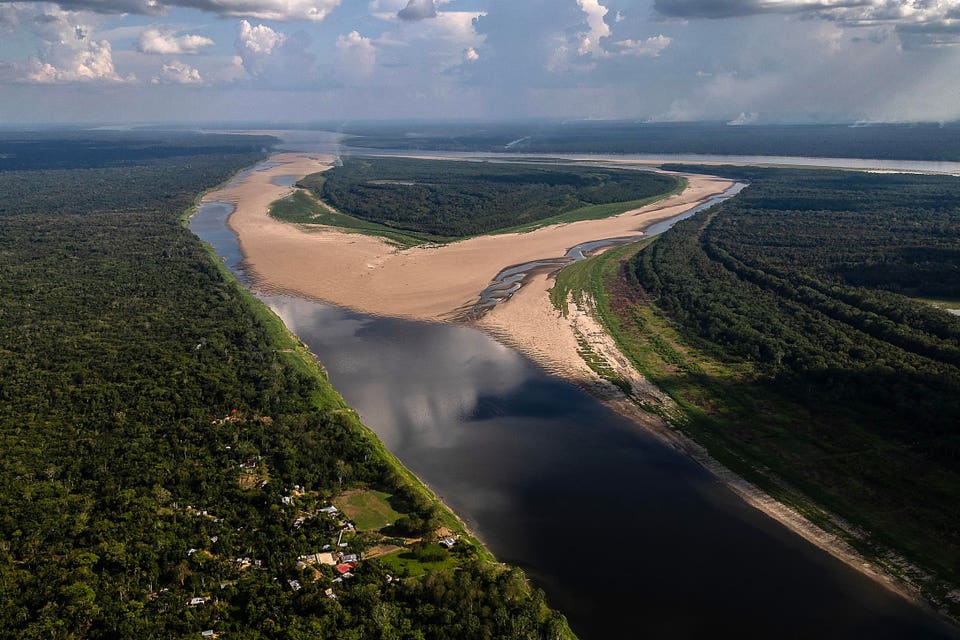
In 2023, severe droughts in the Amazon left giant commodity barges stranded on rivers that had effectively vanished. River transport volumes fell by up to 50 percent, freight tariffs doubled, and Brazilian water transport company Hidrovias do Brasil recorded a net loss exceeding $100 million in 2024 alone. The episode was not an anomaly — it was a warning.
A False Assumption at the Heart of Global Finance
Supply chain pricing, trade finance, and credit frameworks share a foundational premise: that natural systems — rivers, rainfall, soils — are broadly stable. That premise is increasingly untenable, and the consequences are beginning to surface across agricultural equities, sovereign bonds, and credit markets simultaneously.
Humanity has now breached seven of nine planetary boundaries. Extreme weather events are escalating in severity, frequency, and economic impact. Several major institutions have recently raised alarms that ecosystem degradation could trigger the next financial crisis.
The UK’s Joint Intelligence Committee, drawing on analysis from MI5 and MI6, found strong consensus that ecosystem loss poses a direct threat to national security — capable of reducing GDP by 12 percent by 2030. The Institute and Faculty of Actuaries, a globally recognised authority on financial risk, has warned that withdrawals from nature have far exceeded deposits, with many accounts now overdrawn and at risk of irreversible collapse.
The Amazon Tipping Point
A paper published last month in Nature sharpened the stakes considerably. It warned that two-thirds of the Amazon rainforest could flip into savannah — and become a net carbon source — at between 1.5°C and 1.9°C of global warming, if deforestation reaches 22 to 28 percent.
The cascading effects would extend far beyond Brazil. Moisture shifts in one part of the Amazon can affect regions hundreds or thousands of kilometres away. Reduced rainfall would disrupt trade routes, degrade agricultural land, and generate price volatility with economy-wide consequences across South America.
Soy, Ports, and Quantified Exposure
New research from Zero Carbon Analytics (ZCA) has put concrete figures on one dimension of this risk. The study estimates that up to USD $1 billion in Europe-bound soy is at risk annually by 2060, due to critically low river levels at two major Amazon ports caused by deforestation. That figure represents more than one-third of the USD $2.4 billion in European-bound Brazilian soy transiting those ports each year.
The exposure is not evenly distributed, but it is significant across the supply chain:
Banks providing financial services along these supply chains carry commensurate exposure. The same ZCA report finds that the United Kingdom faces up to $50 million in annual soy trade disruption from the two Amazon ports by mid-century — even as it simultaneously cuts climate and development aid that would reduce that very exposure.
Structural Miscalculation, Not Capital Shortage
The problem is not a lack of available capital. It is a systemic miscalculation of ecosystem fragility embedded within the financial models that govern investment, credit, and insurance decisions.
Research from Cambridge’s Institute for Sustainability Leadership finds that where climate and nature risks are assessed at all, they are treated as discrete, siloed events rather than compounding, interlinked systems. Feedback loops between climate, nature, and social risks remain unmodelled — leaving investors exposed and unable to capitalise on emerging opportunities in areas such as:
Banks are aware of the challenge but face compounding structural barriers to incorporating forward-looking assessments within existing credit frameworks. Work addressing these barriers, developed in collaboration with major banks, is due to be published at the end of May.
Incentivising a Shift in Trade Flows
One concrete mechanism on the table is the Tropical Forest Forever Facility (TFFF). Reaching its $10 billion target, combined with a credible Deforestation Roadmap, could incentivise a structural shift in trade flows and redirect harmful financial flows — tipping what remains a groundbreaking concept into a viable investment pathway for private capital.
The UK’s Office for Budget Responsibility has identified unanticipated shocks as carrying the most significant negative effects on the economy. Without sustained investment in the natural systems underpinning economic activity, those shocks will increasingly originate from ecosystem collapse rather than conventional market forces.
Until climate and nature risks are embedded in the financial models governing our economies, every asset, portfolio, and insurance product is being valued on a false premise — and the costs of that miscalculation are already arriving.