
Singapore’s National Wage Council Calls on Employers to Share Economic Gains as Growth Outpaces Expectations

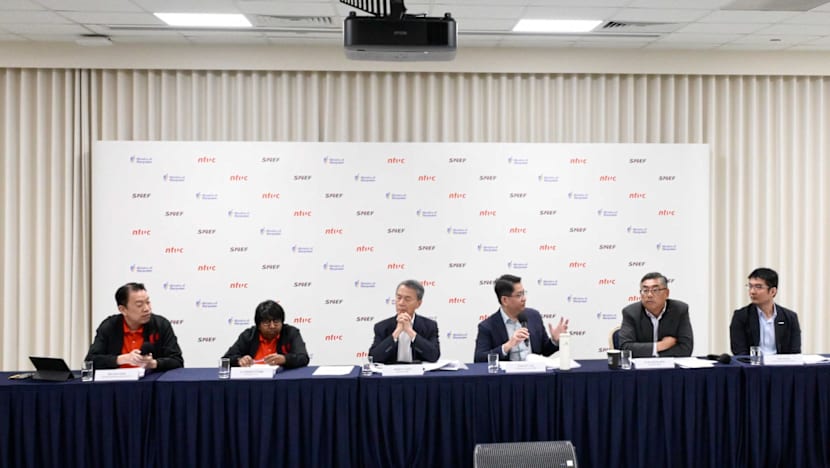
Singapore’s economy has been performing well enough that the country’s tripartite wage-setting body now feels confident asking employers to do more than hold the line — it wants them to lean in. The National Wage Council (NWC) released its guidelines for December 2026 to November 2027 on Monday, urging employers to adopt a “positive-leaning” approach to wage increases and to distribute productivity gains more equitably across their workforces.
The council’s framing is deliberate. Rather than issuing a flat mandate, it calibrates its recommendations to business performance, acknowledging that growth has been uneven across sectors. Firms that have performed well and hold positive business prospects are expected to give built-in wage increases at the higher end of a 6 to 8 per cent range for workers earning a gross monthly wage up to S$2,800, or at least S$135 to S$170, whichever is higher. Those facing uncertain prospects despite decent performance should aim for the middle of that range. Firms that remain profitable but have struggled are asked to provide at least S$120. The logic is graduated, not blunt.
What is genuinely new this cycle is the explicit inclusion of unprofitable firms in the guidelines. For the first time, even employers who have not done well and are running losses are expected to provide a built-in increase of at least S$120 for their lower-wage workers. The NWC adds that if business conditions subsequently improve, employers should revisit wages and consider further increases. This extension of coverage signals an institutional push to make wage floors meaningful across the full spectrum of business conditions, not just in good times.
The question of adoption hangs over these recommendations. Ministry of Manpower permanent secretary Stanley Loh acknowledged at Monday’s press conference that adoption of last year’s guidelines reached only just over 25 per cent, a sharp drop from the peak adoption rate of above 70 per cent in prior cycles. NWC chairman Hsieh Fu Hua was careful to clarify that the remaining employers did not simply ignore their workers — rather, they failed to provide increments that met the specific thresholds. The introduction of the new unprofitable-firm category is partly an attempt to close that gap, giving more employers a defined floor to work toward rather than an aspirational range that feels out of reach.
Beyond wages, the council turned its attention to the structural disruption posed by artificial intelligence. It called on both employers and workers to build capabilities suited to an AI-driven economy, framing the technology not as a threat but as a productivity multiplier and a source of new value. Workers are encouraged to develop AI literacy alongside the human judgment that machines cannot replicate. Employers, meanwhile, are expected to redesign job functions proactively, invest in training budgets across all career stages, and strengthen their human resource infrastructure to support workplace transformation.
The training data complicates that optimistic framing. The proportion of employers providing structured training to employees fell from 66.4 per cent in 2024 to 64 per cent last year, while the proportion of employees receiving such training declined from 52.6 per cent to 48.1 per cent over the same period. National Trades Union Congress president K Thanaletchimi supported the recommendations but pressed employers on a specific point: workers need “protected training time” — dedicated hours that do not force them to choose between upskilling and meeting their immediate work obligations. That demand cuts to the heart of a persistent tension in Singapore’s workforce development model, where training is encouraged in principle but often squeezed out in practice.
On inflation, Loh described current conditions as “a bit higher but manageable,” and indicated the council saw no need for supplementary one-off payments on top of the wage recommendations. The government has separately rolled out cost-of-living support measures for citizens. Singapore National Employers Federation chief executive Hao Shuo pointed to real gross monthly income growth in the first half of this year, and noted that over a ten-year horizon, real wage growth has materialised. His framing was measured but confident: the outcome, he suggested, speaks for itself.
Hsieh was candid about the limits of what any single set of guidelines can accomplish. Uneven economic performance will produce uneven compensation — that is a structural reality, not a policy failure. The longer ambition, he said, is for all workers to be lifted over time, with the council monitoring and responding to each segment of the economy in turn. Senior employment, he noted, remains on the agenda, though not for this cycle. What Monday’s guidelines reveal, taken together, is an institution trying to hold two things simultaneously: the flexibility that Singapore’s varied business landscape demands, and the equity imperative that its social compact requires.