
Why More Singaporeans Are Using MediSave Across the Causeway — And What the Numbers Don’t Tell You

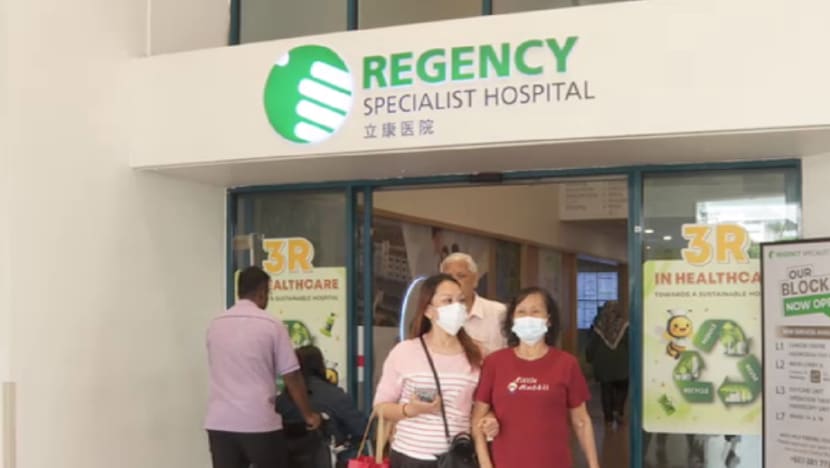
A quiet but measurable shift is underway in how some Singaporeans access healthcare. Since the COVID-19 pandemic, the number of patients from Singapore using MediSave at Regency Specialist Hospital in Johor Bahru has doubled — and the demographic profile of those patients is striking.
Roughly 90 per cent of MediSave patients at Regency are women, with obstetrics and gynaecology services, including maternity care, among the most frequently sought treatments. The hospital, which receives between 150 and 200 international patients daily — predominantly from Indonesia and Singapore — is currently the only JB facility participating in Singapore’s overseas MediSave scheme. Regency declined to disclose the precise number of Singaporean patients using the scheme.
The scheme itself dates to March 2010, when the Ministry of Health extended MediSave withdrawal privileges to elective hospitalisations and day surgeries at a small number of accredited overseas facilities. Singaporeans and permanent residents must first attend Health Management International, a Singapore-based provider, for a clinical assessment and financial counselling before eligibility is confirmed. The same withdrawal limits that apply domestically apply abroad. Beyond Regency, only Mahkota Medical Centre in Malacca currently participates in the arrangement.
What does “cheaper” actually mean here?
The cost differential is real, but it demands careful reading. A 2025 study by the ISEAS-Yusof Ishak Institute found that savings for procedures performed in Malaysia versus Singapore ranged from 24 to 74 per cent — with IVF at the high end of that range, knee replacement at 37 per cent, and heart bypass surgery at 24 per cent. Regency CEO Serena Yong frames the currency advantage plainly: procedure prices in ringgit may be comparable or even slightly higher in absolute terms, but the exchange rate means Singaporeans are effectively paying one-third of the Singapore-dollar equivalent.
Yet the sticker price, as financial advisers are quick to note, is rarely the whole story. Francis Hoan, associate director of financial advisory at Financial Alliance, breaks down what a total treatment cost actually encompasses: consultation fees, pre-operative tests, the procedure itself, hospital stay, anaesthetist and specialist fees, medication, follow-up visits, and the financial exposure that comes with any complications. Patients must also account for accommodation costs across multiple trips and time taken away from work — variables that erode savings in ways that a simple procedure-price comparison obscures.
Insurance coverage adds another layer of complexity. Most Integrated Shield Plans and MediShield Life do not extend to overseas private treatment, which means a procedure that appears inexpensive in Johor Bahru may be entirely self-funded, whereas the same treatment in Singapore might involve only a co-payment after insurance kicks in. Hoan’s conclusion is measured: planned, lower-complexity procedures with minimal follow-up requirements are where the cross-border calculus most reliably favours the patient.
What changes when the RTS Link opens?
The Johor Bahru–Singapore Rapid Transit System Link, scheduled to open in January 2027, stands to alter the accessibility equation significantly. Transit time and logistical friction have always been implicit costs of cross-border healthcare; reducing them makes the option structurally more viable for a broader segment of the population. Regency has signalled that it anticipates sustained demand growth and intends to expand its medical services accordingly.
The longer-term systemic effect may be less visible but more consequential. Hoan describes cross-border healthcare as a “growing, meaningful supplement” to Singapore’s system rather than any kind of wholesale alternative — with complex, urgent, and high-risk cases remaining in Singapore for reasons of continuity and insurance coverage. What the trend may ultimately do, he suggests, is apply pricing pressure on healthcare providers within Singapore itself. That is a dynamic worth watching: not as a consumer curiosity, but as a structural force on one of the city-state’s most regulated and politically sensitive sectors.