

DAP and PKR Congresses Put Anwar’s Coalition to the Test

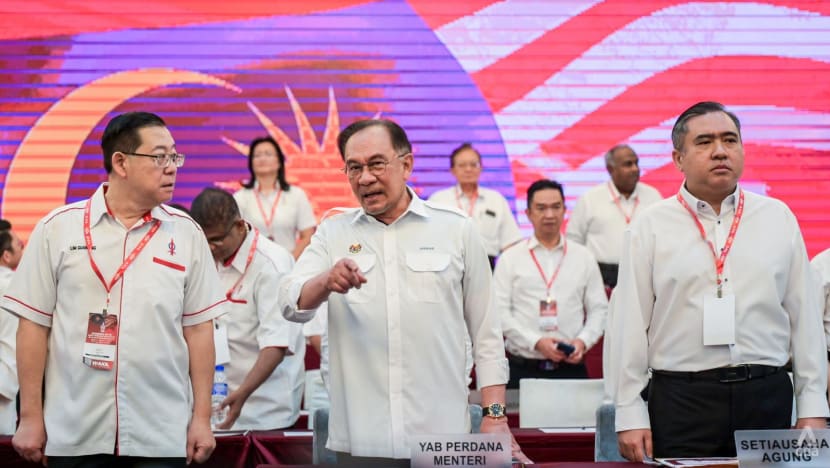
A Weekend That Could Reshape Malaysian Politics
On the morning of his 79th birthday, Prime Minister Anwar Ibrahim underwent surgery for an abdominal hernia. Days later, still recovering, he confronted a political reckoning that no surgical procedure could defer. His two most consequential coalition partners — Parti Keadilan Rakyat (PKR) and the Democratic Action Party (DAP) — were convening separate party congresses, one in Melaka and one in Putrajaya, and the outcomes of both gatherings carried the potential to fundamentally alter the architecture of his unity government.
The timing was not incidental. Three consecutive state election defeats had accumulated into something harder to dismiss than a run of bad luck. In Sabah last November, Pakatan Harapan (PH) was reduced to a single seat from 22 contested. In Johor and Negeri Sembilan, a formidable new alliance between Barisan Nasional (BN) and Perikatan Nasional (PN) — capitalising on consolidated Malay-Muslim majority support — swept both states with two-thirds majorities, cutting DAP’s seat tallies sharply in each. The coalition that Anwar had built to govern Malaysia arrived at this weekend carrying the weight of those losses.
Political analyst James Chin, a professor of Asian Studies at the University of Tasmania, was direct in his assessment. “This is a high-stakes weekend for both parties ahead of the next general election,” he said. “It’s really crucial. For Anwar, he has to wait and see how the DAP votes and how his own party reacts to his own daughter stepping down.” That second dimension — the PKR leadership question — had emerged with particular force only the week before.
The PKR Question: A Leadership Vacuum at the Worst Moment
Nurul Izzah, Anwar’s 45-year-old daughter and PKR’s deputy president, had offered her resignation from the party’s number two role just days before the congress. She was officially granted a temporary leave of absence to pursue further studies, but party sources and analysts were candid that her departure was unlikely to be short-term, and that it stemmed from substantive disagreements with her father over the party’s political direction. She had won the deputy presidency only the previous year, defeating former economy minister Rafizi Ramli in internal party polls — a result that had itself triggered a cascade of departures. Rafizi quit the Cabinet shortly after his defeat, eventually leaving PKR to lead the newly formed Parti Bersama Malaysia.
The exits did not stop there. A handful of PKR members followed Rafizi, and in the days immediately before the congress, Wong Chen — a three-term member of parliament who had spent 17 years with the party — announced his departure. Each resignation compounded the sense that PKR was haemorrhaging credibility at precisely the moment it needed to project strength. Nurul Izzah’s potential exit left the party facing a leadership vacuum with no obvious or uncontested successor, and the congress in Ayer Keroh, Melaka, would have to absorb that reality while simultaneously charting a course toward the next general election, due by February 2028.
Beyond the internal personnel questions, some political observers had begun mooting a more structurally significant possibility: that PKR might use the congress to signal openness to new political alliances. PH’s election director Amirudin Shari, also a PKR vice-president, had said the coalition was open to cooperating with parties beyond its existing partners — a remark widely read as a reference to Parti Pribumi Bersatu Malaysia (Bersatu), which is formally part of PN but whose ties with that pact had grown strained, contesting Negeri Sembilan on its own. Azmi Hassan, a senior fellow at the Nusantara Academy for Strategic Research, argued that PKR’s electoral plight left it little choice. “Not only PKR, but PH as a whole could do with boosting their support among the Malays,” he said. “At this point, Malay support for PH is minimal and Bersatu can bolster this, even slightly.”
The Alliance Question and Its Political Costs
The prospect of any rapprochement with Bersatu carried enormous internal political costs. Bersatu had played a central role in the so-called Sheraton Move of 2020, the political manoeuvre that collapsed the PH government then led by Mahathir Mohamad. Former PKR deputy president Azmin Ali had defected to Bersatu at that moment, a wound that had not fully healed within the party’s rank and file. Amirudin’s comments provoked immediate pushback from DAP parliamentarian Ramkarpal Singh, who questioned whether the matter had been discussed at the PH leadership level at all, and noted that PAS — PN’s largest component — had shown no inclination to moderate its hostility toward DAP.
Johor PKR vice-chairman Jimmy Puah, the MP for Tebrau, declined to comment on potential alliances, redirecting instead to what he characterised as the party’s foundational purpose. “As a party we have to go back to the basics and remember how we started out — we should refocus our efforts on institutional and progressive reforms,” he said. PKR senior member and Pasir Gudang MP Hassan Karim made the case for time: if the next general election could be delayed toward the end of 2026, the government would retain a window to push through reforms and recover lost ground. Political scientist Wong Chin Huat of Sunway University agreed that PKR’s most credible path back to relevance lay in anti-corruption work, noting that the recent Tabung Haji Royal Commission of Inquiry and reports that former PM Ismail Sabri Yaakob faced imminent graft charges were positive signals — but that the government’s record on corruption remained contested, particularly over its handling of investigations involving former anti-graft chief Azam Baki and corporate scandals touching senior PKR figures.
The DAP Decision: Stay or Go
The more immediately consequential gathering was DAP’s congress at the Putrajaya International Convention Centre on Sunday, where more than 4,000 delegates were set to vote on a single defining question: should the party’s five full ministers and seven deputy ministers remain in the Cabinet, or should they resign? The vote had been triggered by DAP’s complete shutout in the Sabah state election the previous November, when it failed to win any of the eight seats it contested. Originally scheduled for July, the congress had been postponed once already to avoid the Johor and Negeri Sembilan polls — elections that, when they came, further reduced the party’s state representation.
Analysts and DAP leaders who spoke ahead of the congress were largely aligned in their prediction: delegates would vote to stay. Former Johor assemblyperson Boo Cheng Hau said sentiment among delegates overwhelmingly favoured remaining in government, but that the decision came with a clear condition — the coalition must demonstrate genuine commitment to fulfilling its manifesto promises. “Even though it would be tough to implement 100 per cent of the manifesto promises, there must be determination and sincerity to fulfil as much as possible before the end of the current term,” he said. He was equally clear about the risks of the alternative: a DAP exit from the Cabinet could trigger snap elections and hand the coalition’s opponents a political gift.
DAP holds 40 parliamentary seats in Malaysia’s 222-member lower house — more than any other PH component, ahead of PKR’s 29 and Parti Amanah Negara’s eight. Its weight within the coalition made the vote structurally significant beyond the party itself. Bukit Gasing assemblyman Rajiv Rishyakaran mapped out the mechanism by which a DAP withdrawal could unravel the government: BN chairman Ahmad Zahid Hamidi, he argued, could use a DAP departure as justification to pull BN’s own support from the unity government, triggering a dissolution of parliament that Anwar himself might not initiate but could not prevent. DAP had already indicated it would maintain parliamentary support for the government regardless of how the Cabinet vote went — but the political signal of ministerial withdrawal would carry its own momentum.
Pressure From Within, Reform as the Price of Loyalty
DAP deputy secretary-general Ramkarpal Singh struck a careful note in the days before the congress, emphasising that delegates were free to vote as they saw fit, while also making explicit that a vote to remain in government should not be interpreted as unconditional. “It is important for this to be emphasised as there might be a false impression that a vote to remain in government for the rest of this parliamentary term equals a vote to remain no matter what, even if events that unfold in the future prove to be detrimental to the interests of the party,” he said in a statement on August 14. Analyst Chin predicted DAP would stay but that its ministers would carry a clear mandate to pressure Anwar on the reforms the party had long advocated — strengthening the independence of the judiciary, the Malaysian Anti-Corruption Commission, and the Attorney General’s Chambers. “Their role would be to pressure Anwar as much as possible and undertake the reforms that were promised,” he said. “DAP had waited a long time to be in government and would not squander the chance they have been given.”
Perak DAP foreshadowed the likely outcome when it announced on August 11 that it would vote to remain in the unity government, citing the country’s recent history of political instability and its effects on economic confidence and investor sentiment. “That bitter experience must not repeat itself,” the state chapter said. Political scientist Sivamurugan Pandian of Universiti Sains Malaysia framed the likely result as the beginning of a more assertive DAP rather than a passive endorsement of the status quo. “Maybe the outcome will be ‘We are staying, but things must change,'” he said. “For Anwar, a DAP vote to stay is not merely about keeping DAP ministers in Cabinet. It is about keeping the political centre of gravity of the unity government intact.”
What Comes After
Beyond the immediate vote counts, the weekend’s congresses carried implications for the longer political trajectory. Azmi Hassan pointed to the upcoming Melaka state election — due before early 2027 — as the next meaningful test for PH, and noted that reported friction between BN and PN over seat allocations could create an opening. “Melaka will be a test for this collaboration, and PH can use this as an opportunity to assert themselves, provided they come out of this weekend united and strong,” he said. The conditional phrase was doing considerable work: unity was precisely what both congresses were being asked to produce, under circumstances that made it anything but guaranteed.
Political scientist Syaza Shukri of the International Islamic University Malaysia situated the stakes in terms that went beyond coalition arithmetic. The Malaysian electorate, she argued, was watching for evidence that the government could deliver tangible improvements. “People want outcomes that can improve lives and that depends on these parties closing ranks and putting in the work for the next year or so,” she said. PKR and DAP had been political allies for roughly 18 years, from a loose electoral cooperation in 2008 through the successive formalisation of that relationship into Pakatan Rakyat and then Pakatan Harapan. Whether the alliance that had survived so much political turbulence could now survive the pressures of governing — and losing — was the question the weekend was forcing into the open.