
Indonesia’s Lido SEZ: How a Trump-Branded Golf Development Survived a Year in Limbo

A Project Frozen, Then Unfrozen
Construction is moving again at Indonesia’s Lido Special Economic Zone — and with it, the Trump Organization’s most ambitious foothold in Asia has regained its footing after more than a year of regulatory paralysis.
The Lido SEZ sits in West Java, roughly 60 kilometres south of Jakarta. Spanning 1,040 hectares of green highland terrain, it was conceived as an integrated entertainment and resort destination — a luxury enclave close enough to the capital to serve its elite, distant enough to feel like an escape. For years, however, it remained more aspiration than construction site.
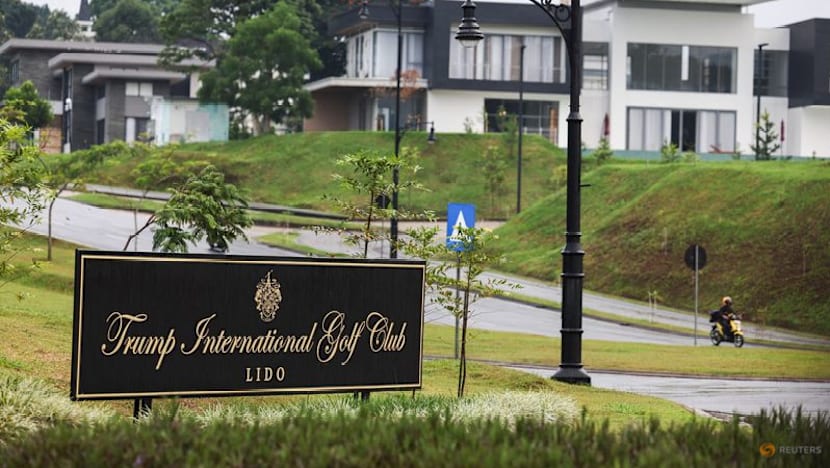
That changed, at least in part, when MNC Group — the Indonesian conglomerate controlled by media tycoon and politician Hary Tanoesoedibjo — signed a licensing agreement with the Trump Organization. The partnership brought Trump International Golf Club Lido into existence: 216 hectares within the SEZ dedicated to an 18-hole golf course, a planned five-star hotel, wellness facilities, luxury residences, and what MNC Tourism has described as the largest Trump Organization clubhouse in the world.
The Environmental Suspension That Stopped Everything
In February of last year, Indonesia’s environment ministry moved decisively. Officials sealed portions of the Lido SEZ and issued a formal order halting development activity. The stated grounds were specific: concerns over water management practices and sedimentation affecting Lido Lake, which sits within the zone’s boundaries.
The order landed with considerable weight. It raised immediate questions about the viability of the broader project and, by extension, about the Trump Organization’s first golf property in Asia. Weeks passed, then months. Media reports circulated suggesting the dispute might escalate to the courts. The development stalled.
Behind the scenes, however, MNC Land Lido — the MNC Group arm responsible for the site — was working to satisfy the ministry’s conditions. An official at the secretariat-general of Indonesia’s national council for special economic zones confirmed to CNA that the company had undertaken remedial measures, including engineering interventions to prevent soil and sediment from flowing into the lake. The anticipated court proceedings, the official said, never materialised.
By early this year, the suspension had been lifted. When CNA asked Environment Minister Jumhur Hidayat directly about the Lido SEZ’s status on August 1st, his answer was unambiguous, if spare: “They have already fulfilled our orders for those mistakes.” The enforcement mechanism, he explained, is designed not as permanent prohibition but as compulsion — a lever to extract compliance. Once compliance is demonstrated, the lever releases.
What CNA Found on the Ground
When CNA visited the site in May, the evidence of resumed activity was visible. Construction equipment was operating adjacent to the Trump golf course, which has been open to players since last year. A staff member on site confirmed the work was for the Trump clubhouse. Nearby, expansion work was also underway at Lido Lake Resort, owned by MNC Hotel and likewise located within the SEZ perimeter.
The clubhouse under construction is a substantial undertaking. At 3.3 hectares — equivalent to roughly 4.5 football fields — MNC Tourism has billed it as the largest clubhouse operating under the Trump Organization’s brand. Plans call for multiple restaurants, meeting rooms, a large ballroom, and a 5,000-square-metre semi-outdoor event space. Completion is expected before the end of this year.
The Trump Organization’s own website frames the Lido project in expansive terms, describing it as “the first Trump Golf property in Asia” and promising “world-class facilities, including an immaculate lifestyle country club, luxurious spa, high-end residences and five-star white-glove service.” The political valence of that branding, in the current global climate, is not incidental.
The Architecture of the Partnership
Understanding the Lido project requires understanding the two figures at its centre. On the Indonesian side, Hary Tanoesoedibjo built MNC into one of the country’s largest conglomerates, with dominant positions in media, entertainment, financial services, and tourism. He founded the political party Perindo in 2014, giving him influence that spans both the boardroom and the ballot box. MNC Group began developing the Lido area around 2014, acquiring it from the Bakrie Group, another major Indonesian conglomerate.
The site’s ambitions have always been large. Over the years, plans for Lido included golf resorts, hotels, film production facilities, residential precincts, leisure attractions, and at one point a proposal for the world’s largest theme park. In 2021, during the presidency of Joko Widodo, the area was formally designated a Special Economic Zone — a status that brings with it simplified licensing, state infrastructure support, and a more favourable regulatory environment for investors.
The SEZ designation was meant to accelerate development. In practice, the main completed asset remains the 18-hole golf course. The clubhouse, hotels, residences, and broader entertainment infrastructure are still works in progress — some stalled by the environmental suspension, others simply reflecting the long timelines endemic to large-scale resort development.
What Makes an SEZ Work — and What Doesn’t
Made Supriatma, a political analyst and visiting researcher at the ISEAS-Yusof Ishak Institute in Singapore, sees genuine commercial logic in the Lido project. Its proximity to Jakarta — now reduced to roughly an hour’s drive via a new highway — gives it an accessibility that many resort destinations lack. “It could become an integrated entertainment centre for Indonesia’s elites,” he told CNA, noting that the combination of location, Trump-brand prestige, and entertainment variety positions it well for a specific and affluent demographic.
Wawan Mas’udi, dean of the faculty of social and political sciences at Gadjah Mada University, offered a more structural reading. SEZ status, he explained, is fundamentally an institutional intervention: the state reduces bureaucratic friction, provides supporting infrastructure, and creates conditions more hospitable to investment. But the designation does not guarantee commercial success. “The development’s actual business success depends on investors and market conditions,” he said, pointing to business model risks and potential social friction as variables that no regulatory framework can resolve on its own.
Syarifah Syaukat, an environmental property expert at Knight Frank, pointed to Lido’s physical attributes — its green landscape, large land area, and new toll road access — as genuine commercial assets. She also flagged the structural opportunity: Indonesia’s growing wealthy class represents a natural market for high-end golf and resort facilities. Her caution, however, was equally pointed. Developers must account for local culture, spatial planning regulations, national economic stability, and — critically — the relationship between the development and surrounding communities, both in terms of environmental sustainability and economic inclusion.
The Trump Brand: Prestige and Political Exposure
The Trump name operates as a double-edged instrument in the Indonesian market. Virdika Rizky Utama, executive director of the PARA Syndicate political think tank in Jakarta, acknowledged the prestige dimension while questioning its sufficiency. “An international brand may confer prestige, but without adaptation to the Indonesian context, the project’s sustainability is highly questionable,” he said.
The reference point he reached for is instructive. A Trump-linked golf resort in Bali was operational for a period several years ago, but when CNA visited in April, it was closed to the public. Security staff declined to comment. A local official, speaking on condition of anonymity, told CNA the club had ceased operations during the COVID-19 pandemic and was expected to undergo renovation last year — though as of the time of reporting, no such work had begun.
Nicky Fahrizal of the Center for Strategic and International Studies drew a broader lesson from the Bali experience. Growing debate over overtourism and environmental protection on the island, he argued, demonstrates that premium tourism projects cannot survive on branding alone. The question of community benefit compounds the concern. Andra, a 45-year-old resident living near the Lido site who asked to be identified only by that name, put it plainly: “We have not benefited from the past development. Most workers were not locals.”
That tension — between the institutional architecture of the SEZ, the commercial ambitions of MNC Group, the symbolic weight of the Trump brand, and the economic realities of surrounding communities — defines the Lido project as it enters its next phase. The construction has resumed. The harder questions remain open.