

Kencana Agri Under Indonesian Inquiry as Singapore Moves Against Haze-Linked Firms

A Preliminary Inquiry in North Kalimantan
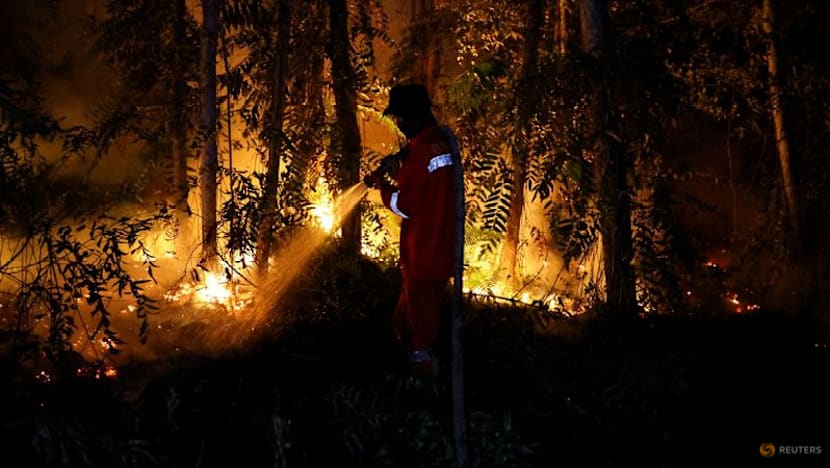
Singapore-listed palm oil producer Kencana Agri is facing a preliminary inquiry by Indonesian authorities over a fire incident at one of its subsidiaries in North Kalimantan. The inquiry centres on suspected land clearing by burning along the boundary between the group’s land and an adjacent third party’s concession — a detail the company has been careful to foreground in its public disclosures.
The disclosure came in response to queries from Singapore Exchange Regulation (SGX RegCo), which contacted listed companies in the wake of the forest and peatland fires sweeping across Indonesia and the transboundary haze that has once again settled over the region. Kencana Agri filed its response on Thursday, stating that investigators conducted a field inspection of the affected area in September and that its subsidiary has cooperated fully with the information requests made of it.
The company was unequivocal in its denial of direct culpability. Based on its internal operational review, management assessed that available information does not indicate the group’s activities materially contributed to the fires or the resulting haze. Fire incidents were recorded across approximately 62 hectares within concession areas in North and East Kalimantan — less than 0.09 per cent of the group’s total planted area of roughly 67,862 hectares across Sumatra, Kalimantan and Sulawesi.
“Based on preliminary internal assessments, it indicates that the fire did not originate from within the group’s operations, but rather spread from adjacent areas,” the company stated in its bourse filing.
The Zero-Burning Defence
Kencana Agri’s response leaned heavily on its stated zero-burning policy, which it says it enforces strictly and supplements with surveillance infrastructure — drones, fire observation towers, and dedicated firefighting teams working alongside local authorities and communities. The company insists it does not undertake land clearing by burning, nor does it use fire for land preparation, framing both as core operational commitments aligned with government regulations.
This defence was not unique to Kencana Agri. Across the SGX-listed agribusiness sector, the week saw a wave of near-identical disclosures, each company positioning itself as a responsible operator caught in the crossfire of broader ecological conditions. Golden Agri-Resources cited a zero-burning policy dating to 1997 and a no-peat policy since 2010, applicable to its suppliers as well. Wilmar International pointed to its no-burning policy in place since 2006, noting it has undertaken no new oil palm planting in Indonesia since 2013, with field activities since then limited to mechanical replanting.
PT Salim Ivomas Pratama, an Indofood subsidiary, similarly invoked mechanical land clearing and satellite-based hotspot monitoring via data from the US National Oceanic and Atmospheric Administration and NASA. First Resources and Bumitama Agri — both named in an October 5 Greenpeace report alongside First Borneo Plantations as being associated with concessions contributing to the haze — attributed the fires in part to this year’s El Niño conditions and to blazes originating in regions outside their operational footprints.
The Greenpeace Report and the Burden of Proximity
The Greenpeace report’s identification of First Resources, Bumitama Agri and First Borneo Plantations added an external dimension that corporate filings alone cannot fully neutralise. Being named by an internationally recognised environmental organisation carries reputational weight independent of legal culpability — and the companies’ responses, while procedurally sound, did not directly engage with the specific allegations in that report.
Bumitama Agri’s executive chairman and CEO Lim Gunawan Hariyanto stated that no evidence has been established linking the group’s operations to the initiation of the fires under investigation. First Resources acknowledged cases of fires originating outside its boundaries spreading into managed areas, describing some blazes as “too massive and fast-spreading to be fully contained.” These are plausible explanations under El Niño conditions. They are also, structurally, the kind of explanations that are difficult to independently verify in real time.
Singapore’s Regulatory Response
The government’s posture has shifted noticeably from prior haze cycles. Prime Minister Lawrence Wong stated on Thursday that Singapore is actively investigating which companies may bear responsibility for the Indonesian fires, and signalled that action under the Transboundary Haze Pollution Act remains on the table — including the possibility of joint action with other countries.
Minister for Sustainability and the Environment Grace Fu followed on Friday with a concrete announcement: the National Environment Agency (NEA) will issue preventive measure notices to seven Indonesian companies identified through Singapore’s investigations as responsible for fires contributing to the current haze. The seven firms — PT Bumi Andalas Permai, PT Bumi Mekar Hijau, PT Paramitra Mulia Langgeng, PT Sumatera Alam Anugerah, PT SBA Wood Industries, PT Hutan Lestari Raya and PT Bangkanesia — will be required to deploy firefighting personnel, cease burning activities, and submit action plans to the NEA for extinguishing fires and preventing recurrence.
None of the seven companies named in the NEA notices are among the SGX-listed firms that filed disclosures this week — a distinction worth noting, even as broader scrutiny of the sector intensifies.
Institutional Mechanics and What Comes Next
Singapore’s Transboundary Haze Pollution Act, enacted in 2014, gives the government extraterritorial reach over entities that cause or contribute to haze affecting Singapore, regardless of where the burning occurs. Its invocation has historically been measured and infrequent. The issuance of preventive measure notices to seven companies simultaneously represents one of the more assertive deployments of the legislation since its passage.
For SGX-listed agribusinesses, the regulatory dynamic is layered. SGX RegCo’s queries compel disclosure; the Transboundary Haze Pollution Act creates potential civil liability; and Indonesian authorities conduct their own parallel investigations. Kencana Agri sits at the intersection of all three — listed in Singapore, operating in Indonesia, and now subject to an inquiry whose outcome remains open.
The board noted it will continue to monitor the Indonesian inquiry closely while maintaining heightened prevention and monitoring measures across its operations. Whether that posture proves sufficient — legally, regulatorily, and reputationally — depends on findings that neither the company nor observers outside the investigation can yet fully anticipate.



