

Goh Jin Hian Takes the Stand: Ignorance, Reputation, and the Limits of Legal Belief in the NSG False Trading Trial

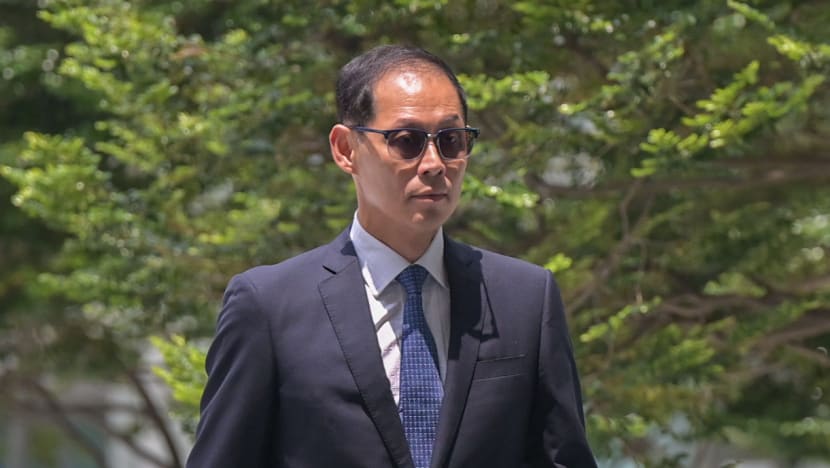
The central question in the ongoing false trading trial of Dr Goh Jin Hian is not merely whether he conspired to manipulate New Silkroutes Group’s share price, but whether a man of his standing — the son of former prime minister Goh Chok Tong, a director surrounded by lawyers and finance professionals — can credibly claim he simply did not know enough to know better. His testimony on Tuesday suggests his defence rests precisely on that proposition: that genuine ignorance of an industry, combined with sincere concern for reputation, constitutes a sufficient answer to charges of conspiracy. That thesis is legally coherent but institutionally fragile, and the prosecution’s case will likely hinge on dismantling the gap between what Dr Goh says he believed and what the evidence suggests he understood.
Dr Goh told the court that when NSG engaged GTC Group in February 2018 as a designated market maker, he had virtually no familiarity with the market-making industry. He did not know market rates. He did not know where to find competing firms. He had never engaged such a service before. The S$60,000 monthly fee charged by GTC Group struck him immediately as three times his own salary — high, he acknowledged, though he ultimately accepted it after consulting his team, including former finance director William Teo Thiam Chuan, who assured him the company could afford it. This picture of a senior executive deferring entirely to subordinates on a commercially unusual and financially significant arrangement is either an honest account of how authority is sometimes delegated within holding companies, or it is a carefully constructed distance from decisions that were, in fact, made with his full awareness.
The circumstances surrounding NSG’s engagement of GTC Group do not sit entirely comfortably with the defence’s framing of innocent ignorance. Dr Goh himself acknowledged that he had asked Teo to find a market maker who could “support shares and prevent Shen killing the price” — a reference to former director Lee Soek Shen, whom he believed was depressing NSG’s share price through sustained selling. That instruction was purposive and specific. It was not a general inquiry into liquidity solutions; it was a request to find someone who could counteract downward price pressure from a named individual. The company was also operating under time pressure: a months-long trading suspension was about to be lifted, major acquisitions had just been announced, and NSG’s broader business strategy was, according to the prosecution, premised on maintaining a high share price. Dr Goh’s claim that he believed the arrangement was “completely legal” may be genuine, but it does not resolve the more pointed question of what exactly he understood the arrangement to accomplish.
His defence also leaned heavily on reputation as a proxy for intent. The phrase “whiter than white” — used during the February 2018 meeting between Dr Goh, co-accused Kelvyn Oo Cheong Kwan, and Huang Yiwen — was presented by the defence as evidence that the parties explicitly required GTC Group’s activities to comply fully with MAS and SGX rules. Dr Goh testified that he was acutely sensitive to any wrongdoing, given the standing of the individuals on NSG’s board and his own public profile. Oo, he noted, was a lawyer by training and therefore unlikely to sanction anything illegal. This reasoning is not without logic, but it conflates reputational caution with legal diligence. Concern for how one appears is not the same as rigorous scrutiny of what one has authorised. Singapore’s regulatory environment has seen enough cases where reputationally prominent figures presided over structures they claimed not to understand to treat this argument as self-evidently exculpatory.
The WhatsApp messages introduced into the trial complicate the defence’s position further. In one exchange, Dr Goh wrote to his management team: “looks like we can decide how much to price our shares today” and “maybe open at S$0.30?”, followed by a smiling emoji. His lawyers characterised this as banter — facetious language that SGX rules would have made operationally impossible to act upon. That characterisation may well be accurate. But the instinct behind the message, however casually expressed, reveals a mindset in which the share price was something to be managed rather than simply discovered by the market. Whether that mindset crossed the threshold into criminal conspiracy is precisely what the court must determine. Both Teo and Huang have already been convicted and sentenced — twelve weeks and over two years in jail respectively — which means the factual architecture of the conspiracy has been judicially established. What remains is whether Dr Goh and Oo were architects of it or merely adjacent to it. The answer will say something important not just about their individual culpability, but about how Singapore’s courts assess the accountability of those at the top of publicly listed companies when the mechanisms of manipulation are operated by those beneath them.



