

PM Lawrence Wong: Economic Frustration Is Singapore’s Sharpest Threat to Social Cohesion

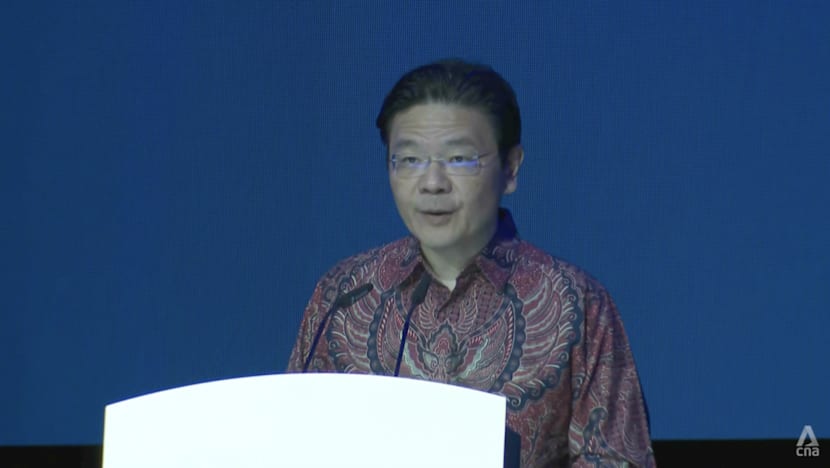
Prime Minister Lawrence Wong has issued a pointed warning that economic hardship, left unaddressed, can corrode the social and racial bonds Singapore has spent decades constructing. Speaking at the Singapore Kadayanallur Muslim League’s (SKML) 85th anniversary dinner on Saturday, he framed the risk not as a distant possibility but as a present and observable tension within the city-state.
His remarks arrived one week after Minister for Home Affairs K Shanmugam publicly condemned what he described as “shameful” racist and xenophobic commentary online — commentary triggered by Singapore Airlines’ investment in Air India and by the Nepal-Tibet disaster. Police have since identified and interviewed five individuals in connection with those posts, with investigations still ongoing.
Wong drew a direct line between economic disappointment and social fracture. When people feel they have not shared in national progress, he argued, that frustration does not remain purely economic — it attaches itself to questions of identity, belonging and perceived unfairness. “That is when divisions really start to become more entrenched, and people start to build walls between — us versus them,” he said. The language was deliberate, and the diagnosis structural rather than incidental.
Singapore, he acknowledged, is not immune to the global pattern of fragmentation and polarisation. Fault lines remain visible: between foreigners and Singaporeans, between local-born and naturalised citizens, and along racial and religious dimensions. Acknowledging those lines publicly, from the prime minister’s podium, signals that the government considers them politically consequential rather than residual social noise.
The government’s response, Wong said, would operate on two tracks simultaneously. On one track, policy reform targeting cost-of-living pressures and employment access — the material conditions that generate frustration in the first place. On the other, the deliberate reinforcement of shared institutions: schools, public housing neighbourhoods, workplaces and National Service, all of which function as structured environments for cross-community contact. The architecture of cohesion, in other words, is not accidental but engineered.
Wong was careful to assign limits to what the state can accomplish alone. Government policy can establish the conditions for cohesion, he said, but the substance of that cohesion depends on communities themselves — on their confidence in their own identities and their willingness to extend trust across communal lines. That framing distributes responsibility without absolving the state of its primary role in managing the structural drivers of discontent.
Within that broader argument, Wong identified a specific role for SKML. The organisation, he said, can serve as a bridge between Singapore’s Indian and Muslim communities more broadly, and he pointed to a new inter-Indian-organisation connectivity initiative led by Minister of State Dinesh Vasu Dash. He also flagged SKML’s potential contribution to the M3+ initiative, a platform linking Malay, Muslim and minority community organisations. SKML’s existing partnerships with MUIS, MENDAKI and SINDA — covering digital literacy, scam awareness and professional development — were cited as concrete illustrations of that bridging function already in practice.
Wong closed with a reading of SKML’s institutional history as a microcosm of Singapore’s own social evolution. In the city-state’s early decades, communities organised tightly around kinship, dialect, race and religion — the familiar logics of migrant societies navigating unfamiliar terrain. Over generations, as Singaporeans of different backgrounds became neighbours, schoolmates and colleagues, those concentric circles of loyalty expanded. SKML, he said, had traced the same arc: remaining rooted in the Indian Muslim community while progressively widening its sense of collective responsibility. “Our own means Singaporeans regardless of race, language or religion,” Wong said. The formulation is well-worn in Singapore’s official lexicon, but the context in which he deployed it — a moment of visible online hostility and economic anxiety — gave it renewed operational weight.



