

Trump Lashes Out at Supreme Court After Birthright Citizenship Ruling

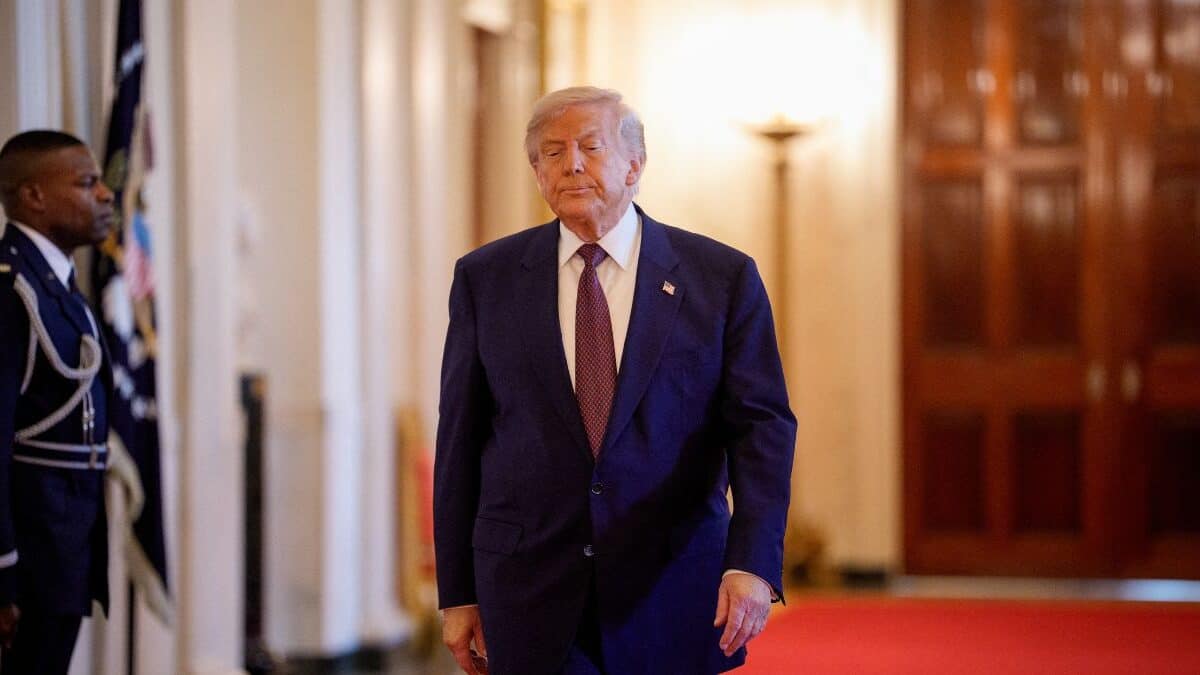
When the United States Supreme Court handed down a 6-3 decision on Tuesday affirming birthright citizenship for children born on American soil — including those born to parents present unlawfully or on temporary visas — President Donald Trump did not reach for measured legal commentary. He reached for Truth Social, and for sarcasm.
“I would like to congratulate President Xi, and the Great Country of China, on their massive Birthright Citizenship WIN!” Trump posted, framing a landmark constitutional ruling as a geopolitical gift to Beijing. The remark, characteristically blunt and deliberately provocative, encapsulated the administration’s posture toward a judicial branch it has increasingly treated as an obstacle rather than an arbiter.
The ruling itself was unambiguous in constitutional terms. The Court struck down Trump’s executive order — which had sought to deny automatic citizenship to children born in the United States to parents who are either undocumented or present on temporary visas — as incompatible with the Fourteenth Amendment’s Citizenship Clause. The majority also leaned on the precedent established in United States v. Wong Kim Ark, an 1898 decision that had already settled, at least in legal doctrine, the question of whether children born on American soil to foreign parents are entitled to citizenship. The answer, then and now, was yes.
The administration’s central legal argument — that the Fourteenth Amendment’s birthright guarantee applied only to those domiciled in the United States, meaning those with genuine intention to remain — did not persuade the majority. It is a reading of the amendment that has found some sympathy in certain conservative legal circles, but it has not, until Trump’s executive order, been tested so directly against the weight of established precedent.
Trump’s response moved quickly from mockery to legislative instruction. In a follow-up post, he urged Congress to act immediately, arguing that legislation — rather than a constitutional amendment — could close what he characterises as a loophole. “No long and unwieldy Constitutional Amendment is necessary!” he wrote, calling on Congress to “start TODAY.” The White House declined to specify which legislation the President had in mind. The constitutional mechanics are not trivial: amending the Fourteenth Amendment would require a two-thirds vote in both chambers of Congress, or a two-thirds vote of state legislatures at a national convention, followed by ratification by three-quarters of states — a threshold that reflects precisely how seriously the framers of Reconstruction-era law took the citizenship guarantee.
Whether ordinary legislation could effectively circumvent a constitutional provision without itself being struck down is a question the administration left conspicuously unanswered.
The political choreography around the ruling was swift and coordinated. Border czar Tom Homan pledged to “triple, quadruple down” on investigations into birth tourism — the practice of foreign nationals travelling to the United States specifically to give birth and thereby secure citizenship for their child — and called on Congress to address the issue legislatively “right away.” The State Department had already staked out a position on X, declaring it “unacceptable for foreign parents to use a US tourist visa for the primary purpose of giving birth in the United States.” Vice President JD Vance called the ruling a “major, major mistake.” House Speaker Mike Johnson said Congress is weighing both legislative and constitutional amendment routes, though he indicated he would review the full opinion before committing to a path.
The most structurally significant element of the ruling may be the concurring opinion of Justice Brett Kavanaugh, whose vote was decisive in the 6-3 outcome. His concurrence did not extend as far as the full majority’s reasoning, and Republican strategists are already parsing it for any opening — any narrower constitutional theory — that might provide a legal foothold for future challenges. That search reflects a broader pattern: when the courts rule against the administration, the administration does not concede the constitutional question. It looks for the next lever.
Civil rights organisations welcomed the decision as a relief for immigrant communities, many of whom had been living with the uncertainty created by the executive order since its signing. For those communities, the ruling restores a settled expectation — one that has governed American life, and American identity, for well over a century.
Trump’s congratulatory message to Xi Jinping was, in one reading, political theatre. In another, it was a signal of how the administration intends to prosecute this debate going forward: not as a constitutional question largely resolved by precedent, but as a sovereignty and security issue, one in which foreign nationals — and foreign governments — are positioned as the primary beneficiaries of American legal restraint. Whether Congress proves receptive to that framing, and whether any legislation it produces could survive judicial scrutiny, will define the next chapter of a dispute that Tuesday’s ruling did not so much close as redirect.