

Emirates flies some near-empty jets into Dubai as Gulf war hits travel demand

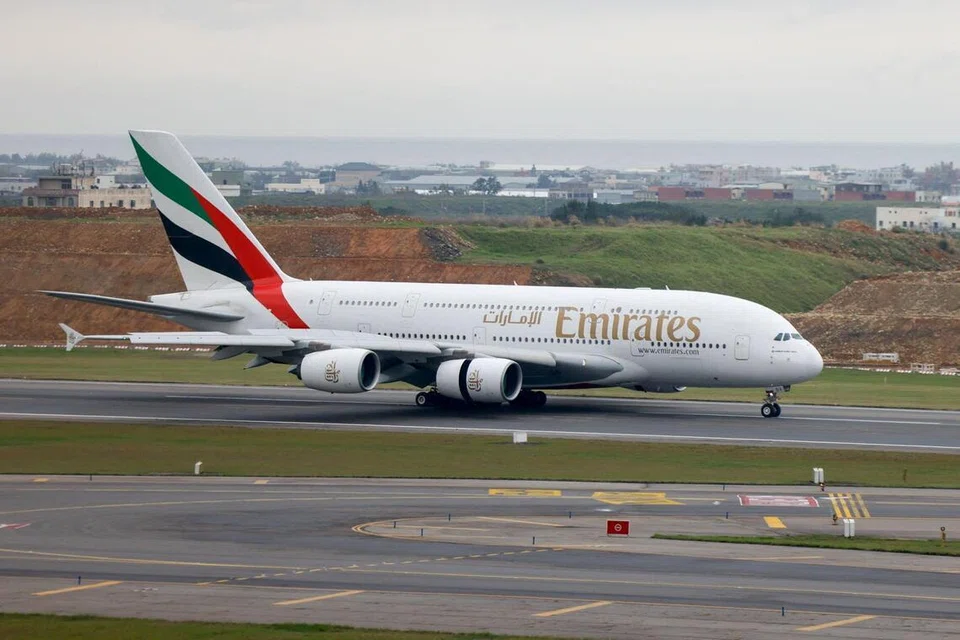
Emirates is operating some flights into Dubai with extremely low passenger loads as travellers avoid the Gulf during a widening regional war. The pattern shows how hard it remains for the Dubai-based carrier to rebuild its network even as it restores services faster than many rivals. Bloomberg reported that some inbound flights from Europe and the United States were returning almost empty, while Emirates said it is continuing to restore operations only where it can do so safely.
The imbalance is striking. Flights leaving Dubai are fuller because many travellers want to get out on the reduced number of services still operating. Inbound flights, however, are much weaker as tourists and business travellers postpone trips to a region now associated with missile and drone threats. Bloomberg reported that some return legs from cities such as Prague and Budapest were only around 5 to 10 per cent full, while several flights from New York sold only a fraction of seats.
Why Emirates Dubai flights look so uneven
This split reflects the airline’s role in a crisis. Emirates is not just selling normal round-trip travel. It is also trying to keep a global hub functioning while passengers make one-way decisions based on safety concerns. Bloomberg reported that the airline has also had to manage several thousand no-shows a day on outbound flights, even as it offers refunds and flexible rebooking through the end of March.
That creates a difficult operating model. Emirates must keep aircraft moving to preserve connectivity, reposition crews and maintain cargo flows, even when passenger revenue on some sectors is thin. The company told customers on March 17 that, following the partial reopening of regional airspace, it is operating a reduced flight schedule and adjusting operations as the security situation evolves.
Dubai’s hub model is under direct pressure
The weakness in inbound traffic comes as Dubai’s aviation system faces repeated disruption. Reuters reported that the UAE briefly closed its airspace on March 17 because of missile and drone threats from Iran, a day after a drone caused a fire near Dubai airport. Flights later returned to normal, but the incident showed how exposed Gulf hubs remain to the conflict.
Reuters also reported on March 16 that Emirates planned only a limited Dubai flight schedule after operations were suspended. That followed wider regional airspace closures triggered by the U.S.-Israeli war with Iran and Tehran’s retaliation. The airline’s challenge is therefore not only weak demand. It is also the difficulty of rebuilding a precise, high-frequency network when airspace access can change within hours.
Cargo has become more important
Passenger demand may be soft on the way into Dubai, but Emirates still has another reason to keep flying. Bloomberg reported that the carrier is loading cargo on those aircraft, especially perishables and other essential goods, which helps offset the weakness in ticket sales. The report added that Emirates is placing more emphasis on Boeing 777 aircraft because they offer better cargo economics than the Airbus A380.
That matters more than usual because the Strait of Hormuz remains heavily disrupted. Reuters reported that the UAE’s airspace has faced repeated closures and that Gulf aviation has been affected by the broader conflict. With maritime trade routes under pressure and supply chains strained, aviation is carrying added weight for high-value and time-sensitive shipments.
Emirates is recovering faster than rivals, but from a low base
Even with these problems, Emirates appears to be restoring service more aggressively than some competitors. Reuters reported earlier in March that Emirates was operating a reduced schedule to 82 destinations, while regional rivals such as Etihad and Qatar Airways were also maintaining only limited services. Reuters separately reported that Etihad’s restored schedule was temporary and focused on a defined group of international destinations.
That gives Emirates an advantage in network reach, but not necessarily in profitability. A long-haul airline depends heavily on both direction of travel and connecting traffic. If outbound seats from Dubai are in demand but inbound cabins remain sparse, aircraft utilisation may recover faster than margins do. Bloomberg’s reported loads on routes from Paris, New York and other major cities suggest that this is exactly the imbalance Emirates is now managing.
A difficult moment before the usual peak season
The timing adds to the pressure. Airlines were moving toward the Easter travel period, when bookings would normally strengthen on Europe-Gulf routes. Bloomberg reported that forward bookings on some inbound Emirates flights were only around a third of capacity, a weak figure for this stage of the seasonal cycle. That suggests traveller caution is not limited to immediate departures but is also affecting short-term future demand.
For Dubai, the issue goes beyond one airline. Emirates sits at the centre of the emirate’s tourism and transit model. When inbound long-haul demand weakens, the effect can spread across hotels, retail, airport operations and business travel. The carrier’s current schedule therefore offers an early signal of how conflict risk is reshaping movement into the Gulf, even as people continue to leave on the seats still available.
Emirates has said it will keep restoring its network at pace if safety conditions allow. For now, however, the airline is flying through an unusual reality: fuller aircraft out of Dubai, sparse cabins on the way back, and a hub that remains open but exposed to the wider shocks of war.